
Stathmopoda plumbiflua
Stathmopoda plumbiflua
Description
How to identify
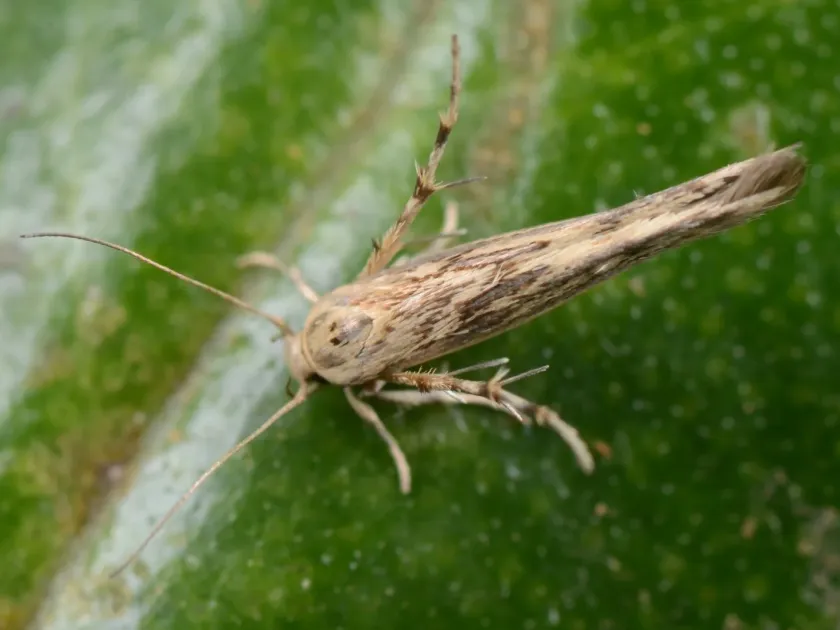
Stathmopoda plumbiflua is a species of moth belonging to the family Stathmopodidae within the order Lepidoptera. These moths are characterized by their slender bodies and narrow, often fringed hindwings, which are typical morphological features for the family.
The adult moths have a wingspan typically ranging between 10 and 15 millimeters. Their coloration generally consists of shades of yellowish-brown to grayish-brown, often displaying a subtle metallic luster. Taxonomic identification often requires dissection and examination of genitalia by specialists.
The larvae are typical caterpillars with a cylindrical body structure, featuring well-developed thoracic legs and abdominal prolegs. They are often whitish or pale green, with distinct markings that may aid in camouflage against the inner tissues of the host fruit.
Due to their cryptic lifestyle, the insects are rarely seen by farmers. The larvae spend most of their life cycle sheltered within the fruits, making observation and monitoring during the larval stage quite difficult without specialized techniques.
The development of this pest is highly dependent on environmental factors, particularly temperature and the availability of suitable host plants during the growth season. Understanding their seasonal phenology is essential for effective farm management.
What it damages
The primary damage is caused by the larvae, which bore into the fruits. By consuming the internal pulp, they create galleries and chambers, which directly affects the fruit quality and market value, often rendering the produce unsuitable for sale.
Infestation usually leads to premature fruit drop. Even if the fruit remains on the tree, the internal decay caused by larval feeding often triggers rapid decomposition and the secondary development of fungal pathogens and rots, further destroying the harvest.
The level of crop damage can vary significantly depending on seasonal conditions and host availability. In years with favorable weather patterns, this moth can cause substantial yield losses, significantly impacting the economic return for orchard owners.
The damage is often discovered late, frequently during harvest or post-harvest sorting. Because the external entry holes may be very small, it is challenging to identify infected fruits during initial field inspections.
Once the larvae have entered the fruit, they are shielded from most external factors, including many traditional contact insecticides. This protection makes the management of established infestations particularly challenging for agricultural producers.
Control measures
Cultural control is a cornerstone of managing this pest. Consistent sanitation, including the prompt collection and destruction of fallen fruit, is essential to disrupt the life cycle, as many larvae remain in the dropped fruit to pupate.
Chemical control should be strategically timed using pheromone monitoring traps. By identifying the peak flight periods of adult moths, farmers can apply targeted insecticide treatments to control the egg-laying phase and newly hatched first-instar larvae.
Biological control methods involve the use of entomopathogenic organisms, such as specialized bacteria or nematodes. These tools can be very effective when applied before the larvae have fully penetrated the fruit skin and are still vulnerable.
Quarantine measures are necessary to prevent the accidental spread of the pest to non-infested regions. Strict inspection protocols for transported fruits and nursery stock remain the primary defense against the long-distance dispersal of this insect.
An integrated approach, combining monitoring, sanitation, and judicious use of biopesticides, provides the best chance of minimizing damage. Protecting natural predators and parasitoids in the orchard environment is also a recommended long-term strategy.
Taxonomy
- Latin name
- Stathmopoda plumbiflua
- Order
- Lepidoptera (butterflies)
- Family
- Stathmopodidae
- EPPO code
- STATPU
Discussion
No discussions yet — be the first.