
Eucalyptus psyllid
Spondyliaspis plicatuloides
Description
How to identify
The eucalyptus psyllid (Spondyliaspis plicatuloides) belongs to the order Hemiptera and the family Psyllidae. These small insects are known for their jumping ability, characteristic of the group.
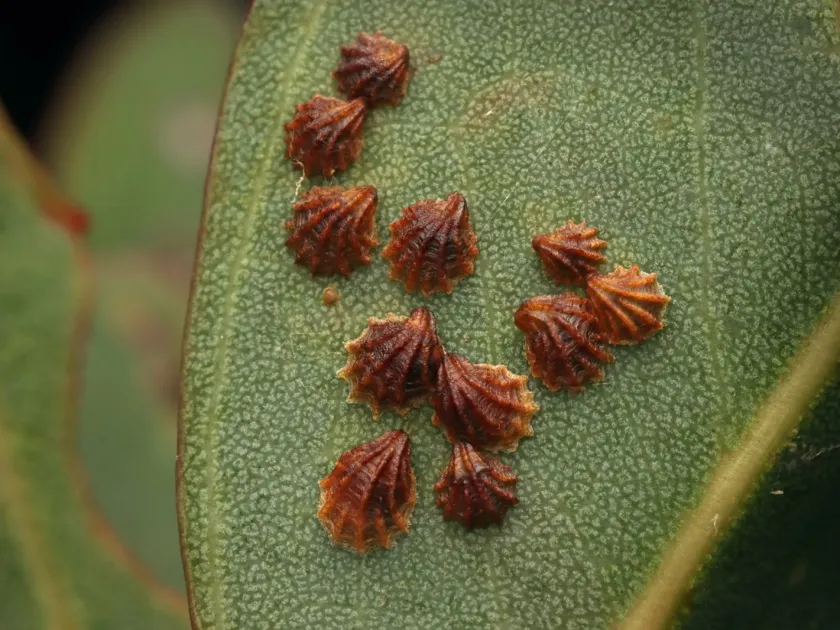
The most distinctive feature of this species is the white, rectangular or oval covering produced by the nymphs, known as a "lerp". This structure is made of wax and excrement, serving as a protective shelter against predators and harsh environmental conditions.
Adult psyllids are typically yellowish to brown in color, allowing them to blend into the eucalyptus foliage and bark, making them difficult to spot without close inspection.
The life cycle is closely linked to the physiological state of the eucalyptus host. In warm climates, reproduction can continue year-round, resulting in overlapping generations.
Females lay eggs primarily on young leaves and succulent shoots, providing immediate nutrition for the newly emerged nymphs upon hatching.
What it damages
The eucalyptus psyllid feeds on the sap of eucalyptus trees using a piercing-sucking mouthpart. This activity disrupts the transport of water and nutrients within the leaf tissues.
Heavy infestations can lead to significant tree stress, characterized by stunted shoot growth and reduced photosynthetic capacity due to tissue damage.
The secretion of honeydew by the psyllids promotes the growth of sooty mold, a black fungus that covers the leaf surface and further inhibits photosynthesis.
Continued feeding causes leaves to become chlorotic, curled, and ultimately leads to premature leaf drop, which can weaken the overall structure of the tree.
In cases of severe outbreaks, the cumulative damage can lead to branch dieback and significantly reduce the aesthetic and economic value of the timber or landscape trees.
Signs of infestation
The primary symptom of infestation is the appearance of white, wax-like lerps on the upper or lower surfaces of the leaves, which are easily visible upon close examination.
Leaves often show irregular yellow spots or necrotic patches where nymphs have been feeding, reflecting the localized damage to the leaf cells.
The presence of sticky honeydew on foliage, branches, and the ground beneath the tree is a strong indicator of an active psyllid population.
Increased activity of ants, bees, and wasps around the tree canopy is frequently observed, as these insects are attracted to the sugary honeydew produced by the psyllids.
Premature leaf senescence and thin canopies are classic signs of a long-term or intense infestation that has severely drained the tree's resources.
Control measures
Biological control is the cornerstone of sustainable management, focusing on the release or preservation of specific parasitoid wasps that feed on the psyllid larvae.
Cultural practices, such as maintaining tree health through proper irrigation and fertilization, can increase the tree's natural resistance to herbivory.
If chemical control is necessary, systemic insecticides applied as soil drenches or trunk injections can effectively target the psyllids while minimizing impact on beneficial predatory insects.
Regular monitoring of the canopy using yellow sticky traps is an effective method for detecting early migration of adults and assessing the population density.
- Biological control using parasitoid wasps
- Systemic insecticidal treatments
- Cultural tree health management
- Monitoring with yellow sticky traps
- Sanitary pruning of heavily infested branches
Taxonomy
- Latin name
- Spondyliaspis plicatuloides
- Order
- Hemiptera (bugs, aphids, leafhoppers)
- Family
- Aphalaridae
- EPPO code
- SPNDPL
Discussion
No discussions yet — be the first.