
Anoeconeossa
Anoeconeossa
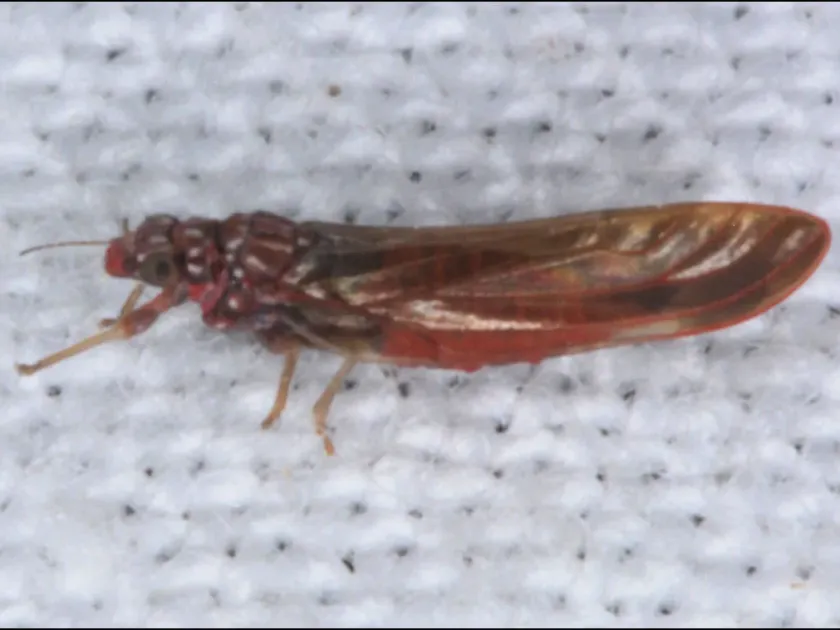
Description
How to identify
Anoeconeossa is a genus of jumping plant lice (psyllids) belonging to the family Psyllidae, order Hemiptera. These insects are small in size and highly specialized to thrive on their host plants by feeding on sap.
The lifecycle of Anoeconeossa involves multiple developmental stages, transitioning from eggs to nymphs and finally reaching the adult phase. Adults are typically equipped with robust wings for dispersal and specialized jumping legs.
Morphologically, these insects are similar to other members of the Psyllidae family, necessitating precise examination of their wing venation and genitalia for accurate species identification by entomologists.
Their biological activities are closely synced with the phenology of host plants. The emergence of nymphs usually occurs during the flush of new foliage, ensuring an ample food source for development.
Anoeconeossa species are known for their ability to spread rapidly across plantations under favorable environmental conditions. High humidity and mild temperatures often trigger population spikes, requiring vigilance from forest managers.
What it damages
Eucalyptus trees are the primary host and source of food for Anoeconeossa. The pests target soft tissues of leaves and young shoots, inserting their stylets into the vascular system to extract sap.
The damage to young eucalyptus trees is particularly severe, as constant sap extraction leads to stunted growth and foliage deformation. These conditions severely hinder the plant's development rate.
Heavy infestations cause premature leaf drop and the chlorosis of tissues. This loss of functional photosynthetic surface area weakens the tree, making it vulnerable to drought stress and secondary pathogens.
In addition to direct damage, the insects excrete honeydew, which fosters the growth of sooty mold. This fungus can cover leaves, further inhibiting photosynthesis and reducing the overall health of the tree.
The economic impact of Anoeconeossa involves reduced timber production and the increased cost of managing affected plantations. Sustained infestation levels are often untenable for commercial forestry operations.
Signs of infestation
The most common visible signs of Anoeconeossa infection are twisted or curled leaves. These symptoms occur as a direct response to the toxic substances injected by the nymphs during feeding.
The presence of honeydew and the associated black sooty mold on the leaf surface provides a clear indicator of a pest population. Leaves may also show numerous tiny necrotic spots from previous feeding sites.
Closer examination of the underside of the leaves often reveals clusters of nymphs, frequently protected by waxy, cotton-like secretions. This is a definitive sign of an active infestation.
During peak activity, adult psyllids can be observed jumping or flying around the canopy. If left unchecked, the tips of young branches may begin to die back, signaling a significant infestation level.
Early detection is crucial for effective management. Periodic scouting of new growth in plantations is necessary to spot the initial colonization and prevent a wider outbreak across the site.
Control measures
Effective management of Anoeconeossa relies on Integrated Pest Management (IPM) practices. This approach minimizes pesticide usage while maintaining the ecological health of the plantation.
Biological control, which includes the release of specific predators or parasitoid wasps, has proven successful in reducing population numbers without the need for harsh chemicals.
Systemic insecticides are the preferred chemical method if a threshold level of infestation is reached. Application should be timed to hit the most vulnerable developmental stages of the insect.
Sanitary measures, such as the pruning and removal of heavily infested shoots, help to decrease the overall pest pressure. Maintaining tree vigor through proper fertilization and watering also enhances natural resistance.
Regular monitoring with yellow sticky traps is a standard practice for assessing population dynamics. Data gathered from these traps help managers make informed decisions on the timing and necessity of interventions.
Taxonomy
- Latin name
- Anoeconeossa
- Order
- Hemiptera (bugs, aphids, leafhoppers)
- Family
- Aphalaridae
- EPPO code
- AOECSP
Discussion
No discussions yet — be the first.