
Pistachio psyllid
Agonoscena targionii
Description
How to identify
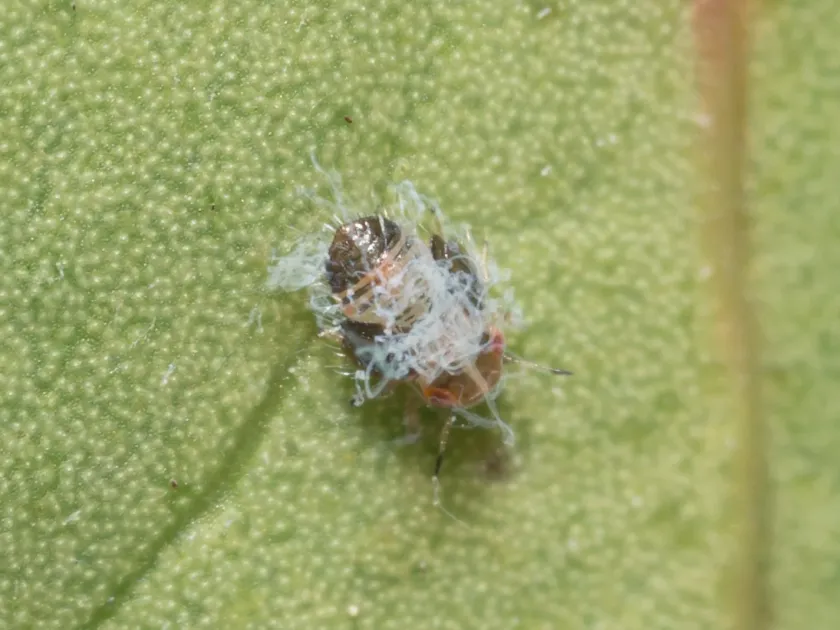
The pistachio psyllid (Agonoscena targionii) is a small insect belonging to the family Psyllidae, which is a significant pest for trees in the genus Pistacia.
Adult insects are typically 2 to 3 millimeters long, possessing specialized jumping legs and transparent wings that are held roof-like over their bodies.
Their color ranges from pale yellow to greenish-brown, which allows them to blend in perfectly with the foliage of pistachio trees, making them difficult to spot without close inspection.
The nymphs are flattened and often secrete honeydew or waxy substances, providing them with a layer of protection against environmental stressors and predators.
They are primarily identified by their jumping behavior when disturbed and their specific association with the growing stages of pistachio leaves and shoots.
What it damages
The damage caused by the pistachio psyllid is primarily due to their sap-sucking feeding habits on leaves, tender shoots, and developing flower buds.
During the feeding process, the psyllids inject salivary toxins into the plant tissues, which cause significant physiological distress, including stunted growth.
Severe infestations lead to leaf curling, chlorosis, and premature senescence, significantly reducing the overall photosynthetic capacity of the pistachio tree.
Continued feeding weakens the tree structure, making it more susceptible to environmental stress and decreasing its overall fruit production capability.
The secretion of honeydew also creates a secondary problem by promoting the growth of sooty mold, which coats the leaves and further inhibits the plant's natural metabolic processes.
When it appears
The life cycle of the pistachio psyllid begins in early spring, as temperatures rise and the overwintering adults emerge from their dormant state.
Throughout the growing season, multiple generations of the pest are produced, with population numbers peaking during the hottest months of late spring and summer.
Activity levels are highly dependent on thermal accumulation, meaning that warm and stable weather conditions can rapidly accelerate the population growth of the psyllids.
As the season progresses, nymphs are most abundant when the tree is actively producing new terminal shoots, providing the most nutritious source of sap.
By autumn, as temperatures decline, the population gradually decreases, and adult psyllids seek out protected areas like bark crevices to enter diapause for the winter.
Signs of infestation
The most prominent sign of infestation is the curling and distortion of young, tender leaves and shoot tips that fail to develop normally.
Honeydew deposits on the foliage are a classic indicator, which often appear as a sticky substance that later turns black due to the growth of sooty mold.
Yellowing of the leaves, specifically around the edges or in patches, often indicates that the psyllids have been feeding in that localized area.
A reduced canopy density and the premature drop of leaflets are also common symptoms observed in orchards with a heavy psyllid burden.
- Curling and distortion of terminal shoots.
- Sticky honeydew buildup on the leaf surfaces.
- Black sooty mold patches on leaves and stems.
- Premature yellowing and leaf abscission.
- Stunted growth of young pistachio trees.
Control measures
Effective management begins with robust orchard sanitation, including the pruning of heavily infested branches to improve light penetration and airflow.
The use of biological control agents, such as predatory beetles or lacewings, can play a crucial role in suppressing psyllid populations naturally.
Monitoring the orchard using yellow sticky traps is essential for timing chemical interventions precisely when the adult population starts to build up.
Chemical control should rely on selective insecticides that minimize the impact on beneficial insects while effectively targeting the sap-sucking nymphs.
Implementing integrated pest management (IPM) practices, including the rotation of active ingredients, helps to prevent the development of resistance within the pest population.
Taxonomy
- Latin name
- Agonoscena targionii
- Order
- Hemiptera (bugs, aphids, leafhoppers)
- Family
- Aphalaridae
- EPPO code
- AGONTA
Discussion
No discussions yet — be the first.