
Pistachio psyllid
Agonoscena
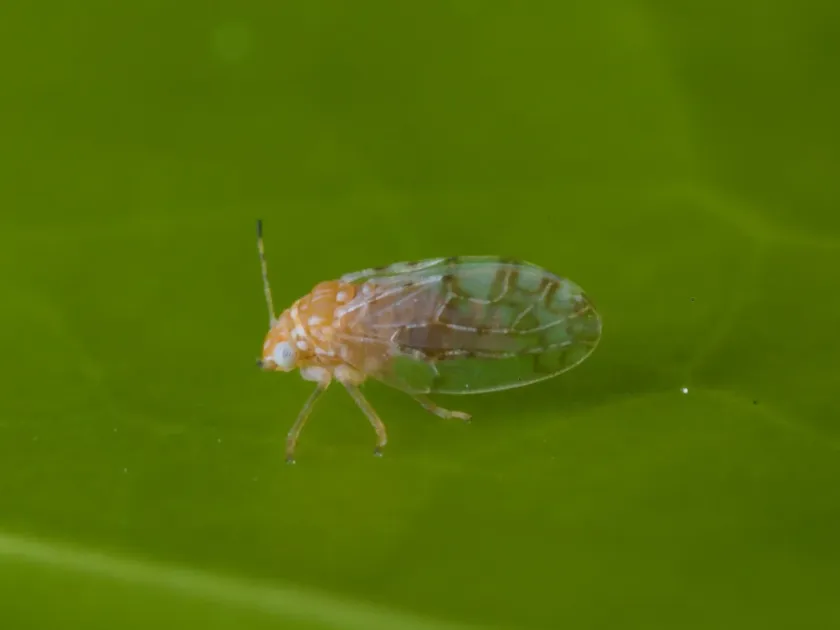
Description
How to identify
The pistachio psyllid (genus Agonoscena) belongs to the Psyllidae family. These insects are small, sap-sucking pests commonly known as jumping plant lice due to their powerful hind legs.
Adults typically measure 2–3 mm in length. Their coloration varies from pale yellow to brownish, allowing them to blend in with the foliage and bark of their host plants.
The life cycle involves an egg stage, five nymphal instars, and the adult stage. Nymphs are characterized by their sedentary lifestyle and the production of waxy secretions for protection.
Pistachio psyllids generally overwinter as adults in protected areas such as bark crevices, leaf litter, or debris within or near the orchard, emerging in early spring as temperatures rise.
The pest produces multiple generations per season. Under favorable conditions, the population can increase rapidly, leading to significant outbreaks in orchards during the mid-summer period.
What it damages
These insects are specialized pests of the Pistacia genus. By piercing the plant tissues and feeding on sap, they drain the tree of vital nutrients needed for healthy growth and development.
Damage symptoms include leaf curling, deformation, and chlorosis. Heavy infestations cause leaves to yellow and drop prematurely, which significantly hampers the tree's photosynthetic capacity.
A major indirect problem is the production of honeydew, which promotes the growth of sooty mold. This layer of mold blocks sunlight and creates a sticky, unsightly mess on leaves and fruit.
Infested trees show reduced vigor, stunted shoot growth, and a decrease in fruit yield and quality. Over time, recurring damage can weaken the tree, making it susceptible to other diseases.
Economic losses arise from both direct reduction in harvest quantity and the cost of repeated pesticide applications required to manage the pest effectively throughout the growing season.
Signs of infestation
Visible signs of infestation often begin with sticky, glistening droplets on the leaves, followed by the appearance of dark, powdery patches of sooty mold.
Leaf curling and the formation of distorted, tight rolls are typical responses to the feeding activity. Closely inspecting the undersides of these curled leaves usually reveals clusters of nymphs.
The presence of white, cotton-like waxy secretions on shoots or leaves is a reliable diagnostic feature indicating the presence of the psyllid colonies at various developmental stages.
If you shake a branch, you might observe a sudden flurry of small, winged adults taking flight. This behavior is a clear indicator that the population density is high enough to warrant action.
A decline in the growth rate of new terminal shoots and general lack of vitality in the canopy are strong indicators that the psyllid is impacting the tree's health.
Control measures
Chemical control involves applying insecticides during the peak activity periods. It is crucial to use systemic products to reach nymphs protected by their waxy coverings or curled leaves.
Integrated Pest Management (IPM) strategies emphasize the preservation of natural enemies such as ladybeetles, lacewings, and parasitic wasps, which can significantly reduce psyllid populations.
Proper orchard sanitation is essential. Removing weeds and clearing crop debris minimizes overwintering sites, which helps lower the initial pest population density for the following season.
Monitoring using yellow sticky traps or pheromone lures helps growers track psyllid activity, ensuring that pesticide treatments are timed correctly to maximize efficacy and minimize environmental impact.
- Regular monitoring of the canopy from early spring onwards.
- Pruning of heavily infested or weakened branches to improve airflow.
- Application of horticultural oils to suppress egg and nymph survival.
Taxonomy
- Latin name
- Agonoscena
- Order
- Hemiptera (bugs, aphids, leafhoppers)
- Family
- Aphalaridae
- EPPO code
- AGONSP
Discussion
No discussions yet — be the first.