
Eucalyptus psyllid
Spondyliaspis bancrofti
Description
How to identify
The Eucalyptus psyllid Spondyliaspis bancrofti is a small insect belonging to the order Hemiptera and the family Psyllidae, known for being a specialized pest of eucalyptus trees.
Adult psyllids are characterized by their jumping ability due to well-developed hind legs. They usually possess a light brown or yellowish hue, allowing them to blend into the tree's bark and foliage.
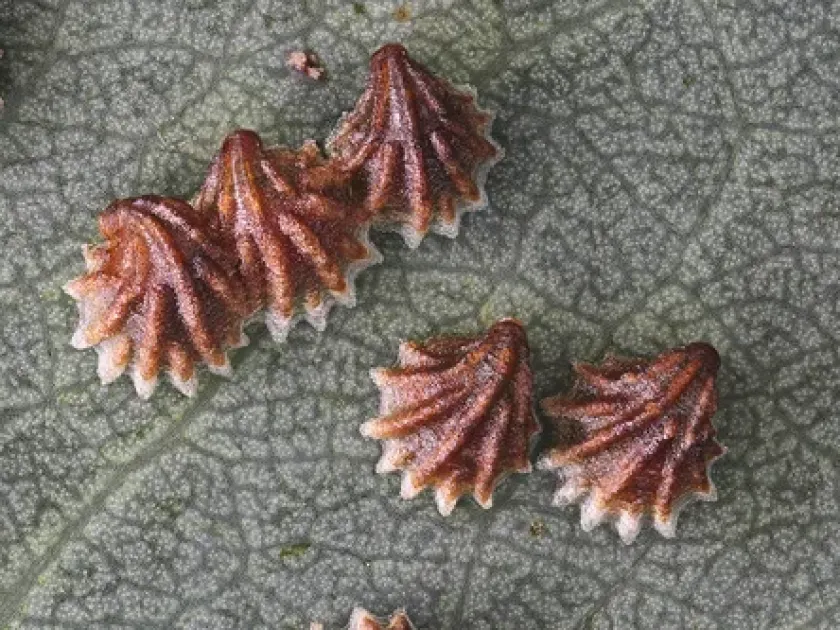
The nymphs are sedentary and create unique, protective coverings known as lerps. These white or transparent shield-like structures protect the immature insects from predators and dehydration.
The lifecycle consists of egg, nymph, and adult stages. Females typically deposit their eggs directly onto the tender tissues of new eucalyptus leaves or shoots.
Identification is primarily based on the morphology of the lerps, which feature specific patterns that distinguish Spondyliaspis bancrofti from other psyllid species found on the same host plants.
What it damages
The primary hosts for this pest are species within the Eucalyptus genus. The insect prefers young, succulent growth, which provides the most nutrient-dense sap for development.
Both adults and nymphs feed by inserting their piercing-sucking mouthparts into plant tissues. This constant extraction of sap weakens the tree significantly and stunts its vertical growth.
Heavy infestations lead to widespread leaf yellowing and premature abscission. This defoliation reduces the tree's ability to perform photosynthesis, directly impacting its energy reserves.
Feeding sites often create pathways for secondary pathogens. The wounds left by the insects can lead to localized necrosis or increase susceptibility to various fungal infections.
In forestry and plantation settings, the economic impact is substantial, resulting in reduced timber quality and a decrease in the production of valuable eucalyptus oils.
Signs of infestation
The most visible sign of an infestation is the presence of white, wax-like lerps on the surfaces of leaves, which resemble small, protective shells or flakes.
A second characteristic sign is the accumulation of honeydew, a sugary substance excreted by the psyllids. This deposit often supports the growth of sooty mold, appearing as black patches on foliage.
Leaf curling, deformation of young shoots, and general chlorosis are common indicators that a colony of psyllids has established itself on the tree.
Disturbing the branches will often reveal the presence of adult psyllids, which scatter rapidly by jumping or flying away from the point of impact.
Advanced signs of severe infestation include thinning of the canopy and visible decline, especially in the younger upper sections of the tree where feeding is most intense.
Control measures
Systemic insecticides are generally the most effective way to manage heavy outbreaks. These chemicals are absorbed by the plant and kill the insects as they feed on the sap.
Biological control methods are highly encouraged, as native parasitoid wasps and predator bugs often provide natural suppression of psyllid populations in stable ecosystems.
Good silvicultural practices, including proper irrigation and soil nutrient management, help trees withstand feeding pressure and maintain their natural defensive capabilities.
Sanitary pruning and the removal of heavily infested branches can help lower the overall pest load and protect the rest of the tree or surrounding plantation.
- Application of horticultural oils to smother nymphs under their lerps.
- Monitoring population trends using yellow sticky traps in the canopy.
- Preserving native beneficial insect habitats to foster natural control.
Taxonomy
- Latin name
- Spondyliaspis bancrofti
- Order
- Hemiptera (bugs, aphids, leafhoppers)
- Family
- Aphalaridae
- EPPO code
- SPNDBA
Discussion
No discussions yet — be the first.