
Eucalyptus psyllid
Spondyliaspis
Description
How to identify
The Eucalyptus psyllid (genus Spondyliaspis) belongs to the order Hemiptera and the family Psyllidae. These are tiny, jumping insects that resemble miniature cicadas, equipped with strong hind legs adapted for leaping.
Adults range in color from pale yellow to brown, often displaying a distinctive wing pattern. Unlike the mobile adults, nymphs are sedentary and typically remain hidden under protective wax-like structures called lerps.
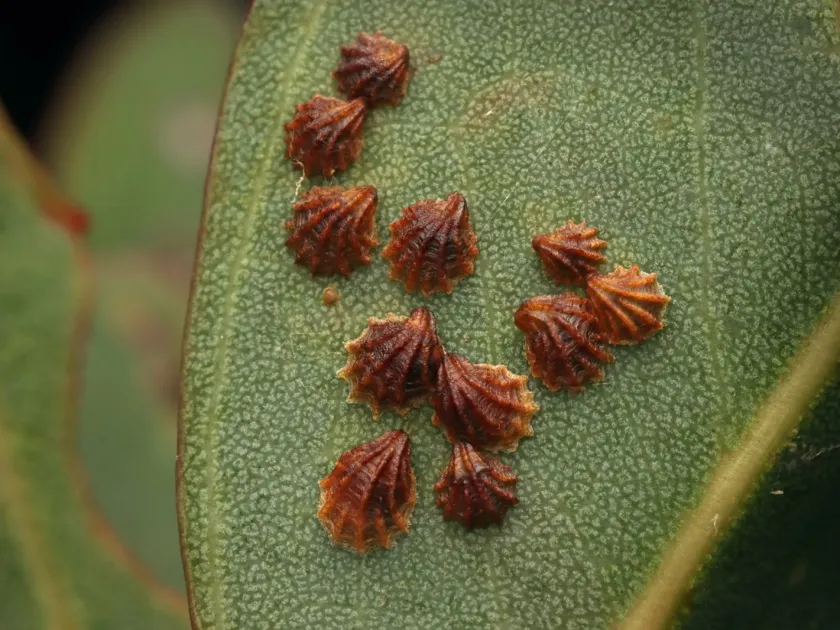
A primary diagnostic feature is the secretion produced by the nymphs, which hardens into a white or cream-colored dome. This dome is tightly attached to the leaf surface, serving as a shield against predators and desiccation.
The life cycle includes the egg stage, five nymphal instars, and the adult stage. Females lay their eggs directly on young leaves or shoots, ensuring immediate access to food upon hatching.
The development rate of the psyllid is highly temperature-dependent. Under optimal environmental conditions, the generation cycle can be completed in a few weeks, leading to explosive population growth.
What it damages
Eucalyptus psyllids specifically feed on various Eucalyptus species, showing a strong preference for young, succulent leaves that contain higher concentrations of sap.
In the absence of natural predators or during environmental stress, these insects can infest entire groves, causing severe damage to both ornamental landscaping and commercial forestry plantations.
Damage is caused by both nymphs and adults piercing leaf tissues to extract sap. This feeding process drains the tree's energy reserves and causes significant physiological stress.
Heavy infestations lead to premature leaf drop, stunted shoot growth, and the death of terminal buds. Persistent damage reduces the overall aesthetic appeal and vigor of the host trees.
- Yellowing and necrosis of leaves
- Reduced growth rates in wood production
- Loss of leaf turgor
- Massive colony proliferation
- Development of sooty mold on honeydew
When it appears
Psyllid activity typically peaks during the warm seasons when eucalyptus trees are in their active growth phase. These periods provide the most favorable conditions for insect reproduction and feeding.
In regions with mild climates, the pest can remain active year-round unless temperatures drop significantly enough to slow down the insect's metabolism.
The most severe damage often occurs during hot and dry spells, as water-stressed trees are more susceptible to attack and the populations of natural biological control agents are limited.
Monitoring is effectively conducted using yellow sticky traps to detect the flight of adult psyllids, which helps in timing necessary insecticide applications.
During the cooler months, activity levels drop, and adults may survive in sheltered areas, such as bark crevices or within the dense inner canopy of the tree.
Signs of infestation
The most visible indicator of an infestation is the presence of white or grayish lerps on the underside of leaves. These look like small, wax-like scales covering the developing nymphs.
Another sign is the appearance of honeydew, a sticky substance secreted by the insects. This coating often promotes the growth of black sooty mold on the foliage surface.
Infested leaves often curl, exhibit chlorotic spotting, and look generally unhealthy. Shaking the branches often triggers a mass movement of adult psyllids.
Early identification is crucial but difficult; therefore, regular inspections of young growth should be performed every 7–10 days during the primary growing season.
Over time, severely infested trees will show thinning foliage, as leaves yellow and drop prematurely due to the constant sap-sucking pressure.
Control measures
Biological control is the most sustainable approach, involving the introduction of specialized parasitoids, such as those from the Encyrtidae family, which naturally suppress psyllid populations.
In situations requiring chemical intervention, systemic insecticides are preferred. These are absorbed by the plant tissues and provide long-lasting control against sap-sucking pests.
Application should ideally occur during the early morning or evening. Thorough coverage of both sides of the leaves is essential to ensure the chemicals reach the nymphs sheltered under their lerps.
Horticultural or mineral oils can be used as an additional measure to physically block the spiracles of the insects, effectively suffocating them.
Good cultural practices, including adequate watering and pruning of heavily infested branches, help maintain tree health and reduce the overall pest pressure on the site.
Taxonomy
- Latin name
- Spondyliaspis
- Order
- Hemiptera (bugs, aphids, leafhoppers)
- Family
- Aphalaridae
- EPPO code
- SPNDSP
Discussion
No discussions yet — be the first.