
Rabbit flea
Spilopsyllus cuniculi
Description
How to identify
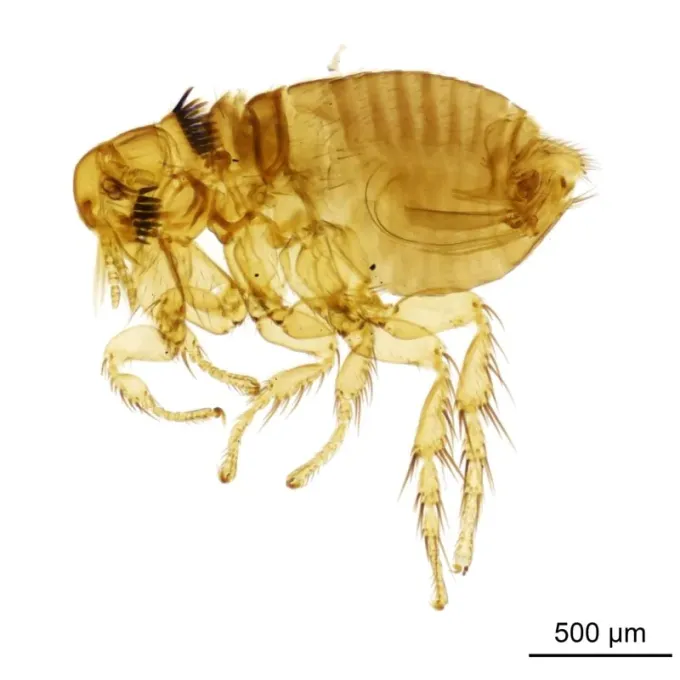
The rabbit flea (Spilopsyllus cuniculi) belongs to the order Siphonaptera and family Pulicidae. It is a specialized ectoparasite that primarily infests rabbits.
These insects have laterally compressed bodies and strong, chitinous bristles that help them navigate through thick fur. They are typically dark brown in color.
Their mouthparts are modified for piercing and sucking blood from the host. They are equipped with powerful hind legs designed for jumping between hosts.
The life cycle is uniquely synchronized with the hormonal cycles of the rabbit. Reproduction is triggered specifically by the presence of a pregnant doe.
This biological adaptation ensures that flea larvae are born in the nest when the kittens are present, providing a stable food source.
What it damages
The direct damage caused by rabbit fleas includes severe irritation and anemia due to blood feeding, leading to decreased growth rates in young rabbits.
They are notorious for being the primary vectors of Myxomatosis and Rabbit Hemorrhagic Disease (RHD), both of which can devastate entire farm populations.
The constant biting causes allergic dermatitis and stress, which compromises the animal's immune system and overall productivity.
Infested rabbits show signs of excessive scratching and self-mutilation, leading to damaged skin and reduced quality of fur/pelts.
In large-scale operations, failure to control these fleas can lead to significant economic losses and increased mortality rates among the stock.
When it appears
The activity of the rabbit flea is highly dependent on environmental temperature and the breeding season of the rabbit host.
In outdoor environments, flea activity peaks during the spring and summer months when rabbits typically breed and build nests.
Indoor rabbitries provide a stable environment, allowing fleas to maintain active life cycles throughout the year regardless of seasonal changes.
Flea pupae can remain dormant in the environment for weeks or months, waiting for the stimulus of a potential host to emerge.
Warm and humid conditions accelerate the development of larvae and pupae, leading to larger population outbreaks during specific times of the year.
Signs of infestation
Visible signs of infestation include intense scratching, particularly around the ears, head, and neck regions where fleas congregate.
An examination of the rabbit's skin often reveals the presence of small, dark, granular feces, often referred to as "flea dirt."
Physical inspection of the animal, especially near the ear base and eyes, allows for the direct observation of the parasites crawling on the skin.
Restlessness and irritability in rabbits, especially at night, are common behavioral indicators of a flea burden.
Crusting, scabbing, or localized inflammation on the pinnae (ears) is a frequent manifestation of flea infestation and should be inspected carefully.
Control measures
Effective control requires a multi-pronged approach, including the application of approved topical parasiticides to the rabbits themselves.
Strict environmental sanitation is crucial, involving regular cleaning of bedding, cages, and floors to eliminate flea eggs and larvae.
Routine veterinary monitoring and the use of preventative treatments are essential for protecting herds against flea-borne viruses.
Biosecurity measures should be implemented to prevent wild rabbits or rodents from entering the farm premises and introducing fleas.
- Apply veterinarian-recommended anti-flea treatments.
- Thoroughly sanitize cages and nesting boxes.
- Quarantine new animals before introduction.
- Vaccinate against Myxomatosis and RHD.
Taxonomy
- Latin name
- Spilopsyllus cuniculi
- Family
- Pulicidae
- EPPO code
- SPLPCU
Discussion
No discussions yet — be the first.