
Sphex rufocinctus
Sphex rufocinctus
Description
How to identify
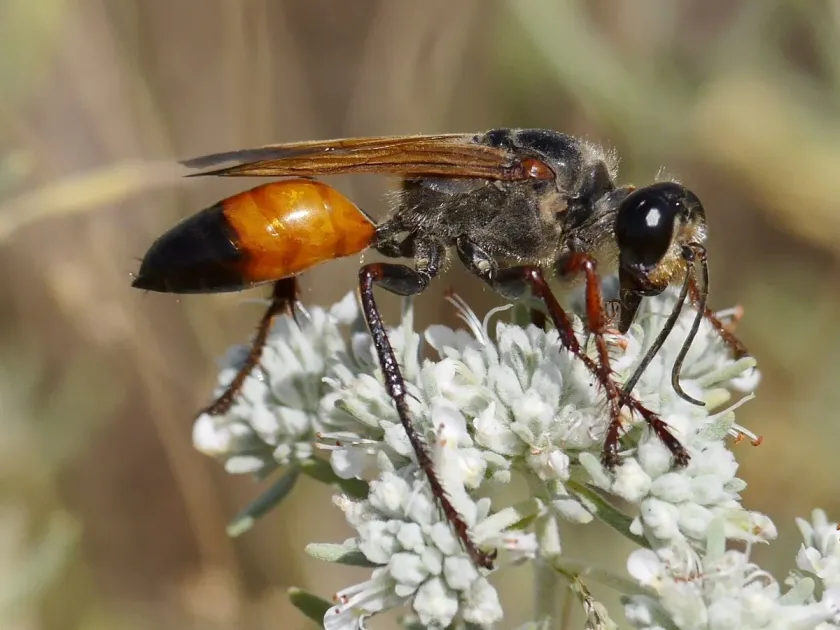
Sphex rufocinctus, commonly known as a type of digger wasp, is a large insect of the family Sphecidae, reaching lengths of up to 25 mm.
The wasp features a black body with a distinctive reddish-orange band on the abdomen, which makes it easy to identify in the field.
They are equipped with robust mandibles and strong legs specifically adapted for excavating deep burrows in sandy or loose soil conditions.
Unlike social wasps, Sphex rufocinctus leads a solitary lifestyle, with each female constructing her own individual nesting chamber.
These insects prefer warm, sun-exposed areas for their nesting sites, often occupying open ground near gardens and agricultural fields.
What it damages
While Sphex rufocinctus is primarily an entomophagous insect, its digging activities can cause indirect damage to cultivated plants.
The construction of numerous deep burrows in the root zone can mechanically damage the root systems of young seedlings, leading to plant stress.
By constantly loosening the topsoil, these wasps contribute to moisture loss around the roots, which is detrimental to plant growth in dry weather.
Their intense activity in greenhouses or nurseries can be problematic, interfering with soil integrity and the development of delicate root structures.
In large-scale farming, while they are not direct crop consumers, their nesting behavior requires attention to maintain optimal soil stability.
When it appears
The life cycle of this wasp is closely tied to the summer months, with activity peaking from late June through August.
During this period, females are actively engaged in digging nests, hunting, and provisioning their chambers for the next generation.
They are most active during the warmest hours of the day, as high soil temperatures are necessary for the successful incubation of their larvae.
As the season progresses toward autumn, the adult wasps die off, leaving the larvae to overwinter safely within their underground cells.
Understanding this seasonal timing is critical for implementing preventive measures before the nesting season reaches its peak intensity.
Signs of infestation
The most prominent sign of their presence is the appearance of numerous small, round entrance holes scattered across the soil surface.
Small mounds of loose, excavated soil surrounding these holes are typical indicators of an active nest being constructed by the female.
Gardeners may observe the wasps flying low over the ground, often carrying prey, accompanied by a distinct buzzing sound.
Sudden wilting of seedlings in a localized area can suggest that their root systems have been disturbed by burrowing activity nearby.
Regular visual inspections of the soil, especially in sandy areas of the plot, will reveal the nesting density of this species.
Control measures
Deep cultivation or tilling of the soil is one of the most effective mechanical methods to disrupt the nesting tunnels of these wasps.
Applying a thick layer of mulch or using landscape fabric creates an unattractive surface for the wasps, preventing them from starting their burrows.
Maintaining high soil moisture through consistent, early-morning irrigation makes the ground harder to excavate for the wasps.
In greenhouse environments, installing fine mesh screens on vents and windows is essential to keep the wasps from entering the facility.
- Deep soil tilling;
- Surface mulching;
- Consistent moisture management;
- Installation of protective netting.
Taxonomy
- Latin name
- Sphex rufocinctus
- Order
- Hymenoptera
- Family
- Sphecidae
- EPPO code
- SPEXRU
Discussion
No discussions yet — be the first.