
Ammophila heydeni
Ammophila heydeni
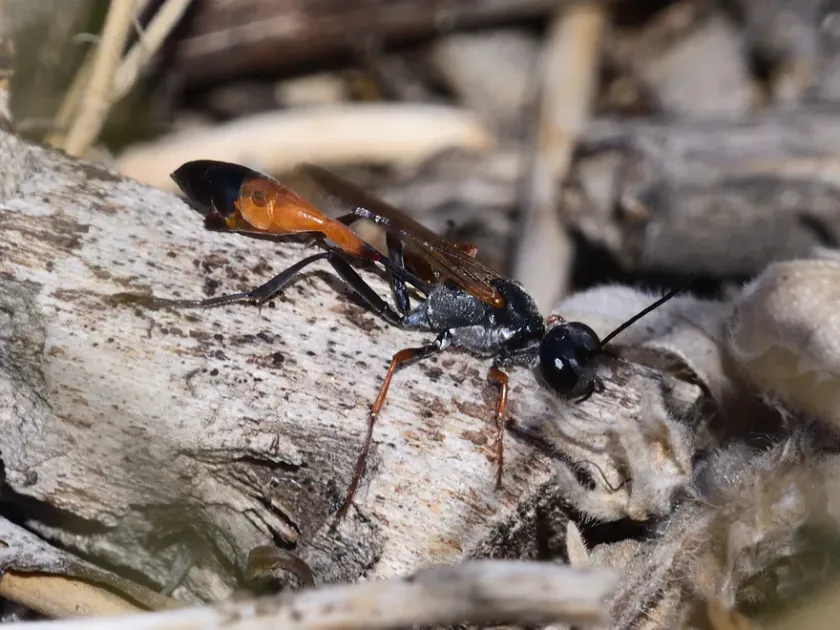
Description
How to identify
Ammophila heydeni belongs to the family Sphecidae, commonly known as digger wasps. This species is characterized by a distinctive, slender body and a long, petiolate abdomen, which is a hallmark of the genus Ammophila.
Adult wasps typically measure between 15 and 25 mm in length. Their bodies are predominantly black, often featuring orange or reddish coloration on segments of the abdomen. The wings are clear with subtle dark margins.
These wasps are solitary insects that specialize in excavating deep burrows in sandy or loose soil. They rely on these underground cavities for nesting and rearing their larvae throughout the season.
Although they are primarily entomophagous, their nesting behavior can interfere with soil structure. Their ability to move significant amounts of soil makes them a species of interest in agricultural soil management.
The larval stage is spent entirely underground within these prepared cells, where the wasp provides prey for its developing young, ensuring the continuation of the species throughout the warmer months.
What it damages
The primary concern regarding Ammophila heydeni in agricultural settings is the mechanical disturbance of the soil, which can indirectly harm the root systems of developing crop seedlings.
In sandy fields, the high density of wasp burrows can compromise the soil integrity surrounding young roots. This disturbance often leads to dehydration of the plant's root system, especially during dry spells.
Mechanical root damage creates entry points for various soil-borne pathogens. This vulnerability can lead to secondary fungal infections, causing plant wilting and stunted development across the affected rows.
While these wasps are not direct plant feeders, their presence in high numbers can negatively impact the overall crop stand, particularly for crops that are sensitive to root-zone disturbances.
The cumulative effect of burrowing activities can lead to localized yield reduction, as plants struggle to maintain nutrient uptake in soil that has been extensively perforated.
When it appears
The active season for Ammophila heydeni begins in late spring, as soon as the soil temperatures rise sufficiently to allow for burrowing and adult flight activity.
Peak activity typically occurs during June and July. During this timeframe, females are intensely occupied with site selection and the construction of their underground brood chambers.
The species follows an annual lifecycle. They overwinter in the prepupal stage deep within the soil, which allows the population to remain stable despite fluctuating winter conditions.
The emergence of the adult generation in early spring corresponds with the critical growth stages of many crops, making it a period requiring increased vigilance from agronomists.
By the end of August, adult activity declines significantly as the species prepares for its winter dormancy, aligning with the late stages of the agricultural growing season.
Signs of infestation
Identifying the presence of this wasp involves looking for small, round entrance holes in the soil, usually accompanied by a small mound of displaced dirt at the burrow opening.
Plants located in the immediate vicinity of these nests may show signs of stress, such as yellowing or wilting, resulting from the compromise of their root connections to the soil matrix.
- Visible adult wasps hovering or landing on bare soil surfaces.
- Small, crater-like holes in the ground measuring about 5-7 mm in diameter.
- Patches of stunted or uneven crop growth in sandy soil areas.
- Secondary root rot symptoms in seedlings despite adequate irrigation.
A closer inspection of the top layer of soil can reveal the presence of sealed larval cells, confirming that the site is being used for reproductive purposes by the wasps.
During dry periods, signs of infestation become more apparent as plants adjacent to burrows wilt faster than those in undisturbed soil areas due to the loss of moisture contact.
Control measures
Effective management against Ammophila heydeni is primarily achieved through agronomic practices designed to maintain soil compactness and prevent favorable nesting conditions.
Regular cultivation and harrowing of field edges and inter-rows can disrupt nesting sites, making it difficult for the wasps to establish long-term burrows in the cultivated soil.
Soil compaction techniques, such as rolling fields after seeding, are highly effective in discouraging these wasps from selecting a particular area for their subterranean nests.
The use of mulching materials can act as a physical barrier, deterring wasps from accessing the soil directly and reducing the likelihood of nest construction near crop roots.
Chemical control is rarely recommended or necessary. Focusing on soil health, consistent weed management, and mechanical soil preparation is usually sufficient to mitigate the impact of this species.
Taxonomy
- Latin name
- Ammophila heydeni
- Order
- Hymenoptera
- Family
- Sphecidae
- EPPO code
- AMMPHE
Discussion
No discussions yet — be the first.