
Spercheus emarginatus
Spercheus emarginatus
Description
How to identify
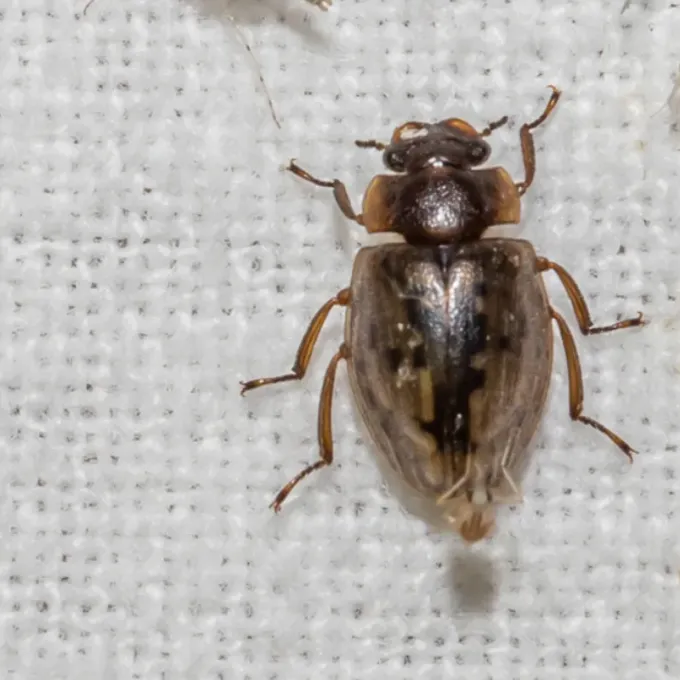
Spercheus emarginatus is a beetle species belonging to the family Spercheidae, within the order Coleoptera. It is uniquely adapted to aquatic environments.
The adult beetle is relatively small, measuring approximately 5–6 mm in length. A key identification feature is the distinct notch on the pronotum, from which its specific name is derived.
Its coloration is typically brownish with dark mottling, providing excellent camouflage against aquatic vegetation and submerged organic debris.
The larvae are entirely aquatic and possess specialized mouthparts used for grazing on the surface of plant tissues, which is their primary feeding method.
These insects prefer stagnant or slow-moving water bodies, where they live among floating or emergent plants throughout their active life stages.
What it damages
This beetle primarily affects aquatic and semi-aquatic plants, particularly those cultivated in wetlands or managed water systems like rice paddies.
Both adults and larvae feed by scraping or consuming epidermal tissues of leaves and stems, resulting in unsightly holes and significant thinning of the plant tissue.
The damage disrupts the plant's photosynthetic ability, which can lead to stunted growth and, in severe cases, the death of young, delicate plant shoots.
Injured tissues often provide entry points for pathogens, facilitating the spread of various plant diseases that further complicate the health of the crop.
While damage is often localized, high population densities in controlled environments can lead to significant aesthetic and economic losses for growers.
When it appears
The life cycle of Spercheus emarginatus is strictly correlated with water temperature, with activity commencing as the water warms during the spring months.
Peak population activity usually occurs during the warm summer months, providing optimal conditions for reproduction and the development of the larvae.
As water temperatures drop in the autumn, the beetles enter a dormant state, seeking refuge in bottom sediments or among plant residues to survive the winter.
Environmental factors, such as water depth and flow rates, play a critical role in the insect's ability to thrive and migrate between different habitats.
Adult beetles are capable of flight, allowing them to locate new feeding grounds if the current environment becomes unsuitable or food resources are depleted.
Signs of infestation
The most prominent sign of infestation is the presence of small, irregular holes on the leaves, specifically those found near or at the water surface.
Detailed inspections of the plant stems and the undersides of floating leaves often reveal the presence of larvae, which may be camouflaged by debris.
The progressive yellowing and necrosis of damaged leaves are common indicators that the plant is undergoing stress due to the feeding activity of the pest.
Disturbance of the water near infested plants will often cause the adult beetles to surface briefly or take flight, making their presence detectable.
Consistent patterns of foliage loss along the edge of a water body are strong indicators of an established population of these beetles.
Control measures
Cultural control is the most effective approach, focusing on the regular cleaning of irrigation channels and the removal of excessive aquatic weeds.
Maintaining a balanced ecosystem that supports natural predators of the beetle can significantly help in suppressing the pest population below economic levels.
Water level management, such as temporary draining or fluctuating levels in controlled systems, can disrupt the beetle's life cycle and reduce its numbers.
Chemical intervention should be considered a last resort, utilizing only products that are safe for aquatic environments to avoid harming non-target species.
Routine monitoring and early detection of the first signs of feeding are essential to prevent localized infestations from spreading across larger areas.
Taxonomy
- Latin name
- Spercheus emarginatus
- Order
- Coleoptera (beetles)
- Family
- Hydrophilidae
- EPPO code
- SPCHEM
Discussion
No discussions yet — be the first.