
Helophorus nubilus
Helophorus nubilus
Description
How to identify
Helophorus nubilus is a beetle belonging to the family Hydrophilidae. Although many members of this family are aquatic, this specific species is primarily terrestrial, often found in agricultural fields throughout the spring season.
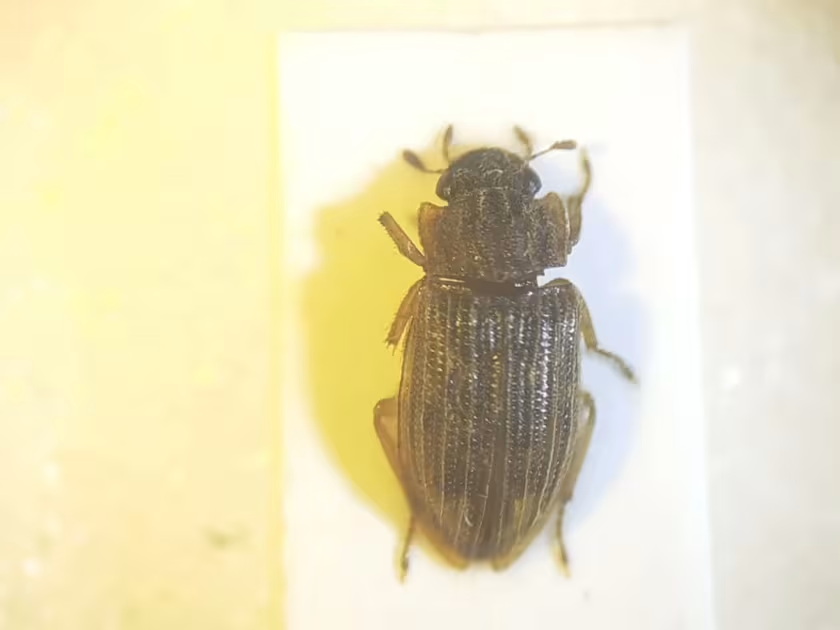
The adult beetle is small, typically measuring between 3 and 4 millimeters in length. Its body color ranges from yellowish-brown to dark brown, often with a dull appearance that provides excellent camouflage against soil particles.
A key diagnostic feature is the pronotum, which features three distinct longitudinal grooves. The elytra possess longitudinal rows of punctures, which are characteristic of this species and help agronomists distinguish it from other soil-dwelling beetles.
The larvae are elongated and have a robust chewing mouthpart. They reside in the topsoil and are well-adapted to feeding on plant matter, including decomposing organic material and the soft tissues of germinating seeds.
Adult beetles are capable of flight, allowing them to disperse quickly across fields. They overwinter in the soil or under debris, emerging as soon as the ground warms up sufficiently to begin their spring feeding cycle.
What it damages
This species is recognized as a pest primarily for cereal crops, including winter wheat, rye, and barley. The most critical period of damage occurs during the early spring when crops are emerging or are in the tillering stage.
Adults feed on the germinating seeds and the base of the young stems, specifically the tillering node. This physical destruction interrupts the plant's ability to transport nutrients, leading to yellowing and plant decline.
Larvae contribute to the damage by feeding on root systems. When population densities are high, this can cause significant thinning of the crop stand, leaving large patches of empty soil where seedlings have failed to thrive.
Plants weakened by this pest become highly susceptible to secondary infections, such as root rot pathogens. This often makes the diagnosis difficult, as the primary cause of damage—the insect—may be overlooked in favor of fungal symptoms.
The economic impact is primarily related to the reduction in plant density. A severely thinned crop leads to lower yield potential and can necessitate costly replanting if the damage exceeds the economic threshold.
When it appears
The activity of Helophorus nubilus is closely linked to spring temperatures. Emergence from hibernation occurs once soil temperatures reach a threshold, usually starting around 5 to 8 degrees Celsius.
The peak period of damage coincides with the germination and early seedling growth of cereal crops. During this time, the lack of alternative food sources makes the succulent tissues of young grain crops highly attractive to the pest.
As the cereal crop enters the rapid tillering and stem elongation phases, its tissues become tougher and less appealing. The beetle then transitions to feeding on other available vegetation or weeds present in the field margins.
The life cycle is typically univoltine, but local outbreaks can occur under favorable conditions, such as high soil moisture and mild spring weather, which support larval development.
By late spring and early summer, the beetles become less active. They retreat into the soil to seek shelter from the heat and prepare for the next generation's overwintering period.
Signs of infestation
The first indicator of an infestation is often irregular crop emergence or the presence of withered, yellowing seedlings. Scouting these areas often reveals chewed seeds or partially consumed plant bases.
If you examine the soil around the base of affected plants, you may find the beetles themselves or their larvae. The damage to the stems typically looks jagged or frayed due to the insect's chewing action.
- Patches of sparse or dead seedlings within the field.
- Small, irregular exit holes or entry points at the plant base.
- Poor vigor of the crop compared to healthy surrounding plants.
- Visible larvae in soil samples taken near the root zone.
To confirm the presence of the pest, digging soil pits in affected areas is the most reliable method. Sampling the top 10 centimeters of soil provides a clear picture of population density.
It is important to differentiate between insect damage and other factors like nutrient deficiencies or drought. Close inspection of the seedling's root and stem is crucial for an accurate assessment.
Control measures
Effective management begins with sound agronomic practices. Post-harvest tillage helps disrupt the overwintering sites of the beetles, effectively reducing the population available to attack the next season's crop.
Planting at the optimal time for the region allows the crop to establish quickly. Vigorous seedlings are much more resilient to pest attacks and can often recover from minor damage to the tillering node.
Balanced fertilization, particularly phosphorus and potassium, encourages stronger root development. This gives the plant a better chance to compensate for localized damage caused by the larvae.
Seed treatment with systemic insecticides is the most effective proactive measure. This protection creates a chemical barrier around the seed and sprout, neutralizing the threat during the most sensitive early growth phases.
In cases of high infestation, foliar insecticides may be applied. These should be timed carefully based on the growth stage of the crop and the economic threshold observed in the field during regular scouting.
Taxonomy
- Latin name
- Helophorus nubilus
- Order
- Coleoptera (beetles)
- Family
- Hydrophilidae
- EPPO code
- HELPNU
Discussion
No discussions yet — be the first.