
Helophorus micans
Helophorus micans
Description
How to identify
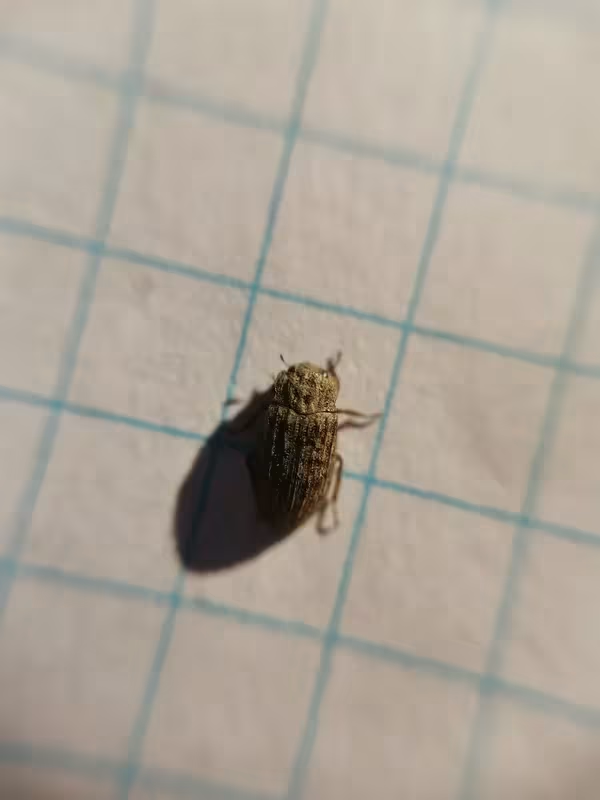
Helophorus micans is a small beetle belonging to the family Hydrophilidae, commonly known as the water scavenger beetles, within the order Coleoptera.
Adult beetles typically measure between 3 to 4 millimeters in length. Their coloration is usually dark brown or bronzy, often displaying a distinct metallic luster on the dorsal side.
The pronotum and elytra feature longitudinal grooves, which are diagnostic characteristics used by entomologists to distinguish this species from other closely related beetles.
The larvae are vermiform and are primarily adapted to life in moist environments, often found in damp soil or near the root systems of wetland plants or agricultural crops.
These beetles are moisture-dependent, which influences their distribution; they are most commonly encountered in low-lying areas, near bodies of water, or in poorly drained agricultural fields.
What it damages
Helophorus micans is known to feed on cereal crops, including winter and spring wheat and barley, primarily attacking them during the early stages of development.
Damage is caused by both adults and larvae. Adult beetles use their mandibles to feed on leaves and young stems, creating holes and notches that weaken the plant structure.
Larval feeding on roots and tillering nodes can cause significant stress to young seedlings, often resulting in stunted growth or plant death when infestations are heavy.
The damage is frequently localized, concentrating on wetter patches within a field where the beetles find the necessary conditions to thrive and reproduce.
While often considered a minor pest, high populations can cause substantial thinning of the crop stand, necessitating active monitoring during the germination phase.
When it appears
The life cycle activity begins in early spring, as rising temperatures and increasing soil moisture stimulate adults to emerge from their overwintering sites.
The most critical window for crop protection is the germination and early seedling stage, when the plants lack the vigor to withstand significant foliage loss.
During the summer months, the population continues to develop. Activity levels may fluctuate based on rainfall, as dry conditions are generally unfavorable for this moisture-loving species.
As autumn approaches, the beetles seek refuge in the soil or under organic debris to survive the winter temperatures until the following spring.
Scouting should be prioritized during early spring in areas with high soil moisture, as these spots are the most likely targets for early-season infestations.
Signs of infestation
Early symptoms of an infestation include the appearance of irregular holes on the leaves of cereal crops, often found in patches corresponding to soil moisture variations.
Missing plants or uneven emergence in damp low-lying areas often indicate that larvae have damaged the roots or seeds before or shortly after germination.
Wilting of seedlings without obvious foliar disease symptoms is a common indicator of root damage caused by soil-dwelling stages of the beetle.
Visual observation of the soil surface during cool, damp mornings can reveal the presence of adult beetles, which are more active when humidity levels are higher.
Field inspections should focus on low areas of the field, where the signs of leaf damage or seedling loss will be most apparent compared to well-drained sections.
Control measures
Effective management of Helophorus micans requires an integrated approach focusing on improving field conditions and using chemical controls when thresholds are exceeded.
- Implementing proper soil tillage to disrupt the beetle's overwintering habitat.
- Practicing crop rotation to break the cycle of pest colonization in the same field.
- Improving field drainage to reduce the attractiveness of low-lying areas to moisture-loving pests.
- Using insecticidal seed treatments to protect young seedlings during the initial phase of development.
In cases of severe infestation, foliar applications of authorized insecticides may be necessary to protect the crop stand from further damage by adult populations.
Regular monitoring of moisture-prone field sections is essential to ensure that control measures are implemented precisely when the threat to the crop is highest.
Taxonomy
- Latin name
- Helophorus micans
- Order
- Coleoptera (beetles)
- Family
- Hydrophilidae
- EPPO code
- HELPMA
Discussion
No discussions yet — be the first.