
Enochrus testaceus
Enochrus testaceus
Description
How to identify
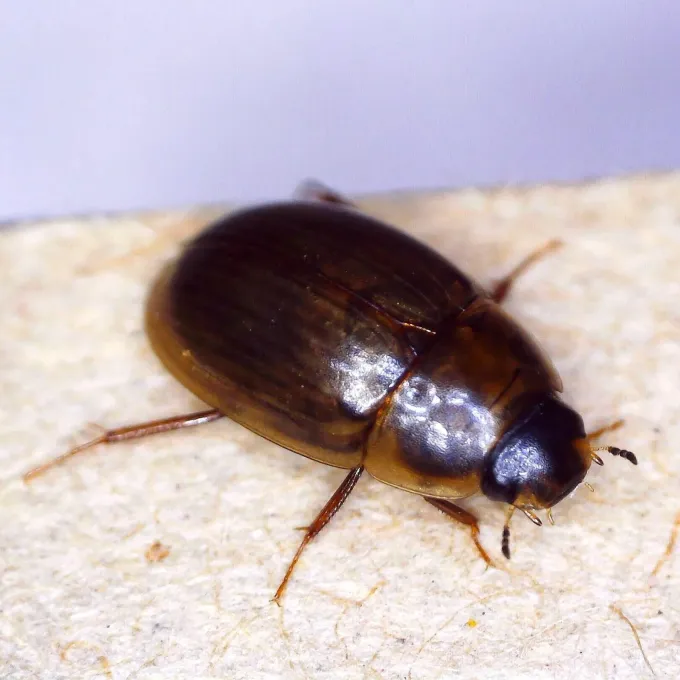
Enochrus testaceus is a beetle species belonging to the family Hydrophilidae, the water scavenger beetles. Adults are typically 4–6 mm long and possess a distinct reddish-brown oval body.
These beetles are primarily aquatic, inhabiting stagnant water bodies and flooded agricultural lands such as rice paddies. Their morphology is well-adapted for swimming, with a specialized underside covered in hydrophobic hairs.
The larvae are distinct in appearance and behavior; they have elongated, soft bodies and are generally predatory or feed on decomposing organic matter, though they can occasionally harm live vegetation.
They undergo a complete life cycle comprising egg, larva, pupa, and adult stages. Females attach their egg cases to submerged vegetation to ensure the safety of the developing offspring.
The beetles breathe by breaking the surface tension of the water to trap an air bubble, which is then stored beneath their elytra for submerged respiration.
What it damages
The pest primarily causes damage to crops grown in flooded conditions, particularly young rice plants where both larvae and adults can feed on tissues.
By grazing on the epidermis of stems and submerged leaves, the pest compromises the plant's structural integrity and nutrient uptake efficiency.
Significant infestations can lead to retarded growth and increased susceptibility to secondary infections, ultimately reducing the plant's vigor and total biomass.
Damage is often most severe in the early stages of crop development, when plants are highly sensitive to tissue loss and physical disturbance.
While often considered a secondary pest, under optimal breeding conditions, populations can surge, causing localized but economically significant damage to the crop stand.
When it appears
Activity begins in late spring as water temperatures rise, triggering the emergence of overwintering adults and the commencement of the breeding season.
The period of maximum damage usually correlates with the active growth phase of the crop, extending through the summer months as generations succeed one another.
As autumn approaches and temperatures drop, the beetles seek refuge in the silt or among dense aquatic vegetation to enter a state of dormancy (overwintering).
The duration and intensity of each stage of the life cycle are strongly influenced by the thermal regime of the aquatic habitat.
Multiple generations can occur within a single growing season, making it necessary to monitor the pest density throughout the period of water saturation.
Signs of infestation
Damage signs include visible ragged edges on stems and leaves below the water level, often accompanied by necrotic patches where tissues were grazed.
Adult beetles can be detected by visual monitoring of the water surface or by using sweep nets to sample the water column among crop rows.
Stunted growth of seedlings, yellowing of leaves, and thin crop stands are reliable indicators that require immediate investigation for the presence of the beetle.
Search for small, silken egg cases attached to submerged plant surfaces, which serve as a clear sign of active reproduction and future larval pressure.
- Ragged and necrotized stem tissues.
- Visible presence of adult beetles in the water column.
- Poor plant stand establishment in localized areas.
- Detection of egg cases on underwater plant structures.
Control measures
Effective water management, particularly strategic drying of fields during sensitive growth phases, can significantly disrupt the beetle's life cycle and reduce population levels.
Maintaining clean fields by removing excess aquatic weeds eliminates preferred egg-laying sites and reduces the overall carrying capacity for the pest.
When infestation levels exceed the economic threshold, the application of targeted insecticides approved for aquatic use is recommended to protect the crop.
Promoting a balanced ecosystem by encouraging natural predators, such as small aquatic fish or amphibians, can provide long-term biological suppression.
Regular scouting using light traps or systematic sampling of the water helps agronomists make informed decisions regarding the timing and necessity of chemical interventions.
Taxonomy
- Latin name
- Enochrus testaceus
- Order
- Coleoptera (beetles)
- Family
- Hydrophilidae
- EPPO code
- ECHRTE
Discussion
No discussions yet — be the first.