
Enochrus beetle
Enochrus
Description
How to identify
The Enochrus genus, commonly known as small water scavenger beetles, belongs to the order Coleoptera and the family Hydrophilidae. These small aquatic beetles are frequently encountered in silt-laden ponds, irrigation canals, and rice paddies.
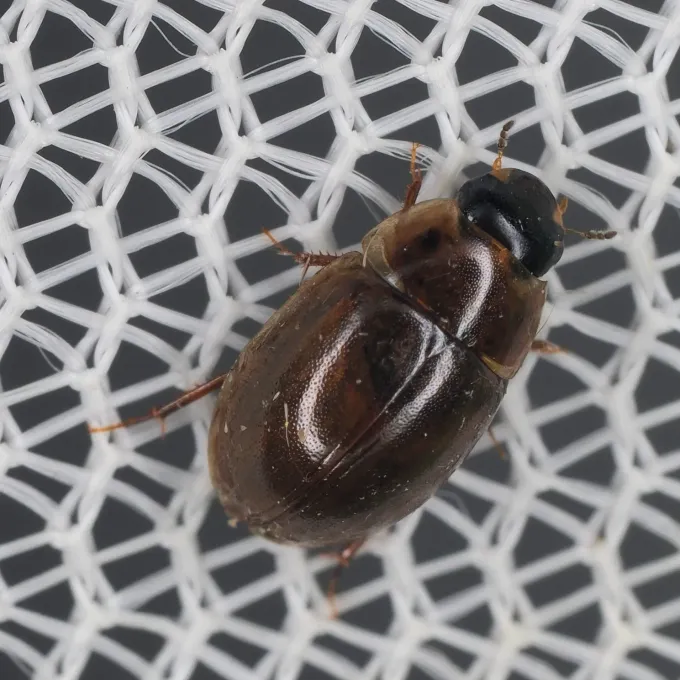
Adults typically feature an oval body shape, usually dark brown or black in color. The head and pronotum are often smooth and shiny, which facilitates movement through water. Their underside is covered in dense hairs that hold a layer of air, allowing them to breathe while submerged.
The larvae are more elongated and possess well-developed mouthparts designed for feeding on organic material and plant tissue. They are largely nocturnal or reclusive, hiding within the substrate or among the roots of aquatic vegetation.
Biologically, these beetles are intrinsically tied to aquatic environments throughout their entire life cycle. They are highly adaptable to changes in water quality, which often allows them to thrive in human-modified landscapes like agricultural fields.
Accurate species-level identification within this genus is complex and usually requires laboratory examination of male genitalia, making it a subject of specialized study for entomologists.
What it damages
In the context of agriculture, Enochrus species are recognized as secondary or occasional pests of rice crops. They primarily impact the fields during the germination phase and the early establishment of seedlings.
Both adults and larvae can damage tender rice sprouts by feeding on the germinating seeds or gnawing at the base of the young stems. This feeding behavior results in thinning of the crop stand and may necessitate costly reseeding.
Beyond direct physical damage, the wounds created by these beetles serve as entry points for various pathogens, including fungi and bacteria, which can lead to seedling rot and overall crop decline.
The extent of damage is generally correlated with high beetle density and specific environmental conditions, such as stagnant water or the presence of excessive organic debris that supports larval growth.
While often not the primary threat to rice yields, their cumulative impact can be significant in regions where intensive irrigation practices provide a stable and consistent habitat for their proliferation.
When it appears
The development of Enochrus is temperature-dependent. As water temperatures rise during the spring months, adult beetles become active, leaving their overwintering sites in the mud to begin feeding and mating.
The life cycle of a single generation can range from several weeks to over a month, depending on environmental factors. Consequently, multiple generations can emerge during a single growing season.
As autumn approaches and water temperatures drop, the beetles migrate to the bottom sediments or the muddy banks of the water bodies to enter a period of dormancy, surviving the winter in this state.
Peak activity is typically observed during the summer months, which often coincides with the critical early growth stages of the rice crop, thereby increasing the risk of significant damage.
Understanding these phenological patterns is essential for farmers to time their inspections correctly and minimize crop exposure to beetle pressure.
Control measures
Effective management begins with maintaining precise water levels in rice paddies. Proper water management can disrupt the larval environment and limit their reproductive success.
Cultural practices, such as land leveling, timely soil preparation, and clearing irrigation ditches of debris and excessive vegetation, help reduce potential breeding habitats for the beetles.
When infestation levels exceed the economic threshold, chemical control may be necessary. However, treatments must be chosen carefully to minimize impact on the broader aquatic ecosystem and non-target species.
Crop rotation and integrated pest management (IPM) strategies play a vital role in suppressing beetle populations over the long term, preventing them from becoming established in the field.
Ongoing research into biological control, including the encouragement of native aquatic predators, offers a promising path toward more sustainable and environmentally friendly rice production.
Taxonomy
- Latin name
- Enochrus
- Order
- Coleoptera (beetles)
- Family
- Hydrophilidae
- EPPO code
- ECHRSP
Discussion
No discussions yet — be the first.