
Black-striped grasshopper
Spathosternum nigrotaeniatum
Description
How to identify
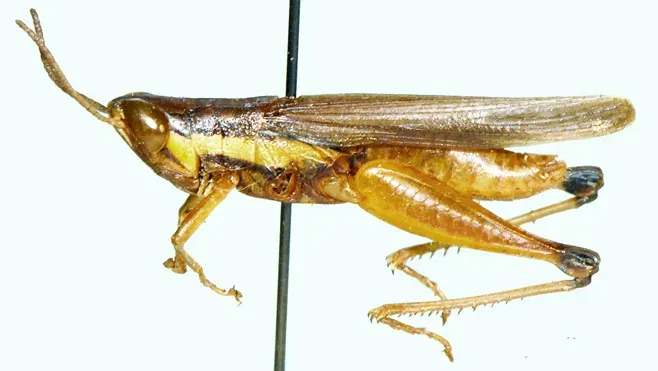
The Black-striped grasshopper (Spathosternum nigrotaeniatum) is a species of the Acrididae family within the order Orthoptera. This insect is primarily recognized by the distinct dark longitudinal stripe that runs along the sides of its body.
Morphologically, these grasshoppers are slender with highly developed hind legs, allowing for efficient movement within dense vegetation. Their coloration, typically ranging from brownish to olive-green, acts as effective camouflage among cereal stems.
The lifecycle follows incomplete metamorphosis, consisting of the egg stage, several nymphal instars, and the adult stage. Eggs are laid in the soil, which provides protection and moisture necessary for development before the nymphs emerge.
Adults possess well-developed mouthparts designed for chewing, which are characteristic of this family. While they have wings, they tend to move short distances, preferring to remain within or near favorable host plants to minimize energy expenditure.
Identifying this pest in the field requires careful inspection of the lower canopy, particularly during early morning hours when the insects are less active and more concentrated in the dense parts of the crop.
What it damages
This grasshopper species is a known pest of various graminaceous crops, including rice, maize, millet, and sorghum. It is particularly drawn to the lush vegetation of young cereal fields, where it feeds on tender leaf tissues.
The damage is characterized by irregular chewing along the margins of leaf blades. Extensive feeding leads to a reduction in the leaf surface area, which directly impairs the plant's photosynthetic capacity and slows overall growth.
In high-density populations, the grasshopper can cause significant stand reduction, potentially leading to total crop loss if an infestation occurs during the early seedling stage. This makes the species a major concern for farmers in tropical regions.
Beyond direct foliage loss, the injuries inflicted by the pest create entry points for various phytopathogenic bacteria and fungi. This secondary infection often accelerates the decline of weakened plants.
The economic impact of the Black-striped grasshopper is determined by the infestation level. Monitoring the crop from emergence to the flowering stage is essential to prevent irreversible damage to potential grain yields.
Control measures
Integrated Pest Management (IPM) strategies for this species focus on a combination of cultural and chemical controls. Tilling the soil after harvest is highly effective, as it destroys egg pods buried in the top layer of the ground.
Chemical applications using authorized insecticides should be deployed only when pest numbers exceed the economic injury level. Targeted spot treatments are preferred to minimize the impact on beneficial insects and the surrounding environment.
Biological control methods involve supporting natural predators, such as birds, spiders, and predatory wasps, which naturally help keep grasshopper populations in check within the field ecosystem.
Farm hygiene is critical for management. Eliminating alternate host grasses and weeds along field margins removes the reservoirs where the pests congregate before invading the main crop.
- Use of crop rotation to break the pest cycle.
- Deployment of traps for population density monitoring.
- Selection of resilient seed varieties that tolerate early defoliation.
Taxonomy
- Latin name
- Spathosternum nigrotaeniatum
- Order
- Orthoptera (locusts)
- Family
- Acrididae
- EPPO code
- STHSNT
Discussion
No discussions yet — be the first.