
Ornamented shield bug
Solubea ornata
Description
How to identify
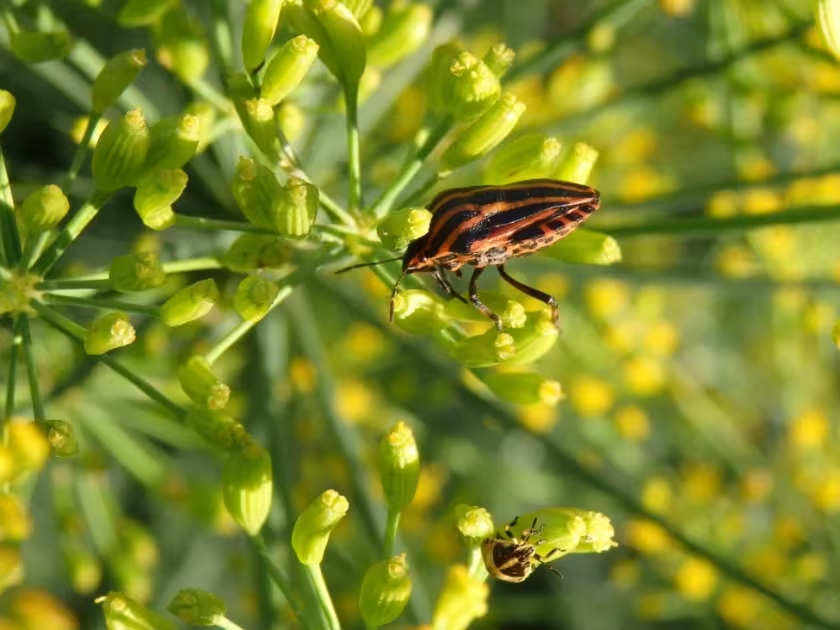
The ornamented shield bug, scientifically known as Eurydema ornata (often historically associated with the Solubea genus in some regions), is a member of the Pentatomidae family, order Hemiptera.
Adult bugs are easily recognizable by their vibrant, warning coloration, consisting of distinct black spots on a red, yellow, or white background. Their body length typically ranges between 7 and 9 millimeters.
Nymphs go through five instars, appearing as smaller, wingless versions of the adults. Their color patterns change as they mature, becoming more defined with each developmental stage.
These pests overwinter as adults, finding shelter in dense vegetation, leaf litter, or crop residues near the edges of fields and forest belts.
As spring temperatures rise, the bugs emerge from hibernation and begin to feed on wild hosts before migrating to cultivated agricultural fields.
What it damages
The primary hosts of this pest include various crops within the Brassicaceae family, such as cabbage, radish, mustard, rapeseed, turnips, and various kale varieties.
While preferring brassicas, the ornamented shield bug acts as a polyphage and can infest other crops, including cereals or medicinal plants, if preferred food sources are scarce.
The insects damage plants by piercing the epidermis with their specialized mouthparts and injecting digestive enzymes, followed by sucking out the cell sap.
This feeding behavior causes significant physiological stress, often leading to stunted growth, wilting, and the eventual death of affected plant tissues.
In seed-producing fields, the insects target flowering stems and pods, which can result in total crop failure or a significant reduction in the germination quality of seeds.
When it appears
Active life for the species begins in early spring, once the average daily temperature consistently reaches the threshold of 10-12 degrees Celsius.
Depending on the climatic conditions of the region, the bug can produce one or two generations per season, extending the risk period throughout the summer.
The peak of damage often coincides with the late spring and summer months, when younger generations are most actively feeding to support their development.
Migration events are common during hot, dry spells when bugs move from drying wild vegetation into well-irrigated commercial fields.
Late-season feeding is crucial for the bugs' survival, as they must build up energy reserves before entering diapause to survive the winter months.
Signs of infestation
The most common symptom of an infestation is the appearance of small, whitish, or necrotic spots at the feeding sites on leaves and stems.
Severe infestations cause leaves to distort, curl, or turn yellow, giving the entire plant a chlorotic appearance and reducing its photosynthetic capacity.
- Wilting of young shoots and buds during hot parts of the day.
- Visible presence of shield bugs on the underside of leaves and stems.
- Distorted or withered seed pods and floral spikes.
- Decreased market value and reduced yield of cabbage heads.
Because the bugs inject toxins while feeding, even minor infestations can lead to substantial plant deformation, particularly in younger, more succulent seedlings.
Control measures
Effective management begins with strict sanitation practices, including the removal of weeds belonging to the Brassicaceae family that serve as early-season reservoirs.
Implementing a proper crop rotation strategy helps to break the life cycle of the pest, making it harder for overwintering adults to find suitable hosts.
In cases of high population density, systemic insecticides are the standard control measure to protect vulnerable vegetable crops during critical growth stages.
Timing is essential; applications should be conducted during low-activity periods, such as early morning or late evening, to ensure maximum coverage and efficacy.
Biological control, including the conservation of natural predators and parasitic wasps (egg parasitoids), plays a vital role in suppressing population growth in sustainable farming systems.
Taxonomy
- Latin name
- Solubea ornata
- Order
- Hemiptera (bugs, aphids, leafhoppers)
- Family
- Pentatomidae
- EPPO code
- SOLUOR
Discussion
No discussions yet — be the first.