
Rice stink bug
Solubea insularis
Description
How to identify
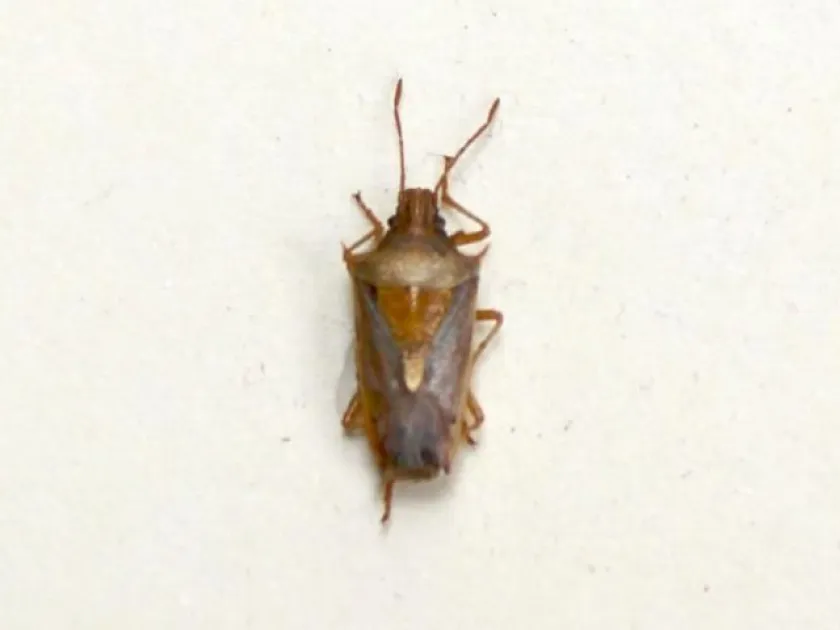
The rice stink bug (Solubea insularis) is a member of the order Hemiptera, specifically the Pentatomidae family. These insects are easily recognized by their shield-like body shape and their coloration, which typically ranges from light green to brownish-yellow.
Adults usually measure between 8 and 10 mm in length. A key diagnostic feature is the presence of sharp, thorn-like projections on the sides of the pronotum, which distinguish this species from other similar stink bugs found in agroecosystems.
Females lay their eggs on the underside of rice leaves, often in neat rows. These egg masses are frequently covered with a sticky secretion that provides protection against environmental stress and small predators.
The nymphs undergo five distinct instars as they grow. During this period, they resemble the adults but lack fully developed wings, and they are highly active in feeding on the developing rice plant tissues.
These pests overwinter as adults in protected areas such as dry grasses, leaf litter, or debris near the edges of rice fields. As temperatures rise in the spring, they migrate to the rice crops to begin their reproductive cycle.
What it damages
The primary damage caused by the rice stink bug is direct feeding on the rice grain. Using their piercing-sucking mouthparts, they penetrate the hulls of the developing grain during the milk or dough stage.
The insect extracts the fluid content of the endosperm, which stops the grain from developing properly. This feeding behavior causes the grain to become empty, shriveled, and light in weight, significantly reducing the final yield.
Feeding punctures also act as entry points for various pathogens, including fungi and bacteria. These infections cause the grains to darken, lose their commercial value, and suffer from reduced milling quality.
A damaged rice panicle often exhibits "pecky rice" or general blanking, where many grains fail to fill. This results in significant quantitative losses, especially if the infestation occurs during the critical flowering and grain-filling stages.
High population densities can cause severe economic impact. In regions where Solubea insularis is prevalent, it remains one of the most significant threats to rice production stability and grain quality.
Control measures
Effective management of the rice stink bug relies on an integrated pest management (IPM) approach that combines cultural practices, chemical control, and biological monitoring.
Cultural control is centered on managing weed populations near rice fields. Since weeds act as alternate hosts, eliminating them reduces the population reservoir from which the bugs move into the rice crops during the season.
Chemical control involves the application of appropriate insecticides when scouting indicates that the pest population has reached the economic threshold. Timing is crucial to target the nymphs and adults before significant damage occurs to the grain.
Conservation of natural enemies, such as egg parasitoids, is highly recommended. These beneficial insects can play a major role in suppressing the stink bug population, especially when the use of broad-spectrum pesticides is minimized.
Consistent field scouting and the use of sweep nets are essential for monitoring the migration of the bugs. These techniques allow producers to make informed decisions about when to apply treatments, ensuring both efficiency and environmental safety.
Taxonomy
- Latin name
- Solubea insularis
- Order
- Hemiptera (bugs, aphids, leafhoppers)
- Family
- Pentatomidae
- EPPO code
- SOLUIN
Discussion
No discussions yet — be the first.