
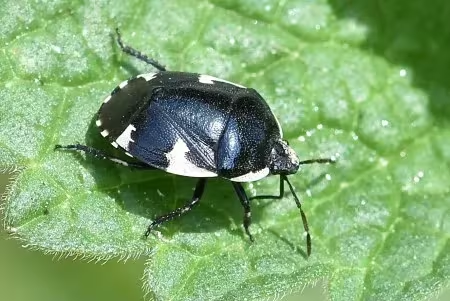
Six-spotted shield bug
Sehirus sexmaculatus
Description
How to identify
The six-spotted shield bug, scientifically known as Sehirus sexmaculatus, is a member of the burrowing bug family (Cydnidae). These insects are distinguished by their rounded, shiny black or dark-brown bodies adorned with small, light-colored spots.
Adult insects typically measure between 5 and 7 millimeters in length. They possess a specialized rostrum or "beak" used for piercing plant tissues, which is a common characteristic of the Pentatomoidea superfamily to which they are loosely related.
The life cycle of these bugs is deeply connected to the soil environment. They spend significant amounts of time burrowing into the topsoil, which serves as both a daytime shelter and a protective environment during the winter season.
Immature stages, or nymphs, resemble smaller versions of the adults but lack full wing development. As they progress through their larval stages, they gradually take on the appearance and pigmentation of mature bugs.
These insects are highly adaptable to various habitats but are most commonly found in gardens, meadows, and agricultural fields with loose soil structures and sufficient ground vegetation cover.
What it damages
The six-spotted shield bug primarily feeds on the succulent parts of plants. They are known to attack various crops, particularly favoring young shoots, leaves, and developing floral buds of herbaceous plants.
By using their piercing-sucking mouthparts, they extract plant sap, which serves as their primary food source. During this feeding process, they inject saliva containing enzymes into the plant tissues, leading to cellular damage.
Visible symptoms on the plant include yellowing, localized necrosis, and stunted growth. The injected enzymes can cause the leaves to curl, wither, and eventually drop if the infestation is severe enough to overwhelm the plant's resources.
In addition to direct physiological damage, the bugs' feeding activity weakens the overall vigor of the crop, making it more susceptible to secondary infections caused by fungi or bacteria that enter through the puncture wounds.
While a single bug may cause minimal damage, a large colony can significantly reduce the yield of berry bushes and vegetable plants, often causing flower buds to fail or fruit to become distorted.
When it appears
Adults emerge from their overwintering sites in the soil as soon as spring temperatures begin to rise, typically when soil temperatures reach 10–12 degrees Celsius. This marks the beginning of their active season.
The peak of their activity occurs during the late spring and early summer months, coinciding with the rapid growth of many garden plants. During this time, they are most mobile and focus on feeding and finding mates.
Depending on the climatic zone, the bug can produce one or two generations per year. The timing of each generation is heavily influenced by the availability of moisture and temperature stability in their local habitat.
During the hottest periods of mid-summer, individuals may retreat deeper into the soil to avoid excessive heat and dehydration, which makes monitoring more difficult during these intervals.
As autumn approaches and temperatures start to drop, the bugs prepare for hibernation. They migrate into deeper layers of the soil or beneath thick layers of organic debris to ensure their survival during the winter months.
Signs of infestation
Early identification of an infestation starts with checking the foliage for small, pale or yellowish spots. These marks are the direct result of the bugs' feeding activity and serve as an early warning sign.
Deformed or curling leaves, accompanied by general wilting of the plant despite adequate watering, often point to a sap-sucking pest infestation near the root zone or the base of the stem.
If you suspect an infestation, inspect the area around the base of the plant during the early morning or evening hours. This is when the bugs are most active and likely to be seen moving on the surface of the soil or on lower leaves.
Many shield bugs release a distinctive, often unpleasant odor when disturbed or crushed. This chemical defense is a hallmark of the family and can be a useful diagnostic tool for identifying their presence.
Examining the soil surface under mulch or plant debris often reveals the presence of nymphs, which may be camouflaged by the soil texture. Their clustering near the stem is a clear indicator of a localized colony.
Control measures
Good sanitation practices are the most effective way to manage Sehirus sexmaculatus. Clearing away leaf litter, weeds, and other organic debris significantly removes potential hiding and overwintering spots.
Regular cultivation and tilling of the soil, especially in late autumn, can disrupt the bugs' hibernation cycles and expose them to unfavorable conditions, greatly reducing the population for the next season.
If the population becomes problematic, biological controls, such as encouraging the presence of predatory insects, birds, or using entomopathogenic fungi, are recommended as a sustainable management strategy.
Chemical intervention should be considered a last resort. If necessary, select targeted insecticides that have minimal impact on non-target species and beneficial pollinators, always strictly following the safety guidelines.
- Rotate crops annually to prevent the buildup of pest populations.
- Use physical barriers or mulching techniques to make the soil less inviting for burrowing.
- Deploy sticky traps near the base of the plant to monitor activity.
- Maintain robust plant health through proper fertilization and watering to improve natural resistance.
Taxonomy
- Latin name
- Sehirus sexmaculatus
- Order
- Hemiptera (bugs, aphids, leafhoppers)
- Family
- Cydnidae
- EPPO code
- SEHISE
Discussion
No discussions yet — be the first.