
Black burrower bug
Aethus nigritus
Description
How to identify
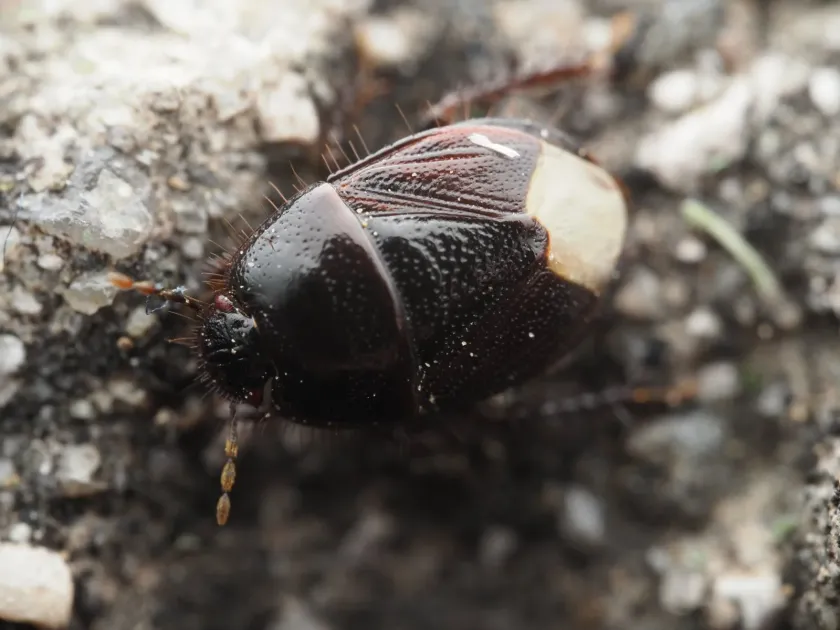
The black burrower bug (Aethus nigritus) is a member of the Cydnidae family, belonging to the order Hemiptera. These insects are small, typically measuring 4 to 6 mm in length, and are characterized by their uniformly dark, black coloration.
The body is oval and slightly flattened, designed for navigating through dense soil environments. A distinguishing feature is the front tibia, which is expanded and covered with strong spines, functioning effectively as a digging tool.
Nymphs resemble the adults in general morphology but are smaller and lack fully developed wings. They undergo several molts before reaching the adult stage, gradually transitioning through different shades of brown and eventually black.
These insects are highly elusive, spending the vast majority of their life cycle beneath the soil surface, under plant debris, or within soil cracks. This subterranean lifestyle makes early detection extremely difficult.
Reproduction occurs underground, where females lay their eggs. Depending on the soil temperature and moisture, the lifecycle can progress through one or more generations per season.
What it damages
The black burrower bug is a generalist feeder that causes significant damage to various cereal crops, including wheat, barley, and rye. It also affects maize and several vegetable crops in their seedling stage.
The damage is caused by the insect feeding on plant juices. By piercing the stems, roots, or root collars, they disrupt the plant's vascular system, leading to wilting, yellowing, and eventually the death of the seedling.
At high population densities, the insects can destroy large patches of a field. Seedlings are most vulnerable shortly after emergence, and heavy infestations often result in reduced stand density and substantial yield losses.
In addition to direct feeding damage, the entry points created by the bug's mouthparts can serve as sites for secondary infections by soil-borne pathogens, further weakening the stressed crops.
Damage is often more severe in drought-prone areas or seasons, where plants are already struggling with water stress, making them less capable of recovering from the insect's feeding activity.
When it appears
Adults hibernate deep in the soil (usually 15–20 cm) or under dense organic mulch. They emerge when soil temperatures consistently reach levels favorable for their activity, typically in early spring.
Peak activity coincides with the emergence and early growth phases of cereal crops. During this time, they migrate from overwintering sites toward succulent young plant shoots to begin their feeding cycle.
The summer generation remains active as long as host plants provide sufficient moisture and nutrition. Activity levels are generally synchronized with the phenology of the surrounding vegetation.
As temperatures begin to drop in late autumn, the bugs initiate their migration into deeper soil profiles to seek protection from the winter frost, preparing for the upcoming dormancy period.
The number of generations per year is largely dictated by the regional climate. Warmer southern regions may see a full second generation, while cooler climates strictly support a single annual cycle.
Signs of infestation
The first indicator of an infestation is often irregular patches of stunted or yellowing plants. These patches may appear suddenly in the field and are frequently misidentified as drought stress or nutrient deficiencies.
A closer inspection of the root collar and soil surface around the wilting plant will often reveal the presence of the bugs, though they will usually attempt to burrow deeper immediately upon disturbance.
The presence of dense weed populations, especially grasses, around the fields serves as a primary indicator of high infestation risk, as these weeds provide a bridge for the bugs to enter the crop fields.
During damp or overcast weather, the insects may occasionally be found on the base of the stems, making them more visible compared to the sunny daylight hours when they are almost entirely buried.
- Yellowing and desiccation of seedling leaves.
- Uneven crop stands with clear circular or irregular patches.
- Visible puncture marks on the base of the stem or root collar.
Control measures
Effective cultural control is the cornerstone of managing this pest. Deep plowing (inversion tillage) in the autumn or early spring can significantly disturb the hibernation sites and reduce the overwintering population.
Sanitation is critical; controlling weeds in and around the field margins prevents the buildup of populations that would otherwise move into the primary crop after the weeds dry out.
Seed treatment with systemic insecticides is highly recommended in areas with a history of infestation. This provides a window of protection for the seedlings during the most vulnerable early stage of growth.
When monitoring indicates that the economic injury level is exceeded, targeted application of contact or systemic insecticides to the soil or basal foliage can be effective in suppressing the infestation.
Crop rotation remains an essential strategy. Avoiding continuous cereal cropping breaks the life cycle of the bug, limiting the accumulation of the pest population in the soil profile.
Taxonomy
- Latin name
- Aethus nigritus
- Order
- Hemiptera (bugs, aphids, leafhoppers)
- Family
- Cydnidae
- EPPO code
- AETUNI
Discussion
No discussions yet — be the first.