
Burrowing bug
Cyrtomenus bergi
Description
How to identify
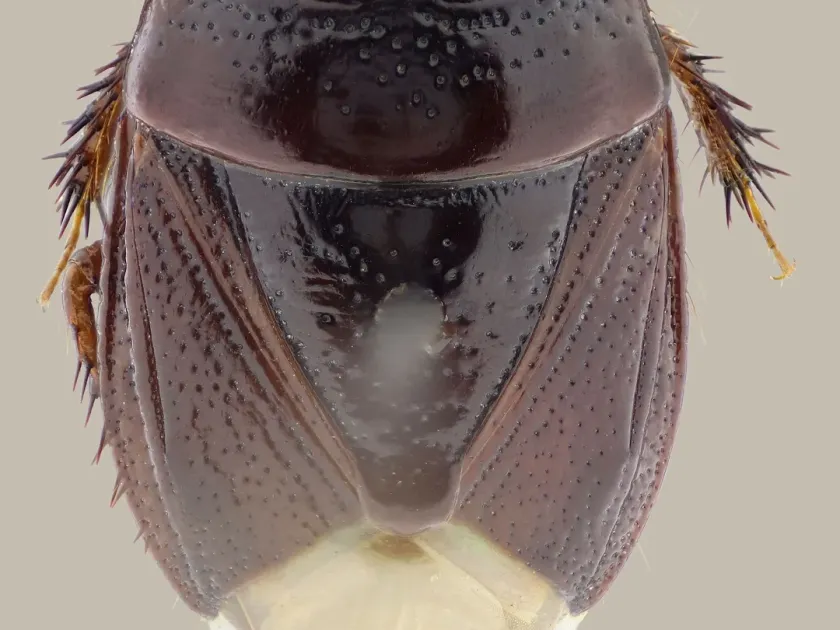
The burrowing bug (Cyrtomenus bergi) belongs to the Cydnidae family within the order Hemiptera. Adult insects are characterized by their oval, flattened bodies, ranging from 6 to 8 millimeters in length, typically displaying a shiny black or dark brown color.
A distinctive feature of this pest is the presence of robust, fossorial (digging) front legs covered in thick spines. This morphological adaptation allows the insect to navigate efficiently through soil profiles and reach the root systems of host plants.
Nymphs, the juvenile stages of the insect, closely resemble adults in body shape but lack fully developed wings and are smaller in size. They undergo several molting stages, gradually increasing in size and pigmentation as they develop into adults.
These bugs are primarily subterranean, preferring loose, moist soils where they can move freely in search of food. Their cryptic behavior makes them elusive, often going unnoticed until significant damage is already occurring in the field.
Native to Central and South America, the burrowing bug is a significant agricultural challenge in those regions. Its potential for accidental spread through global trade in soil or plant material makes it a concern for phytosanitary agencies worldwide.
What it damages
The burrowing bug is a polyphagous pest, meaning it feeds on a wide range of agricultural crops. Its primary hosts include tuberous and root vegetables such as potatoes, sweet potatoes, peanuts, and onions, which are severely impacted by its feeding.
Beyond root vegetables, the bug is a known threat to emerging seedlings of corn, sugarcane, and cotton. By piercing plant tissues with their mouthparts, they drain fluids and severely weaken the structural integrity of the plant's root system.
Damage is caused by both adults and nymphs feeding on roots, stolons, or bulbs. These feeding wounds are often prone to secondary infections by soil-borne pathogens, leading to rotting and necrosis of the plant tissue.
In tuber crops, the direct injury causes small, dark, and unsightly spots, rendering the harvest unmarketable. Furthermore, heavy infestations result in stunted growth, chlorosis, and eventual death of the affected crop.
Economic losses are often compounded by the necessity of discarding produce that fails to meet quality standards due to bug bite marks. When population densities are high, the impact on yield can be devastating.
When it appears
The activity of the burrowing bug is heavily influenced by soil moisture and temperature. They thrive in moderate conditions where the soil remains sufficiently damp, allowing for high mobility and reproductive success.
During periods of extreme drought or unfavorable temperature, the bugs move deeper into the soil profile to find refuge. Once conditions improve, they return to the surface layers to continue their feeding cycle.
The life cycle is usually closely synchronized with the crop growth season. Depending on the environment, the burrowing bug can produce multiple generations in a single year, maintaining a constant threat to agricultural productivity.
Critical growth stages for most crops, specifically seedling establishment and tuber initiation, are the moments of greatest vulnerability. Infestations during these times can lead to poor plant stands and severe yield reductions.
Since adults can fly and disperse to neighboring areas, a burrowing bug infestation can quickly spread across an entire farm if left unmanaged. Maintaining clean field borders and managing crop debris is essential for containment.
Signs of infestation
Visible signs of infestation often begin with stunted or chlorotic plants in the field. When plants are pulled, small, dark necrotic punctures on roots or tubers provide evidence of recent or active feeding by the burrowing bug.
Wilted plants, particularly during the hottest parts of the day, suggest a compromised root system. In some instances, the presence of the bug's entry holes or tunnels in the soil immediately surrounding the stem can be spotted.
Diagnostic soil sampling is the most reliable way to confirm the presence of the pest. By digging around the root zone, researchers and farmers can retrieve nymphs and adults to verify the level of infestation.
Secondary signs include an uneven plant stand and patches of poor development within a row. These irregularities often correspond to areas where the burrowing bug population is most concentrated in the soil.
During the harvest phase, the most conclusive sign is the presence of quality defects on the harvested crop. Disfigured, pitted, or blemished tubers are direct indicators that the crop was under attack throughout its development.
Control measures
Effective management requires an integrated approach that focuses on mechanical, cultural, and chemical interventions. Deep tillage is a critical practice, as it disrupts the bug's soil tunnels and exposes them to environmental stressors.
Crop rotation remains one of the most powerful tools in preventing population build-up. By alternating host crops with non-host varieties, farmers can starve the bug population and limit its reproductive potential.
Chemical control usually involves the application of systemic insecticides or the use of treated seeds to protect the crop during its most vulnerable stage. Always ensure that the selected chemicals are registered and applied according to local regulations.
Biological control alternatives, such as the application of entomopathogenic fungi or nematodes, are increasingly used to manage burrowing bug numbers. These biological agents target the pests directly in the soil without leaving chemical residues.
Continuous field monitoring using traps is necessary to track the insect's activity. By identifying the pest early, growers can intervene before the population density crosses the threshold that causes significant economic loss.
Taxonomy
- Latin name
- Cyrtomenus bergi
- Order
- Hemiptera (bugs, aphids, leafhoppers)
- Family
- Cydnidae
- EPPO code
- CYRTBE
Discussion
No discussions yet — be the first.