
Pied shieldbug
Sehirus luctuosus
Description
How to identify
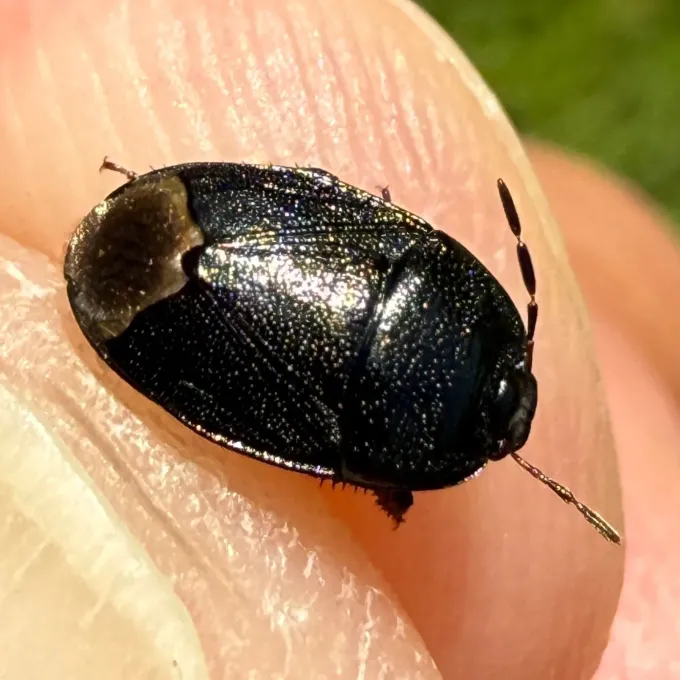
The pied shieldbug (Sehirus luctuosus) belongs to the Cydnidae family, commonly known as burrowing bugs, within the order Hemiptera. Adult bugs typically reach 6 to 8 mm in length.
The body is characterized by a shiny black appearance, often with a subtle metallic luster. A key diagnostic feature is the distinct white or pale margin running along the edges of the pronotum and hemelytra.
Nymphs undergo several developmental stages, during which they gradually transition from smaller, lighter forms into the darker, more hardened adult state through successive molting.
This species is secretive by nature, spending most of its life cycle hidden within soil crevices, under leaf litter, or beneath dense ground cover, making them elusive for detection.
They possess specialized piercing-sucking mouthparts designed to feed on plant sap, allowing them to extract nutrients efficiently from both wild vegetation and cultivated crops.
What it damages
The damage caused by the pied shieldbug results from both adults and nymphs feeding on the sap of various plant tissues, which weakens the plant's overall physiology.
Commonly targeted plants include various vegetable crops, particularly those in the Lamiaceae and Fabaceae families, as well as certain industrial crops grown in home gardens.
In high populations, these bugs can cause severe stress to young seedlings, often leading to stunted growth or even the death of the plant during its most vulnerable stage.
Feeding on stems and leaves interferes with the plant's nutrient transport system, causing wilting, chlorosis, and a measurable decrease in productivity and yield quality.
Because they are polyphagous, these insects can easily transition from common field weeds to valuable garden crops, extending their impact throughout the entire growing season.
When it appears
The life cycle of Sehirus luctuosus is heavily dependent on soil temperature, as adults overwinter deep within the soil or under protective organic debris.
Emergence occurs in early spring as soon as soil temperatures provide the necessary thermal sum to trigger the reactivation of adult bugs from their winter diapause.
The peak reproductive phase occurs during the summer months, with females depositing eggs near host plants to ensure the offspring have immediate access to food sources.
Depending on the climatic zone, the bug may complete one generation per year, with developmental speed highly correlated to soil moisture and ambient air temperatures.
As temperatures begin to drop in autumn, the bugs initiate their migration to overwintering sites, where they prepare for the cold season by burying themselves in the ground.
Signs of infestation
The most prominent sign of a pied shieldbug infestation is the appearance of small necrotic spots on leaves, which occur at the exact points where the bug has inserted its rostrum.
Affected plants often show classic signs of water stress, including wilting and curling leaves, despite consistent irrigation and healthy soil moisture levels.
Observant gardeners can often spot the bugs themselves near the base of the plant during the cooler hours of the morning or evening when they come to the surface.
Patches of stunted or chlorotic plants in a garden bed are common indicators that the root or crown area may be under pressure from these ground-dwelling pests.
- Pin-prick necrotic spots on foliage.
- Leaf wilting and drooping.
- Noticeable stunting of seedling growth.
- Direct observation of bugs in the topsoil.
Control measures
Effective management begins with deep autumn plowing, which disturbs the overwintering sites of the bugs and exposes them to freezing temperatures, significantly reducing the population.
Sanitation practices such as removing leaf litter and controlling weeds around the field edges are crucial to limiting alternative food sources and breeding habitats.
Crop rotation is a highly effective cultural control method, as it disrupts the local population cycle and forces the pests to migrate away from preferred host locations.
In cases of severe infestation, targeted applications of broad-spectrum contact insecticides to the soil surface and plant bases can provide immediate relief.
Regular scouting and early detection are essential to prevent the pest from reaching economic thresholds, allowing for more precise and less environmentally intrusive intervention.
Taxonomy
- Latin name
- Sehirus luctuosus
- Order
- Hemiptera (bugs, aphids, leafhoppers)
- Family
- Cydnidae
- EPPO code
- SEHILU
Discussion
No discussions yet — be the first.