
Shield bug
Sehirus
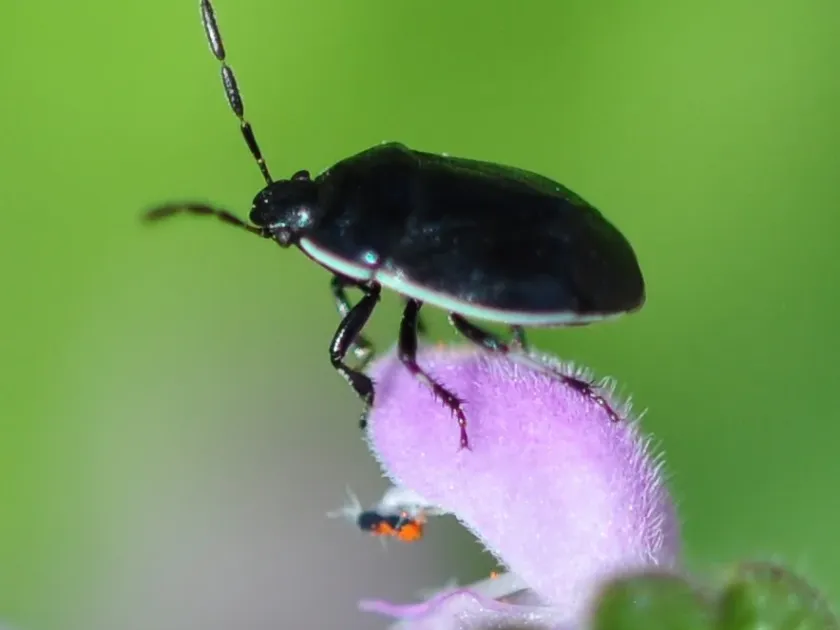
Description
How to identify
The shield bug (genus Sehirus) belongs to the burrower bug family (Cydnidae), order Hemiptera. Adult specimens feature a distinct oval body, typically 6 to 12 mm long, characterized by a glossy black appearance with white margins on the pronotum and elytra.
The body is significantly flattened, an adaptation that allows the bug to navigate easily through the soil surface or beneath dense organic litter. The head is broad, the antennae are five-segmented, and the forelegs are armed with heavy spines designed for digging.
Nymphs resemble the adults but are smaller in size and possess a lighter, grayish-brown color. Their life cycle consists of the egg stage, five nymphal instars, and the adult stage.
They overwinter as adults in a state of diapause, residing in the soil at depths of up to 15–20 cm or hidden under leaf litter. In spring, as soil temperatures rise, they emerge to feed and reproduce.
Females deposit eggs in small clusters within the soil or on the underside of host plant leaves, often guarding their offspring, which is a notable behavior for this group of insects.
What it damages
These bugs are generalist feeders, although they show a strong preference for weeds within the Lamiaceae (mint) family, which serve as their primary food source.
In agricultural settings, they can become pests for vegetable crops such as carrots, parsley, and other Apiaceae members when their preferred weed hosts are scarce.
Damage is most severe during periods of drought, as the insects move from wild vegetation to cultivated crops in search of moisture-rich plant tissues.
Heavy infestations lead to stunted plant growth, as the bugs feed on the sap of stems and leaf petioles, causing systemic stress and symptoms of chlorosis.
The feeding sites often manifest as necrotic spots or brown, depressed lesions, which can lead to the death of the main stem if the damage is sufficiently widespread.
Signs of infestation
The earliest sign of an infestation is the appearance of tiny, dark puncture marks at the base of the plant stem, indicating where the bugs have been feeding.
Affected plants often show inhibited growth compared to nearby healthy plants, with foliage frequently appearing yellowed or curled due to nutrient disruption.
Careful inspection of the soil surrounding the base of the plant often reveals the presence of adult bugs, which burrow rapidly into the ground when disturbed.
Activity is highest during the early morning and late evening, making these the optimal times to monitor for the presence of the pest on the soil surface.
Finding empty egg casings on the undersides of leaves or within the top layer of soil confirms that the population is breeding within the garden area.
Control measures
Deep autumn tilling of the soil is the most effective cultural method, as it disrupts the overwintering sites of the bugs and exposes them to freezing temperatures.
Strict weed control, particularly of deadnettle and other mint family plants, is crucial to remove the primary reservoirs that sustain the bug population throughout the season.
Crop rotation and the immediate removal of crop residues post-harvest prevent the buildup of pest populations and eliminate potential shelter sites.
When populations exceed economic thresholds, contact or systemic insecticides may be used, provided that pre-harvest interval guidelines are strictly observed.
Biological control methods, such as the use of entomopathogenic fungi, offer a more sustainable alternative for managing these bugs in vegetable cultivation.
Taxonomy
- Latin name
- Sehirus
- Order
- Hemiptera (bugs, aphids, leafhoppers)
- Family
- Cydnidae
- EPPO code
- SEHISP
Discussion
No discussions yet — be the first.