
Shiny shield bug
Scutellera
Description
How to identify
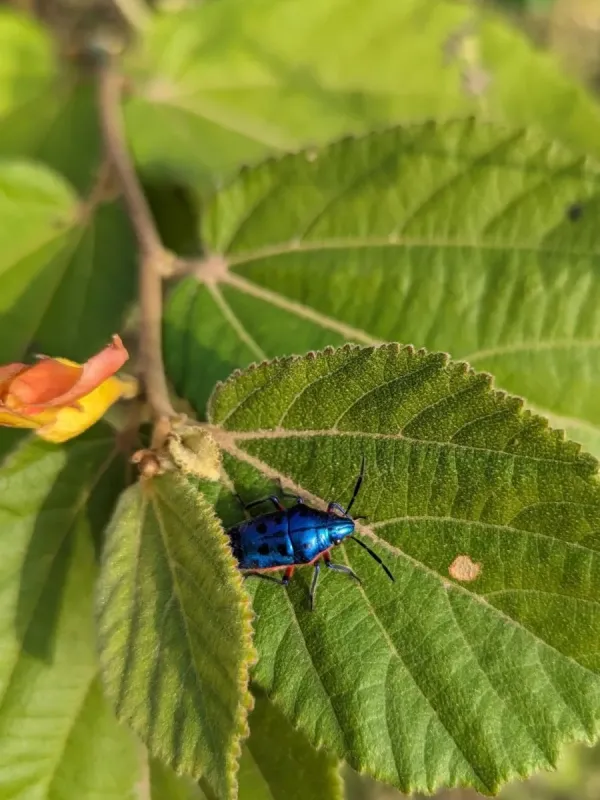
The shiny shield bug, known scientifically as Scutellera, belongs to the order Hemiptera and the Scutelleridae family. These insects are easily recognized by their highly convex, shield-like body shape and often vibrant, metallic coloration.
A defining characteristic of this genus is the scutellum, which is exceptionally large and covers the entire abdomen and the folded wings. Adults typically measure between 8 and 12 millimeters in length.
Their head features a piercing-sucking mouthpart designed for penetrating plant stems and extracting sap. The antennae are five-segmented, which is a key trait used for accurate classification among similar bug species.
The life cycle of the shiny shield bug progresses through three main stages: egg, nymph, and adult. Eggs are usually laid in neat clusters on the underside of host plant leaves, providing natural camouflage and protection.
Nymphs resemble smaller, wingless versions of the adults. As they pass through five distinct developmental stages, known as instars, they grow progressively larger until they reach maturity and develop functional wings.
What it damages
The shiny shield bug is primarily an agricultural pest that targets cereals and grasses. It feeds by piercing the stems and ripening grains, causing significant physiological damage to the host plant.
During feeding, the bug injects digestive enzymes into the plant tissue. These enzymes break down the starch and proteins, which directly impairs the nutritional and commercial quality of the harvested grain.
Heavy infestations can lead to substantial yield losses. The feeding process leaves the grains shriveled, light in weight, and lacking the necessary proteins for high-quality baking or seed viability.
The punctures left by the bug serve as entry points for secondary infections, including fungal pathogens like grain molds. This significantly worsens the total impact on the crop’s overall health.
Visible symptoms often include white, stunted heads that fail to fill properly. In severe cases, the entire stem may collapse or weaken, leading to lodging and difficulty in mechanical harvesting.
When it appears
Adults typically hibernate during the winter, seeking shelter under dried leaf litter, dense grass, or within the upper layers of the soil in forest edges or field margins.
Emergence from hibernation occurs in the spring when temperatures consistently rise above the threshold required for insect activity. Initially, they feed on wild grasses before migrating to cultivated cereal fields.
The peak activity period occurs from late spring through early summer. During this time, adults mate and females deposit their eggs, aligning the hatching of nymphs with the most vulnerable development stages of the crop.
The development from egg to adult takes approximately 40 to 60 days, influenced heavily by the prevailing temperature and moisture levels. A warmer spring generally leads to faster population growth.
As summer draws to a close, the new generation of adults begins to seek overwintering sites. They move away from the crop fields to protected areas in preparation for the upcoming dormant season.
Signs of infestation
Detecting the shiny shield bug requires careful field monitoring. The primary sign of infection is the presence of small, dark, discolored spots on the stems of cereal plants, often surrounded by a light halo.
- Premature yellowing or browning of the flag leaves.
- Presence of «whiteheads»—empty or partially filled grain spikes.
- Weakening of the main stem, leading to visible drooping of the plant top.
- Observation of adult bugs or clusters of nymphs during early morning inspections.
- Detection of bug excrement on the leaf surface or within the leaf sheaths.
Regular scouting should begin at the start of the crop's heading phase. Identifying the presence of eggs or young nymphs is critical for determining the need for intervention before damage escalates.
Field borders and areas near thick hedges are often the first to be colonized. Inspectors should prioritize these zones when conducting initial checks to ensure early detection of the pest.
Distinguishing shield bug damage from other environmental factors, such as drought or nutritional deficiency, is essential. Careful visual inspection of the plant stem for punctures usually confirms the presence of the bug.
Control measures
Effective control starts with good agricultural practices. Destroying weeds and crop residues after harvest significantly reduces the number of suitable overwintering sites for the bugs.
Implementing crop rotation is highly recommended. By alternating cereal crops with non-host plants, farmers can disrupt the life cycle of the pest and prevent populations from reaching high levels.
When infestation levels cross the economic threshold, targeted insecticide application may be required. Using systemic or contact pesticides during the vulnerable nymph stage is often the most effective approach.
Biological control, including the conservation of egg parasitoids, is a sustainable long-term strategy. Promoting a diverse field environment helps maintain natural enemy populations that keep the bug in check.
Monitoring the field with pheromone traps can provide early warning data. This precision allows farmers to apply control measures only when necessary, minimizing the impact on the environment and reducing costs.
Taxonomy
- Latin name
- Scutellera
- Order
- Hemiptera (bugs, aphids, leafhoppers)
- Family
- Scutelleridae
- EPPO code
- SCURSP
Discussion
No discussions yet — be the first.