
Rice black bug
Scotinophara scotti
Description
How to identify
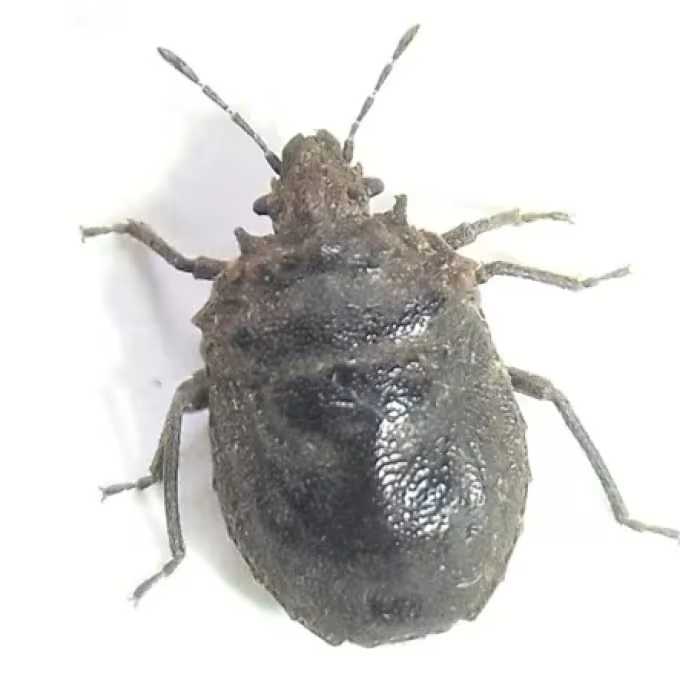
The rice black bug (Scotinophara scotti) is a member of the Pentatomidae family, known for its destructive impact on rice production. The adult bug has a characteristic shield-shaped body, typically measuring about 8–10 mm in length with a dark black or brownish color.
Identification is aided by the presence of lateral thoracic processes which give the insect a slightly spiky appearance at the shoulders. Its head is relatively broad, equipped with a sucking mouthpart designed to penetrate plant tissue.
Eggs are usually laid in clusters on the undersides of leaves, particularly those near the waterline. The nymphs undergo five developmental stages before reaching adulthood, with each stage becoming progressively darker.
The life cycle is highly adapted to the paddy environment, where high humidity and stable temperatures facilitate rapid reproduction. Adults overwinter in protected areas, emerging as temperatures rise in the spring.
These insects are primarily nocturnal, often congregating at the base of rice plants during the day and becoming active feeders when light levels decrease, making them difficult to spot during routine inspections.
What it damages
Scotinophara scotti causes significant damage by sucking the sap from the stems and leaf sheaths of the rice plant. As they feed, they inject toxic saliva that leads to localized tissue necrosis.
This feeding behavior causes the plants to yellow and wilt, a condition often referred to as "bug burn." In severe cases, the entire plant may collapse, especially if the infestation occurs during the early vegetative stages.
The most critical damage occurs during the booting and heading stages. The disruption of nutrient transport leads to the formation of empty or partially filled panicles, causing major yield losses.
Large colonies can quickly kill young seedlings, resulting in thin stands and requiring replanting. Older plants show reduced height and vigor, leading to uneven maturation across the field.
Secondary infections of fungi and bacteria are common at the feeding sites, further exacerbating the damage caused by the initial mechanical piercing of the insect's proboscis.
Signs of infestation
The first signs of an infestation include the yellowing of leaf tips and a general lack of vigor in the rice canopy. Upon closer inspection, small, darkened puncture spots appear on the stems.
Affected fields often exhibit patchy growth, with clusters of stunted or dead plants forming a mosaic pattern. In high-density populations, a distinct, unpleasant odor can be detected in the field.
Observing the base of the rice plants during dawn or dusk often reveals the presence of adult bugs congregating near the water line or on the lower stems.
During the grain-filling stage, the presence of numerous white, sterile heads on the panicles is a clear indicator that the crop has suffered from persistent sap-sucking damage.
Floating excrement on the surface of the paddy water and the presence of exuviae (cast skins) left by nymphs near the waterline are definitive signs of a thriving bug colony.
Control measures
Effective management begins with maintaining a clean field, as weeds act as alternate hosts for the bug during the fallow season. Reducing weed density significantly lowers the population potential.
Water management techniques, such as periodic draining of the paddy, can be highly effective. This forces the bugs to move, making them more visible and vulnerable to predators or insecticidal treatments.
Chemical control should be applied based on economic thresholds, using systemic insecticides to penetrate the plant tissues where the bugs feed. Application is most effective during the early growth phases.
Biological control, including the use of entomopathogenic fungi such as Beauveria bassiana, provides a sustainable alternative for long-term population suppression in humid environments.
- Use light traps to monitor population spikes and time interventions.
- Promote the conservation of natural enemies like egg parasitoids.
- Implement synchronized planting to limit the availability of hosts throughout the season.
Taxonomy
- Latin name
- Scotinophara scotti
- Order
- Hemiptera (bugs, aphids, leafhoppers)
- Family
- Pentatomidae
- EPPO code
- SCOTSO
Discussion
No discussions yet — be the first.