
Black rice bug
Scotinophara lurida
Description
How to identify
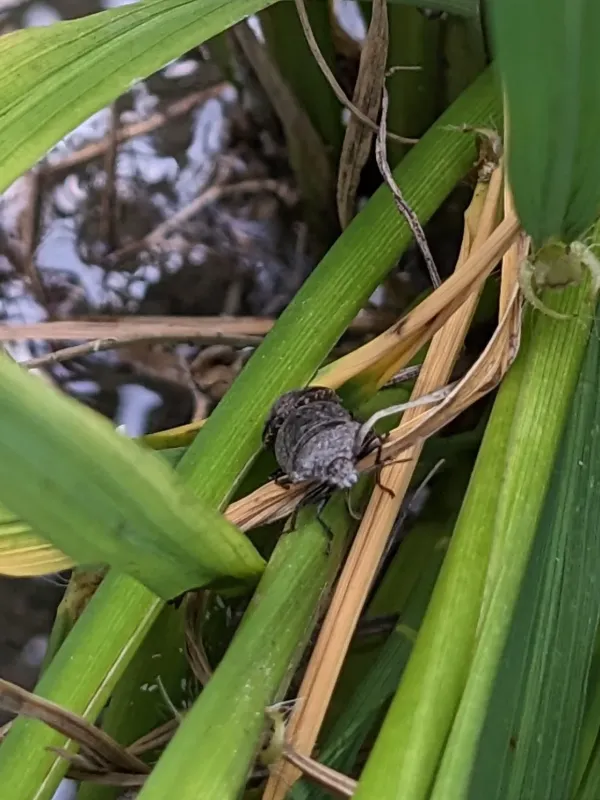
The black rice bug (Scotinophara lurida) is a member of the Pentatomidae family, commonly known as stink bugs. The adult insect is characterized by a dark brown or black body with a length of 7–9 mm.
It possesses a heavily sclerotized exoskeleton with a prominent scutellum that covers the majority of its abdomen. The surface of the head and pronotum is granular, giving the bug a distinct, rough texture.
Eggs are typically laid in masses on the undersides of leaves or near the base of the plant. Newly laid eggs are pale cream-colored and gradually darken as the embryos inside develop.
Nymphs resemble smaller, wingless versions of adults. They undergo several molts, changing color and size until they reach the adult stage, typically remaining clustered at the base of the plants.
They are equipped with a needle-like piercing-sucking mouthpart, which allows them to penetrate the tough stems and leaves of rice plants to extract sap effectively.
What it damages
The primary host for this pest is rice (Oryza sativa). Under favorable environmental conditions, large populations can cause significant yield losses by draining the plant of its vital nutrients.
Beyond rice, these bugs thrive on various grasses found in and around irrigation canals. These weeds serve as crucial reservoirs for the population to persist between cropping seasons.
Feeding during the vegetative growth stage disrupts the plant's metabolic functions, leading to reduced tillering, stunted plant height, and general chlorosis (yellowing of the leaves).
The most severe economic impact occurs during the reproductive phase. When bugs feed on the developing panicles, they cause "pecky rice" or empty grains, leading to a substantial decrease in quality and quantity.
The feeding punctures create entry points for various bacterial and fungal pathogens, which can exacerbate the damage and accelerate plant decay.
##season##Adults overwinter in protected areas, such as leaf litter, debris at the edges of fields, or in the topsoil, where they remain in a state of diapause until environmental conditions improve.
As temperatures rise in the spring, the overwintered bugs emerge and migrate toward newly transplanted rice fields, where they begin feeding and laying eggs on the early-stage plants.
The pest can complete multiple generations within a single growing season, provided that moisture levels are sufficient for their survival and development.
Adults are known for their nocturnal migratory behavior. They are highly attracted to artificial light sources, which can be observed during the evening hours near the fields.
As the harvest season concludes and the rice fields dry out, the bugs migrate away from the crops to find suitable overwintering sites, completing their annual life cycle.
Signs of infestation
One of the first signs of infestation is the yellowing of leaf tips, which often curl and dry out. This damage typically appears in patches across the field rather than uniformly.
Small, dark, necrotic spots become visible on the stems of the rice plants at the exact locations where the bugs have pierced the plant tissue to feed.
Observation of the base of the plant during early morning or late afternoon often reveals groups of nymphs or adults, which are otherwise hidden during the heat of the day.
The appearance of "white heads" or sterile panicles during the grain-filling stage is a critical indicator of severe damage that occurred during the earlier stages of panicle development.
A distinct, unpleasant "buggy" odor is often present in heavily infested fields, which is a defensive chemical emission released by the bugs when they are disturbed or threatened.
Control measures
Cultural control practices, such as the destruction of weeds along irrigation canals, are essential to remove the alternate hosts that support early-season bug populations.
Water level management is a key tool in rice fields; briefly draining the field or flooding it can effectively disrupt the life cycle of the bugs and expose them to natural predators.
Biological control plays a significant role in maintaining populations below economic injury levels through the conservation of natural egg parasitoids like Telenomus species.
Chemical control involving the targeted application of insecticides is necessary during outbreaks. It is vital to apply these treatments when the nymph population is at its most vulnerable stage.
Regular monitoring using light traps provides an accurate assessment of bug density, helping farmers make informed decisions about whether to initiate pesticide applications.
Taxonomy
- Latin name
- Scotinophara lurida
- Order
- Hemiptera (bugs, aphids, leafhoppers)
- Family
- Pentatomidae
- EPPO code
- SCOTLU
Discussion
No discussions yet — be the first.