
Rice bug
Scotinophara inermis
Description
How to identify
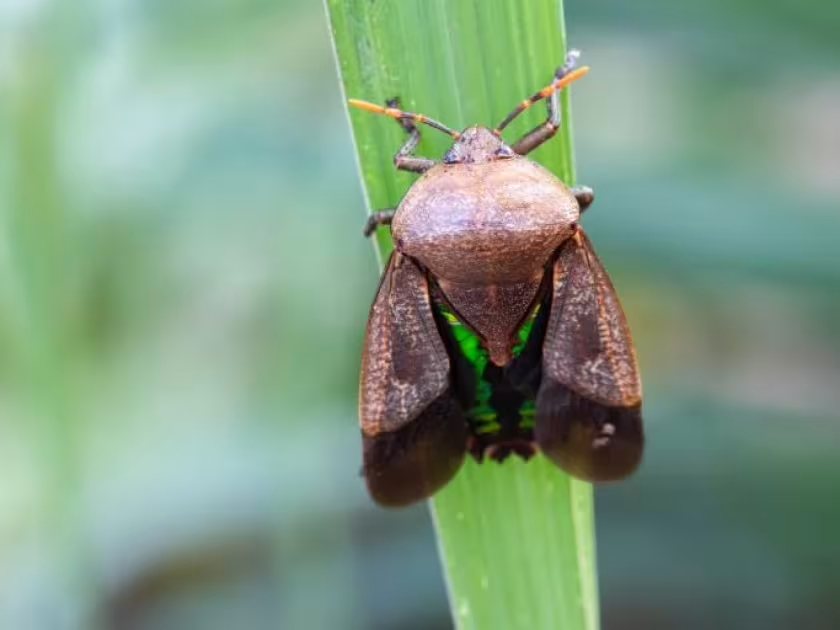
The rice bug, Scotinophara inermis, is a significant insect pest belonging to the Pentatomidae family, commonly known as shield bugs. These insects are characterized by a broad, shield-shaped body, typically measuring 8–10 mm in length.
The adult insect has a dark brown or blackish color with a textured exoskeleton. Its head features a specialized piercing-sucking mouthpart (proboscis) designed to penetrate plant tissues.
The life cycle includes an egg stage, several nymphal instars, and the adult stage. Nymphs resemble smaller, wingless versions of the adults, often with lighter or variegated markings.
These bugs are primarily nocturnal or crepuscular, spending the daylight hours hiding at the base of the rice stalks or beneath the canopy to avoid desiccation and predation.
Their physical structure allows them to grip stalks firmly, making them difficult to dislodge during irrigation or heavy winds without physical intervention.
What it damages
Scotinophara inermis feeds by inserting its proboscis into the stems and leaves of rice plants. This feeding process drains the plant of essential sap and nutrients.
Severe infestations cause a condition frequently referred to as "bugburn." Symptoms include yellowing, browning, and necrosis of the leaves, eventually leading to plant wilting.
When infestation occurs during the vegetative stage, the plant's growth is stunted, and tillering is inhibited. This reduction in biomass leads to lower overall grain yield.
The most critical damage occurs during the flowering and grain-filling stages. Bugs targeting the developing panicles cause grain discoloration and, in many cases, complete sterility (empty grains).
Beyond direct physical damage, the punctures left by the insects create entry points for secondary plant pathogens, further compromising the health and quality of the crop.
When it appears
The seasonal activity of the rice bug is highly correlated with the moisture levels of the rice fields. They overwinter as adults in protected locations such as weeds, soil crevices, or crop debris.
Activity resumes in the spring as temperatures rise, prompting the adults to move into the newly planted rice fields where they begin feeding and mating.
Females lay clusters of eggs on the underside of rice leaves near the water level. The high humidity in paddy fields provides optimal conditions for egg hatching and nymph development.
Under favorable tropical or subtropical conditions, the pest can complete multiple generations within a single rice growing season, leading to rapid population surges.
As the rice crop reaches maturity and fields begin to dry, the bugs migrate out of the fields to find suitable overwintering sites for the next season.
Signs of infestation
Early symptoms of infestation include discolored, yellowish patches on the lower leaves. These patches often expand and darken as the tissue dies due to prolonged feeding.
Plants may show signs of stress, including stunted growth and curling of leaf tips. A closer look at the base of the stalks often reveals dense clusters of adult bugs hiding in the shade.
The presence of tiny black spots (puncture marks) on the stem is a diagnostic indicator. In some cases, a faint, pungent odor may be detected near the infected patches.
Visualizing the insects is easiest in the early morning or late evening. Disturbance of the rice plants may cause the bugs to drop toward the water level to hide.
During the harvest, high percentages of empty or malformed grains provide a retrospective confirmation that the crop was under pressure from rice bug infestation.
Control measures
Integrated Pest Management (IPM) is the most effective approach to control Scotinophara inermis, starting with strict field sanitation to remove overwintering sites.
Water management is a powerful tool; periodic draining of the rice fields exposes nymphs to dry conditions, significantly reducing their survival rate.
Biological control agents, such as egg parasitoids and generalist predators, play a crucial role in suppressing population growth and should be encouraged within the agroecosystem.
When the population exceeds the economic threshold, the application of selective insecticides is recommended to minimize damage while protecting beneficial insect populations.
- Regular monitoring using light traps to track population trends.
- Planting resistant or early-maturing rice varieties.
- Clearing weeds on bunds and irrigation channels.
- Post-harvest tillage to destroy overwintering adults in soil.
Taxonomy
- Latin name
- Scotinophara inermis
- Order
- Hemiptera (bugs, aphids, leafhoppers)
- Family
- Pentatomidae
- EPPO code
- SCOTIN
Discussion
No discussions yet — be the first.