
Scotinophara
Scotinophara
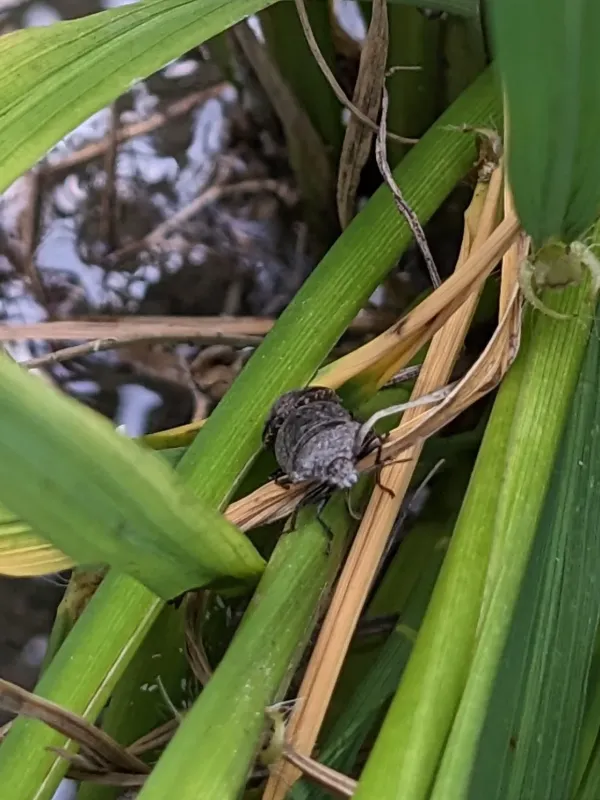
Description
How to identify
Scotinophara is a genus of stink bugs belonging to the family Pentatomidae in the order Hemiptera. These insects are characterized by their shield-shaped bodies and dark brown to black coloration.
The adults possess a hard exoskeleton that serves as a robust defense mechanism. They are equipped with a piercing-sucking mouthpart, which is evolved to extract sap from plant tissues efficiently.
Their life cycle involves incomplete metamorphosis, progressing through egg, nymph, and adult stages. Nymphs resemble miniature versions of adults but lack fully developed wings and often exhibit different color patterns.
These bugs are moisture-dependent and tend to congregate in high-humidity areas, often hiding at the base of stalks near the water level in paddy fields.
Like many members of the Pentatomidae family, Scotinophara release a pungent, foul-smelling chemical secretion when disturbed or threatened by predators.
What it damages
The primary host of Scotinophara is rice (Oryza sativa), earning them the common name "black rice bug" due to their significant impact on rice production.
Beyond rice, these insects can occasionally infest other cereal crops, such as wheat, corn, and millet, especially when these are planted in close proximity to rice cultivation zones.
The damage is caused by the nymphs and adults feeding on plant sap. They pierce the stems and leaves, effectively draining the plant's essential fluids and nutrients.
The most severe damage occurs during the vegetative growth stage of the rice plant. Heavy infestations can lead to substantial yield losses across large paddy areas.
Chronic feeding weakens the host plant, resulting in stunted growth and increased susceptibility to secondary infections, such as bacterial or fungal pathogens.
When it appears
The activity of Scotinophara is strongly correlated with humidity and temperature, with peak populations usually aligning with the active growing season of the rice crop.
They overwinter as adults in the soil, under plant debris, or in sheltered areas surrounding the fields, remaining dormant until weather conditions improve.
With the onset of the irrigation season, adult bugs migrate to the fields. Breeding and egg-laying typically occur shortly after the crops are established.
Several generations can complete their development during a single season, leading to a rapid population surge that peaks as the rice grains begin to mature.
As temperatures drop or fields are drained at the end of the harvest, the bugs move away to seek protected locations for their winter diapause.
Signs of infestation
The initial signs of infestation include the appearance of yellow or brown spots on the leaves, which eventually wither and die due to continuous nutrient loss.
Infected plants often exhibit stunted growth and general chlorosis. In the case of severe feeding at the base, the entire stem may wilt and turn brownish.
A key indicator of an infestation is observing clusters of black bugs at the base of the rice stalks, just above the water level or soil surface.
During the grain-filling stage, bug activity causes the development of "white heads" or empty grains, as the insects prevent the proper flow of nutrients to the panicle.
- Yellowing of leaf tips and margins
- Wilted and stunted young tillers
- Presence of empty or unfilled grain heads
- Clusters of black bugs at the plant base
- A distinct pungent odor in the field
Control measures
Controlling Scotinophara requires a holistic management strategy that combines cultural, biological, and chemical control measures.
Cultural practices, such as draining rice fields periodically, can disrupt the bug's life cycle and force nymphs to abandon their habitat due to lack of moisture.
Strict weed management around the fields is essential, as overgrown vegetation provides critical overwintering sites for the adult bugs between growing seasons.
Chemical intervention with insecticides is recommended when scouting reveals populations that exceed the economic threshold to prevent widespread crop failure.
Promoting a healthy ecosystem by encouraging natural predators, such as spiders and parasitic wasps, serves as a sustainable biological tool for long-term population suppression.
Taxonomy
- Latin name
- Scotinophara
- Order
- Hemiptera (bugs, aphids, leafhoppers)
- Family
- Pentatomidae
- EPPO code
- SCOTSP
Discussion
No discussions yet — be the first.