
Scopelodes venosa
Scopelodes venosa
Description
How to identify
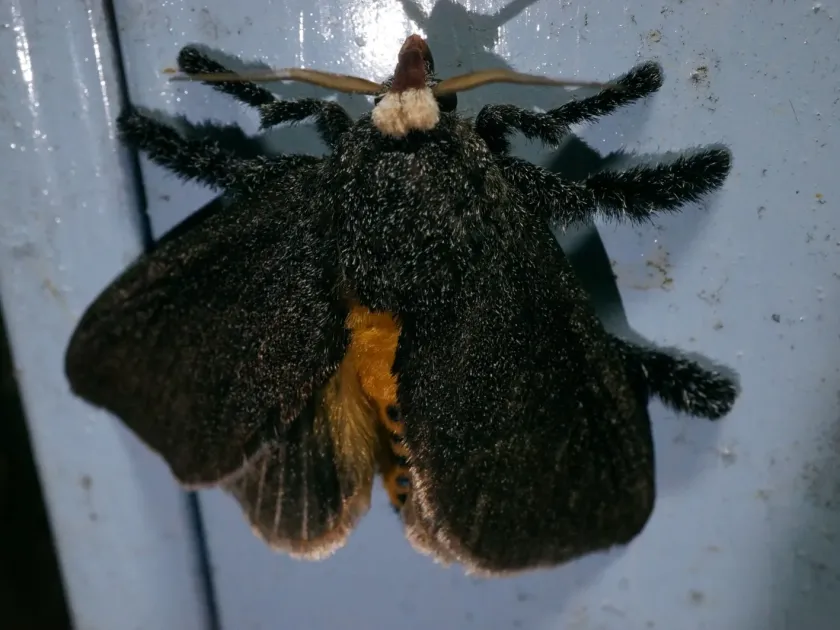
Scopelodes venosa is a moth belonging to the Limacodidae family, commonly known as slug moths. These insects are classified within the order Lepidoptera and are recognized for their distinct physiological traits.
The larvae, which are the primary pest stage, resemble small slugs. They lack traditional jointed legs and instead use suction-like structures on their ventral side to glide across surfaces, a characteristic feature of the family.
The body of the caterpillar is usually flattened and often brightly colored, acting as aposematic coloration to warn predators of potential toxicity or irritant hairs present on their skin.
Adult moths are generally nocturnal and possess cryptic coloration, allowing them to blend in with tree bark during daylight hours. Their wings show specific venation patterns that give the species its scientific name.
The development cycle progresses through metamorphosis, including egg, larva, pupa, and imago stages. Pupation occurs within firm, rounded cocoons frequently attached to host plant foliage or bark.
What it damages
Scopelodes venosa is considered an agricultural and forestry pest, feeding on various woody plants, trees, and shrubs, including commercially significant fruit crops.
The caterpillars are voracious defoliators. They feed on the leaf blades, often leaving behind only the central vein or causing large, irregular holes that severely compromise the plant's photosynthetic capacity.
Heavy infestations can lead to total defoliation of a tree. This results in significant physiological stress, reduced sugar production, and weakened growth, which in turn leads to lower yields.
Continuous damage to the leaves makes the plants more susceptible to environmental stressors and secondary pathogenic infections, such as fungal rots that enter through damaged tissues.
In addition to direct crop loss, the presence of these larvae on fruits or leaves can decrease the marketability of produce, especially for ornamental or high-value crops where visual quality is critical.
When it appears
The life cycle of this species is highly dependent on environmental temperature and regional climate. Adults typically emerge in late spring or early summer to initiate mating.
Generational overlap is common in warmer climates, leading to a prolonged period of pest presence from spring through late autumn, which requires consistent monitoring by agronomists.
Peak larval activity generally occurs mid-season when temperatures are optimal for growth. This is the period when damage becomes most visible and the need for control interventions is highest.
The winter months are spent in a state of diapause, usually in the pupal stage. The durable cocoons protect the developing insect from winter frosts until conditions improve the following year.
Weather fluctuations, such as unusually warm winters or humid springs, can influence the timing of emergence, making historical data and local pheromone trap monitoring essential tools for management.
Signs of infestation
The most common sign of infestation is irregular defoliation, where leaves are skeletonized or stripped of their margins. The foliage damage often appears in specific sectors of the canopy.
Small, dark, granular frass (droppings) located beneath the branches are a clear indication that a colony of caterpillars is actively feeding in the upper canopy.
Direct observation of the caterpillars on the undersides of leaves is possible, though their camouflaged appearance often makes them difficult to spot without careful inspection.
Firm, brownish cocoons found attached to twigs or at the base of leaves confirm that the pests have established a presence and are successfully completing their reproductive cycle.
Stunted growth or chlorosis of the leaves can indicate that the plant's vascular and nutritional systems have been compromised due to intense feeding by the larvae.
Control measures
Effective management of Scopelodes venosa relies on an Integrated Pest Management (IPM) approach that minimizes chemical reliance while maximizing natural control mechanisms.
Sanitation practices, such as removing heavily infested branches and disposing of fallen leaf litter containing cocoons, can significantly reduce the overwintering population.
Biological control methods involve protecting and encouraging natural enemies, such as parasitic wasps and tachinid flies, which are known to prey on or parasitize Limacodidae larvae.
When chemical intervention is required, focus should be on using biorational insecticides like Bacillus thuringiensis or insect growth regulators that target younger larvae while protecting beneficial insects.
Regular field scouting and pheromone trap usage help determine the exact population density, ensuring that control measures are applied only when economically necessary.
Taxonomy
- Latin name
- Scopelodes venosa
- Order
- Lepidoptera (butterflies)
- Family
- Limacodidae
- EPPO code
- SCOPVE
Discussion
No discussions yet — be the first.