
Scopelodes contracta
Scopelodes contracta
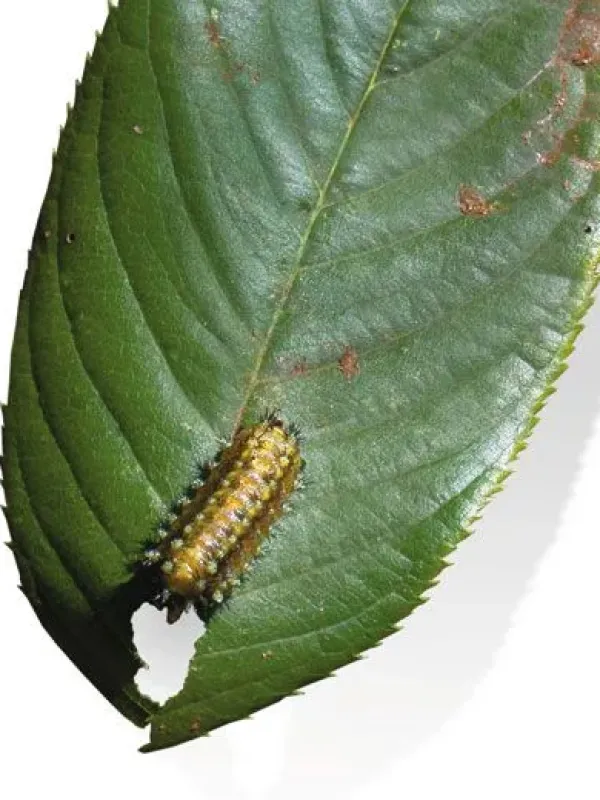
Description
How to identify
Scopelodes contracta belongs to the family Limacodidae, commonly known as slug moths. The adult moth has a wingspan of approximately 45 mm with yellowish-brown wings, allowing for excellent camouflage against tree bark.
The larvae, or caterpillars, have a unique slug-like appearance. They lack standard prolegs and move with a gliding motion. Their bodies are thick, fleshy, and often feature distinctive bright colors, which warn predators of their toxicity.
The head of the caterpillar is often retracted into the thoracic segments, giving the body a rounded, droplet-like shape. Some stages of the larvae are covered in fine, stinging hairs that can cause irritation upon contact.
Development proceeds through several larval instars. As they grow, their size increases significantly, and they become more visually prominent on the foliage of host plants.
Pupation occurs within a tough, spherical, dark-brown cocoon. These cocoons are typically attached to branches, twigs, or the underside of leaves, providing a resilient shelter for the developing moth.
What it damages
The primary damage is caused by the larvae, which are voracious leaf feeders. They consume the leaf blades, often leaving behind only the veins or creating irregular holes, which significantly reduces the plant's photosynthetic surface.
This pest affects a variety of plants, including fruit trees like apples, pears, and citrus, as well as several ornamental woody species. Vineyards located within their range are also susceptible to infestation.
Severe infestations can lead to significant defoliation of the tree. When a tree loses a large portion of its leaves, it becomes stressed, which limits nutrient storage and negatively impacts the following year's bud development.
Young plants in nurseries are at the highest risk. Damage to developing buds and tender shoots can result in stunted growth and structural deformity of the sapling, making recovery difficult.
In some cases, the larvae may also graze on the surface of young fruits, causing scarring and reducing their commercial value, even if the internal fruit remains intact.
When it appears
The life cycle of Scopelodes contracta is highly synchronized with the warmer months of the year. Adult emergence typically follows the onset of sustained spring temperatures, signaling the start of the mating season.
Eggs are deposited on the underside of leaves, ensuring that hatching larvae have immediate access to food. The primary larval activity period occurs during mid-summer, when the pests grow rapidly.
By late summer, the larvae finish feeding and undergo pupation. The cocoons are formed and remain in a dormant state through the colder months, protecting the pupa until the next spring.
In regions with milder climates, the species may complete two generations within a single growing season, leading to more complex control challenges for orchard managers.
Monitoring the flight period of adults using pheromone or light traps is a critical step in determining the exact timing for preventative measures before the larvae hatch and start feeding.
Signs of infestation
One of the earliest signs of infestation is the appearance of skeletonized leaves or irregular gaps in the foliage. This creates a lace-like appearance on the tree canopy.
Accumulation of larval excrement (frass) under the foliage or on the ground below the infested branches is a clear indicator of the presence of feeding caterpillars.
Dark, hardened cocoons attached to the bark or branches serve as a sign of the pest's presence. These are often mistaken for natural tree growths or seeds due to their shape.
Wilting or yellowing of individual leaves, particularly those located near the feeding sites, often suggests that the larvae have compromised the vascular flow or caused significant tissue damage.
Visual identification of the slug-like larvae on the leaves is the most direct sign. Their unusual, non-caterpillar-like shape makes them relatively easy to distinguish from other common garden pests.
Control measures
Management of Scopelodes contracta requires an integrated approach. Regular visual inspections of the orchard during the summer are essential for early detection.
Mechanical control, such as hand-picking the larvae or pruning branches infested with cocoons during the dormant season, is highly effective for smaller garden settings.
Biological control using microbial insecticides based on Bacillus thuringiensis (Bt) is recommended for younger larvae, as it minimizes impact on beneficial insect populations.
- Application of contact insecticides during the early larval stage for large-scale infestations.
- Encouraging natural predators, such as predatory wasps and birds, which can help keep populations in check.
- Sanitation measures, including the removal of old cocoons during winter pruning to break the life cycle.
It is important to rotate chemical classes of insecticides to prevent the development of resistance. Applications should always be performed based on the established economic threshold for the crop.
Taxonomy
- Latin name
- Scopelodes contracta
- Order
- Lepidoptera (butterflies)
- Family
- Limacodidae
- EPPO code
- SCOPCO
Discussion
No discussions yet — be the first.