
Scopelodes
Scopelodes
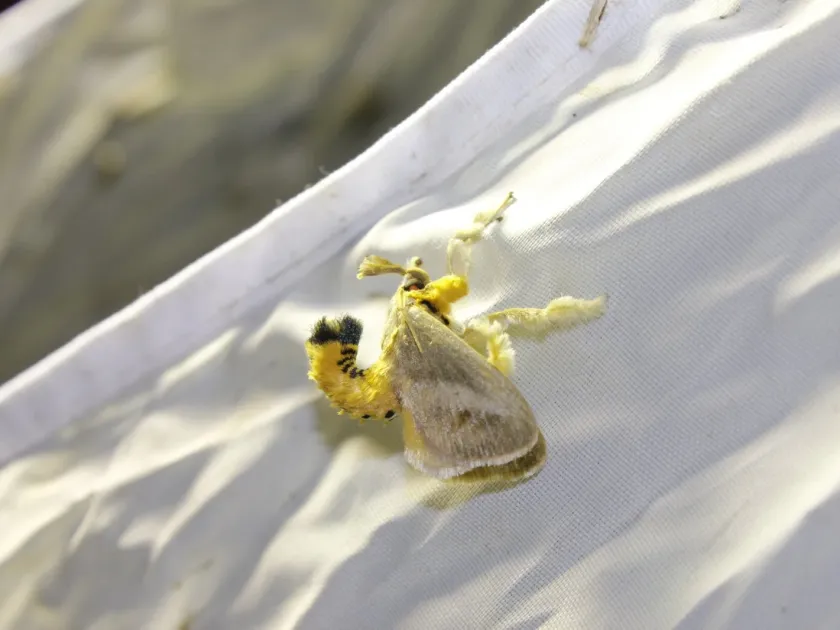
Description
How to identify
Scopelodes is a genus of moths belonging to the family Limacodidae, commonly known as slug moths or cup moths. Adult insects have a robust, hairy appearance typical of this family.
The larvae, or caterpillars, of this genus are distinct due to their flattened, slug-like body shape. They lack the typical prolegs of other moth larvae and move by gliding across the leaf surface.
Their coloration is usually cryptic, blending perfectly with foliage, ranging from shades of green to brown. The body is often covered in stinging hairs or spines that act as a potent defense mechanism against predators.
The life cycle includes complete metamorphosis: egg, larva, pupa within a hard, nut-like cocoon, and adult moth. These cocoons are incredibly durable and often attached to twigs or branches.
Adult moths possess a developed proboscis but are primarily nocturnal. Due to their secretive nature and night-time activity, they are rarely observed during the day, making the larval stage the most recognizable part of the life cycle.
What it damages
Scopelodes larvae are polyphagous, capable of feeding on a wide range of woody plants, shrubs, and trees. This feeding habit makes them a potential threat to both ornamental gardens and agricultural orchards.
The primary damage is caused by the voracious appetite of the caterpillars, which consume leaf tissue. They often start by feeding on the leaf margins, eventually skeletonizing the entire leaf and leaving only the midribs.
Severe infestations can lead to widespread defoliation of trees. This loss of photosynthetic surface area significantly weakens the plant, reducing its vigor and ability to store reserves for the winter or for fruit production.
Young nursery saplings are particularly vulnerable. Heavy feeding can lead to stunted growth, distorted branching, and increased susceptibility to secondary infections by pathogens and fungi.
Economic damage is most significant in areas where the pest reaches outbreak proportions, leading to reduced yields in crops like coffee, tea, and various fruit-bearing species found in tropical and temperate regions.
Signs of infestation
The first indicator of an infestation is the presence of irregular "window-pane" holes or ragged edges on the leaves, caused by the caterpillars' characteristic feeding style.
Visual inspection of the underside of leaves during the early morning or late evening often reveals the larvae resting motionlessly, camouflaged against the plant tissue.
The presence of dense, rounded, and extremely hard cocoons attached to the branches of trees provides evidence of the insect's life cycle being completed in the immediate vicinity.
Accumulation of frass (caterpillar droppings) on the ground or on lower foliage is a strong indicator of an active population feeding in the upper canopy.
Physical discomfort, such as an itching or burning sensation upon touching the foliage, suggests the presence of stinging larvae, as their defensive hairs can easily trigger a skin reaction in humans.
Control measures
For smaller plants or minor infestations, manual removal of larvae is effective. Always wear protective gloves to prevent skin contact with the irritating stinging hairs.
Biological control using microbial insecticides, such as Bacillus thuringiensis (Bt), is highly effective against early-instar larvae while remaining safe for most beneficial insects and the environment.
In cases of high pest density, chemical control with registered insecticides may be necessary. It is crucial to apply these treatments according to label instructions to minimize impact on non-target species.
Promoting natural predator populations is a sustainable strategy. Birds, predatory bugs, and parasitic wasps are known to keep slug moth populations in check within balanced ecosystems.
Winter pruning of infested branches, where cocoons are located, is a vital cultural control method. This practice helps to significantly reduce the overwintering generation and prevents population surges in the spring.
Taxonomy
- Latin name
- Scopelodes
- Order
- Lepidoptera (butterflies)
- Family
- Limacodidae
- EPPO code
- SCOPSP
Discussion
No discussions yet — be the first.