
Giant tropical centipede
Scolopendra subspinipes
Description
How to identify
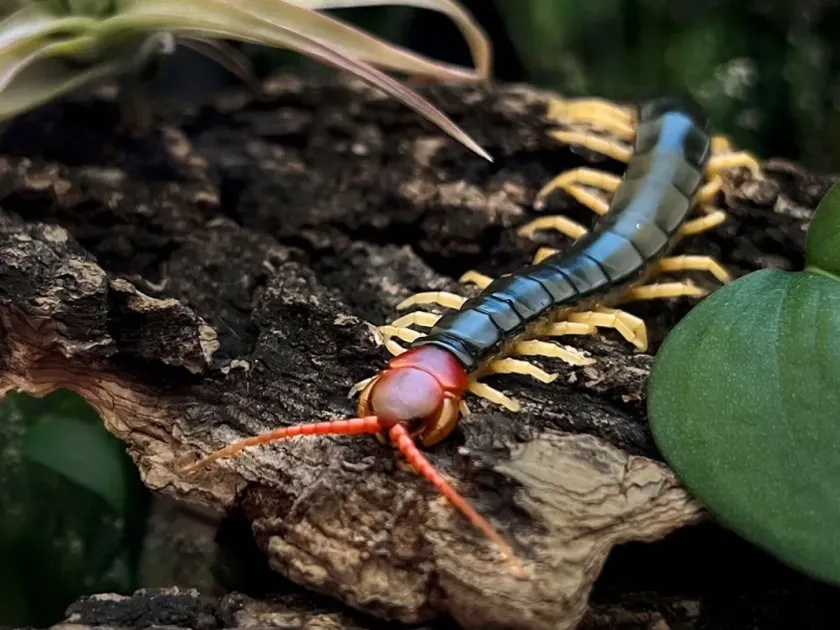
The giant tropical centipede (Scolopendra subspinipes) is a significant member of the family Scolopendridae. Adults can grow up to 25 cm in length, making them some of the largest centipedes globally.
The body is elongated and segmented, featuring between 21 and 23 pairs of legs. The head contains specialized venomous appendages known as forcipules used for hunting prey.
They exhibit a wide range of colors, from reddish-brown to dark olive, often with distinct bands on each segment that provide camouflage in soil and leaf litter.
Their biological lifecycle is closely linked to tropical and subtropical climates where humidity is high. They are nocturnal hunters, active primarily at night.
Females exhibit maternal care for their eggs until they hatch, which ensures a high survival rate for the offspring in stable environmental conditions.
What it damages
The giant tropical centipede is primarily a predator. While it does not consume plant matter, its presence in greenhouses can cause secondary damage to agricultural operations.
Centipedes may unintentionally damage young plant roots or delicate seedlings while burrowing through light potting media or loose topsoil in search of prey.
The most significant impact on agricultural productivity is the disruption of the ecosystem through the consumption of beneficial predatory insects and earthworms.
In container-grown crops, excessive burrowing can disturb the root zone, leading to poor nutrient uptake and decreased vitality in sensitive greenhouse plants.
Worker safety is a major concern; accidental stings during horticultural activities can be painful and may pose health risks, requiring careful management of the greenhouse environment.
Signs of infestation
Signs of infestation include the presence of small, winding burrows in the soil surface, particularly near moist areas or underneath greenhouse benches.
Shed exoskeletons found around the base of plants or in dark crevices are a clear indicator that the centipedes are established in the area.
The sudden disappearance of soil-dwelling organisms, such as beneficial mites or earthworms, may signal the presence of a predator like S. subspinipes.
Direct sightings during night-time inspections, especially after irrigation, confirm the presence of these large invertebrates in the cultivation facility.
Occasional encounters or bites reported by workers during maintenance are often the first sign that the local population density requires management intervention.
Control measures
Sanitation is the most effective management tool. Removing debris, decaying wood, and dense leaf litter eliminates the shelter and moisture they require.
Maintaining proper soil moisture and improving drainage can reduce the attractiveness of the greenhouse to centipedes looking for humid nesting sites.
Physical exclusion methods, including sealing gaps in flooring and using fine-mesh screens on ventilation openings, prevent access from the surrounding environment.
If population levels are high, non-toxic barriers or localized application of registered insecticidal dusts in non-crop zones may be used as a last resort.
- Regular removal of organic debris;
- Improving greenhouse drainage;
- Sealing potential entry points;
- Monitoring with nocturnal trap inspections.
Taxonomy
- Latin name
- Scolopendra subspinipes
- Family
- Scolopendridae
- EPPO code
- SCOESU
Discussion
No discussions yet — be the first.