
Giant centipede
Scolopendra heros
Description
How to identify
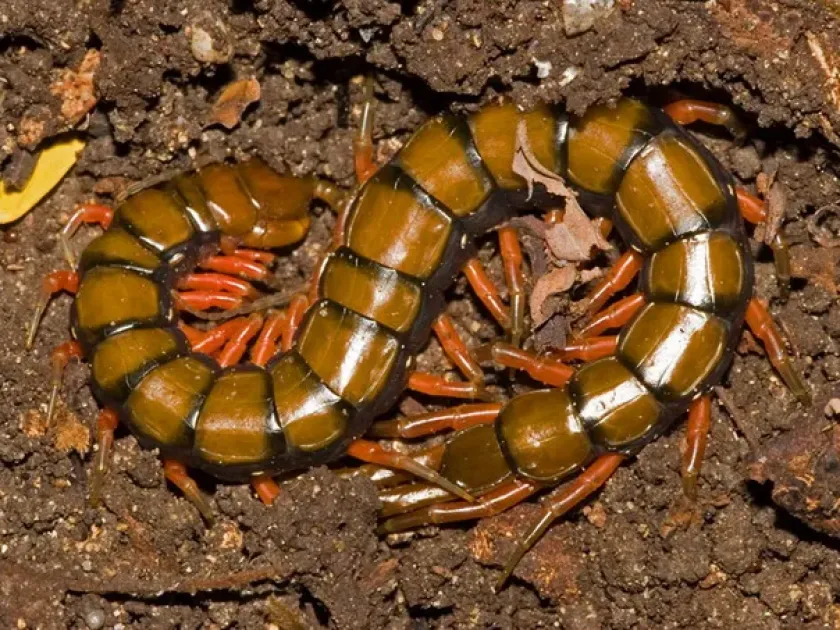
The giant centipede (Scolopendra heros) belongs to the order Scolopendromorpha and the family Scolopendridae. It is a large, predatory arthropod known for its segmented body and aggressive nature.
These organisms can reach lengths of up to 20 centimeters. Each segment of the body is equipped with a pair of legs, enabling rapid and agile movement through both soil and leaf litter.
They possess specialized mouthparts called forcipules, which are venom-bearing appendages used to paralyze their prey. These features make them highly effective hunters in agricultural ecosystems.
The coloration of Scolopendra heros is typically distinct, often featuring a vibrant pattern that acts as a warning to potential predators in their native environment.
These centipedes are nocturnal, preferring dark, damp microclimates. During the day, they remain hidden in soil crevices, under rocks, or beneath piles of garden debris to stay moist.
What it damages
While giant centipedes primarily feed on insects and small invertebrates, they can turn into pests in greenhouse settings when their preferred natural food sources become scarce.
They are known to damage young vegetable seedlings by gnawing at stems and root systems. This feeding behavior disrupts nutrient uptake, often leading to stunted growth or plant death.
Because they frequently feed at the base of the plant, their damage can go unnoticed until the plant begins to wilt or collapse entirely due to root system destruction.
Wounds caused by centipede feeding create entry points for soil-borne pathogens, including various types of rot and bacteria, which can devastate young plant populations.
In high-density greenhouse environments, a large population of these centipedes can lead to significant economic loss by impacting the germination and survival rates of young crops.
Signs of infestation
The most noticeable sign of damage is the appearance of mechanical gnaw marks on the stalks or the presence of hollowed-out areas within the root zone of the affected plants.
Gardeners often detect them when moving pots or shifting mulch, as the centipedes quickly retreat into the dark, soil-rich areas upon being disturbed by light or vibration.
Wilting of seedlings without obvious signs of common fungal diseases or wilting viruses should prompt a closer investigation of the root zone for centipede presence.
You may also observe small, burrow-like holes in the soil surface near the stem, which are characteristic of their movement and hunting activity during the night.
In humid areas, the presence of these large arthropods can be confirmed by nocturnal scouting, as they are most active during the night seeking moisture and prey.
Control measures
The first line of defense is rigorous sanitation. Removing organic debris, rotting wood, and excessive mulch from the planting area reduces the available habitat for centipedes.
Proper soil management is crucial; ensuring good drainage and avoiding chronically waterlogged soil will make the environment less hospitable for these moisture-loving pests.
Mechanical control using damp trap boards or cardboard strips placed near vulnerable plants can be highly effective, as centipedes will seek these out as daytime hiding spots.
If an infestation reaches threshold levels, use of target-specific soil insecticides may be necessary, provided they are labeled for use on the specific crop and application area.
- Regular soil cultivation to disturb nesting sites
- Maintenance of clean aisles in greenhouses to prevent colonization
- Encouraging natural predators such as birds and ground beetles
Taxonomy
- Latin name
- Scolopendra heros
- Family
- Scolopendridae
- EPPO code
- SCOEHE
Discussion
No discussions yet — be the first.