
Scolopendra morsitans
Scolopendra morsitans
Description
How to identify
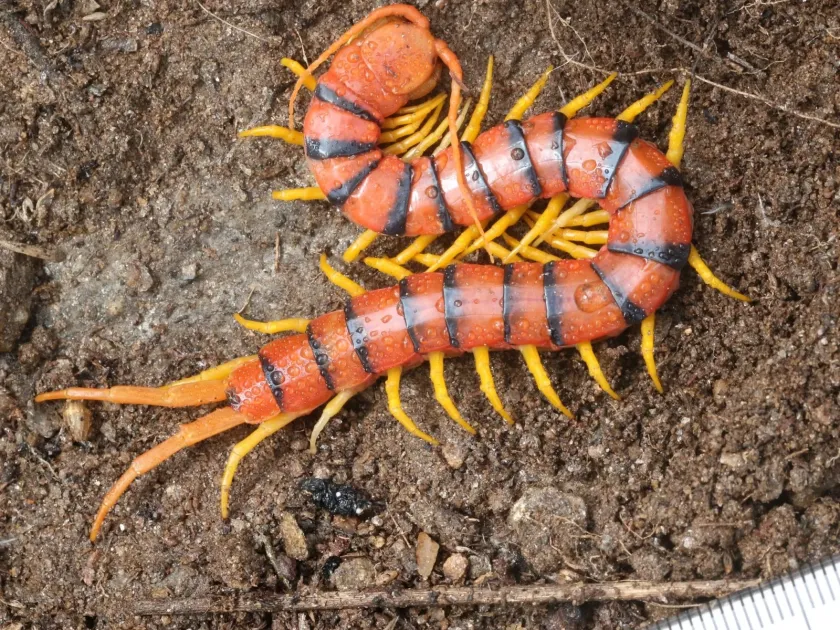
Scolopendra morsitans, a member of the Scolopendridae family and the Scolopendromorpha order, is a large centipede primarily found in tropical and subtropical climates.
The adult typically measures between 10 and 15 centimeters in length and is characterized by a segmented, olive-brown or yellowish body with numerous legs.
Its primary distinguishing feature is the presence of modified front legs called forcipules, which contain venom glands used to immobilize prey.
Unlike many insects, this centipede lacks a protective cuticle capable of preventing moisture loss, making it highly dependent on damp soil environments.
The reproductive cycle involves maternal care of the eggs, which increases the likelihood of offspring survival within stable, moisture-rich microhabitats.
What it damages
While primarily predatory and insectivorous, Scolopendra morsitans can cause incidental damage to horticultural crops when their natural food sources are scarce.
Young seedlings, tender stems, and soft roots are the most susceptible to damage, as these parts are easily accessible within the soil layers.
In greenhouses, these centipedes may disrupt the root systems of tomatoes, cucumbers, and ornamental flowers, leading to poor plant establishment.
The damage caused by their feeding activities often results in mechanical wounds that serve as entry points for secondary fungal and bacterial infections.
- Feeding on the roots of young seedlings.
- Girdling stems at the soil line.
- Damage to tubers and succulent root systems.
When it appears
Activity levels peak during warmer months, which align with the growth stages of many agricultural crops in both open fields and greenhouses.
In the spring, populations often migrate towards cultivated areas as soil temperature and moisture levels become ideal for their development.
As the weather cools in autumn, centipedes seek out protected environments, including compost heaps, mulched beds, and greenhouse infrastructure.
In controlled-climate greenhouses, their activity can be observed throughout the entire year, posing a year-round threat to fragile plant tissues.
They are strictly nocturnal, which makes identifying them difficult during daylight hours when they remain hidden in burrows or under surface debris.
Signs of infestation
Sudden wilting of young plants, despite adequate irrigation, is one of the most common early signs of a centipede infestation.
Visible excavations or shallow tunnels around the root zone are clear indicators that these arthropods are active in the growing medium.
The presence of centipede droppings near the base of the plant or within the soil tunnels confirms their occupancy of the immediate area.
During the night, individuals can sometimes be spotted roaming across the surface of the soil or climbing up greenhouse walls.
Slowed growth and stunted development of seedlings without any signs of foliage-based pests strongly suggest subterranean disturbance by centipedes.
Control measures
Good agricultural practices, such as thorough soil tillage, are essential to destroy tunnels and nesting sites, significantly reducing local populations.
Maintaining a clean cultivation area by removing decaying plant matter, wood debris, and trash helps eliminate hiding spots for the centipedes.
Managing soil moisture levels by avoiding excessive watering helps discourage centipedes from colonizing the root zone of vulnerable plants.
In severe infestations, the application of targeted soil-applied insecticides, approved for use on specific vegetable crops, can provide effective control.
Biological control methods, such as the use of entomopathogenic fungi or natural predators, provide a sustainable approach for integrated pest management in greenhouses.
Taxonomy
- Latin name
- Scolopendra morsitans
- Family
- Scolopendridae
- EPPO code
- SCOEMO
Discussion
No discussions yet — be the first.