
Obscure grasshopper
Schistocerca obscura
Description
How to identify
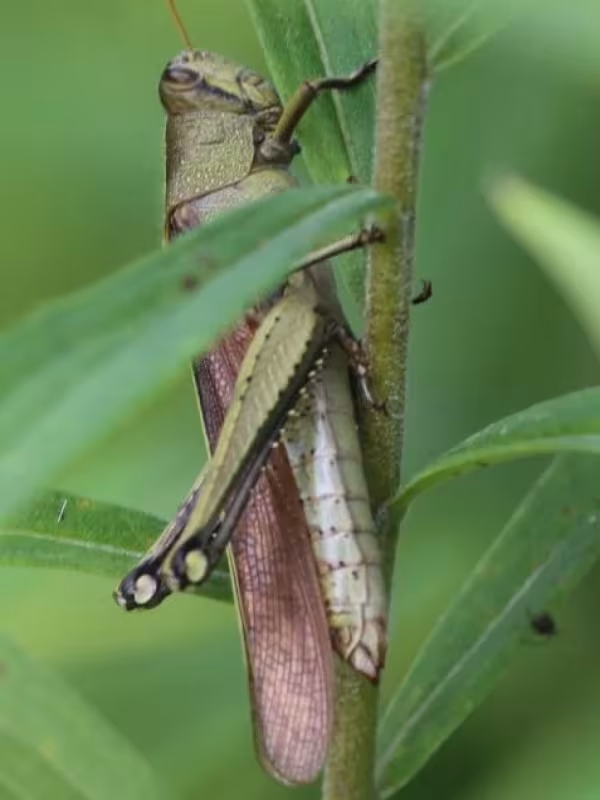
The Obscure grasshopper, scientifically known as Schistocerca obscura, is a prominent member of the Acrididae family, characterized by its relatively large size and distinctive appearance.
Adult insects typically measure between 40 and 60 millimeters in length, with females being notably larger than males, which is a common trait in this genus.
Their body color ranges from olive-green to dark brown, marked by a recognizable light-colored longitudinal stripe extending from the thorax down to the wings.
Well-developed wings grant these grasshoppers significant migratory capabilities, allowing them to travel long distances in search of food or during mating seasons.
The nymphs (immature stages) resemble miniature adults and undergo five molts, gradually increasing in size and color intensity until reaching the final winged stage.
What it damages
As a polyphagous insect, the Obscure grasshopper feeds on a wide variety of plant species, posing a serious threat to diverse agricultural sectors worldwide.
Key crops at risk include cereals like corn, wheat, sorghum, and millet, which can suffer devastating damage from both nymph and adult populations.
The pest also targets various vegetable crops, including tomatoes, peppers, and beans, often stripping leaves entirely and severely inhibiting plant development.
In cases of infestation, grasshopper swarms can destroy entire fields within a very short time frame, leading to significant economic losses for farmers.
Damaged plants are unable to sustain photosynthesis, resulting in stunted growth, low yields, and in severe cases, the total death of the crop stand.
When it appears
The life cycle of this species is highly temperature-dependent, with egg hatching usually occurring in the spring as soil temperatures begin to rise consistently.
Adult activity peaks during the warm summer months, providing ideal conditions for mating, egg-laying, and rapid population expansion in infested regions.
Females deposit their eggs in the soil during autumn, encasing them in a protective foam substance that helps them survive harsh winter temperatures underground.
Depending on the climatic zone, the number of generations per year may vary, with warmer regions potentially seeing multiple cycles within a single growing season.
Early season scouting is essential, as the first signs of nymph emergence indicate the start of the pressure period and the need for immediate action.
Signs of infestation
The most noticeable sign of damage is the appearance of large, irregular holes in leaves, often resulting in the total skeletonization of the foliage.
Large aggregations of grasshoppers are easily visible during the morning hours when they gather on the upper leaves of plants to bask in the sun.
The presence of insect frass (droppings) on the ground surface under crop rows is a reliable indicator of a significant resident population of pests.
Young cereal plants may appear shredded or completely defoliated, with stems partially consumed, causing the plants to collapse or wilt prematurely.
The distinct chirping sounds produced by males during the breeding season can serve as an audible warning of a growing infestation density in the area.
Control measures
Cultural control methods, such as deep plowing in the autumn, are effective in disturbing the soil and exposing egg pods to predators and winter elements.
Chemical control involving systemic insecticides is the primary method for managing large-scale outbreaks, particularly when nymphs are still in early stages.
Timed application of insecticides is critical, as young nymphs are far more susceptible to contact and ingestion-based pest control products than adults.
Biological control alternatives, including the use of entomopathogenic fungi, are increasingly used to suppress populations while minimizing the impact on non-target species.
Integrated Pest Management (IPM) practices, including constant field monitoring and setting up traps, allow for precise timing and targeted interventions to minimize crop loss.
Taxonomy
- Latin name
- Schistocerca obscura
- Order
- Orthoptera (locusts)
- Family
- Acrididae
- EPPO code
- SHICOB
Discussion
No discussions yet — be the first.