
Dung fly
Scathophaga
Description
How to identify
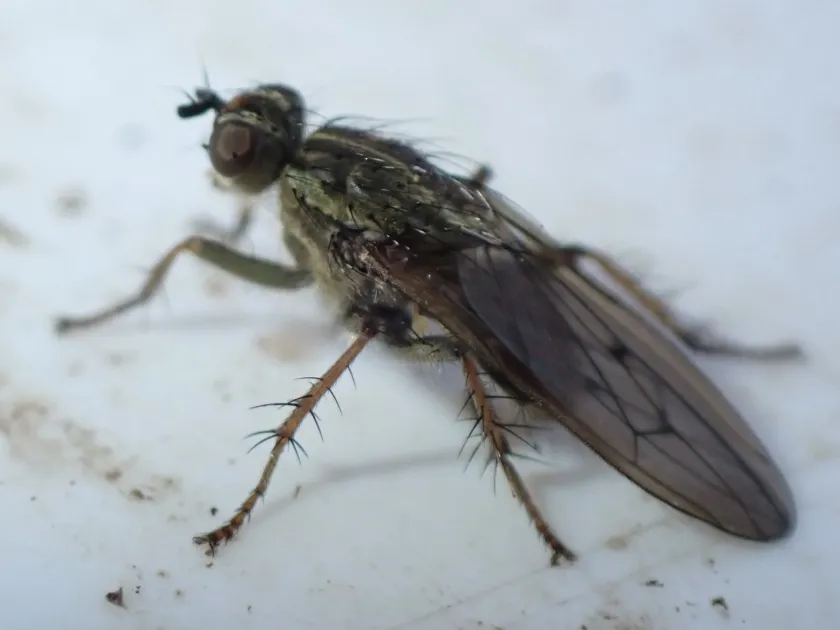
The dung fly, classified within the Scathophagidae family, is a distinct insect, often recognized by its hairy, yellowish-brown body and aggressive predatory behavior.
Adult flies act as significant predators in the ecosystem, hunting other small insects, which classifies them as beneficial species in many non-agricultural contexts.
Morphologically, they are robust, characterized by strong legs and specialized mouthparts adapted for both predatory activities and environmental navigation.
Larvae develop in animal excrement, which serves as their primary food source, demonstrating the species' adaptation to specific organic habitats within agricultural landscapes.
Belonging to the Diptera order, these insects are ubiquitous, and their presence is often dictated by the proximity of livestock or open manure deposits near cultivated areas.
What it damages
While primarily associated with livestock, dung flies can become pests when their larvae migrate from breeding grounds into the root zones of tender crop seedlings.
Direct damage is usually caused by the larvae feeding on organic tissue, which, if high in moisture, can extend to the softened tissues of young plant stems.
The primary threat to crops is indirect, as the larvae introduce pathogens through their feeding tunnels, leading to the rapid decay of plant structures.
Crops such as vegetables or young cereals can suffer from reduced growth vigor, chlorosis, and, in severe cases, total plant collapse due to root destruction.
The pest's impact is significantly influenced by soil moisture levels, with waterlogged conditions creating the most conducive environment for larval survival and plant attack.
When it appears
Active adult emergence typically begins in early spring, as temperatures rise, signaling the start of the breeding season for the first generation of the year.
Mass emergence periods are tightly linked to the availability of fresh organic substrate, which the adults use for mating and subsequent oviposition.
Depending on regional climatic conditions, the dung fly can complete multiple generations within a single season, maintaining a persistent presence in the field.
As temperatures begin to drop in late autumn, the species transitions into overwintering stages, typically occurring in the soil or protected organic debris.
Farmers should focus monitoring efforts during the early developmental stages of the crop, as this is when the plants are most vulnerable to larval interference.
Signs of infestation
Initial signs of a potential infestation include the visible accumulation of adult flies on the soil surface or near moisture-rich areas within the field borders.
Plant distress, manifested as yellowing foliage and stunted growth, is a key diagnostic indicator when checking crops in areas adjacent to manure storage.
Internal tunnels within the base of the stem or root crown, often accompanied by foul-smelling decay, confirm the presence of larval activity.
The sudden death of individual seedlings in patches suggests localized larval damage, requiring immediate inspection of the root zone for insect presence.
Observing a high number of flies in sticky traps placed near the field edge can serve as an early warning system for farmers to assess the risk of infestation.
Control measures
Effective management focuses on agronomic practices, primarily ensuring that manure is properly composted or incorporated deep into the soil to prevent access.
Crop rotation serves as a fundamental preventative measure, disrupting the life cycle of the pest by changing the environmental conditions in the root zone.
Chemical intervention should be used sparingly and only when damage thresholds are exceeded, given the predatory role adult dung flies play in controlling other pests.
Improving soil drainage is critical to reduce the appeal of the field for larval development, as these insects thrive in persistently moist, organic-rich substrates.
- Deep plowing of organic residues.
- Proper management of livestock waste.
- Monitoring field edges for adult activity.
- Using yellow sticky cards for population tracking.
Taxonomy
- Latin name
- Scathophaga
- Order
- Diptera (flies)
- Family
- Scathophagidae
- EPPO code
- SCPESP
Discussion
No discussions yet — be the first.