
Grain miner fly
Amaurosoma
Description
How to identify
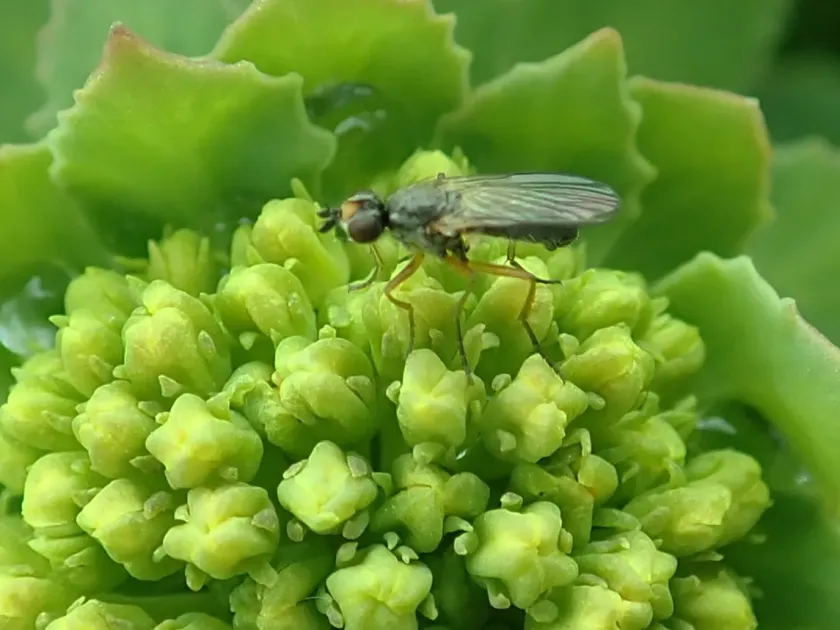
The grain miner fly (Amaurosoma) belongs to the family Scathophagidae. It is a small insect, typically measuring 5–7 mm in length, characterized by a greyish-black body covered in dense hairs.
Adult flies have wings with a slight dark tint and a well-developed mouthpart. Females are generally larger than males, which is a common trait among many species of this dipteran family.
The larvae are white or yellowish, legless maggots that can grow up to 8–10 mm. Their hidden lifestyle inside plant stems makes them difficult to spot during routine field inspections.
The life cycle encompasses four stages: egg, larva, pupa, and adult. These insects primarily overwinter as pupae in the soil at depths of 10–15 cm, ensuring high survival rates during winter.
Mass emergence of the adults typically occurs in early spring, coinciding with the tillering phase of winter cereals and the emergence of spring crops, which are most vulnerable at this time.
What it damages
Amaurosoma mainly affects cereal crops, including winter wheat, rye, and barley. The damage is primarily caused by the larvae, which feed on the internal tissues of the stems.
By boring into the stem, the larvae consume the growing point and the heart of the plant. This feeding activity disrupts the plant's development and often prevents the emergence of the ear.
Young plants are particularly susceptible. The larvae effectively "mine" the stem, leaving behind tunnels that weaken the plant structure significantly and stunt overall growth.
The severity of the damage is highly dependent on the population density of the pest and the growth stage of the crop during the spring migration of the flies.
In addition to tissue consumption, the feeding sites become entry points for secondary fungal and bacterial infections, which further deteriorate the health and yield potential of the cereal field.
Signs of infestation
The most prominent sign of infestation is the yellowing and wilting of the central leaf of the plant. This symptom is often referred to as "flagging" and indicates damage to the apical meristem.
Upon closer examination, one can identify a small entry hole on the stem. Dissecting the stem often reveals the presence of larvae or their excrement and feeding tunnels.
Infested plants usually appear stunted and lack the vigor of healthy neighboring crops. They often stand out in the field due to their chlorotic color and underdeveloped appearance.
In severe infestations, the internal core of the stem may be completely hollowed out, causing the plant to collapse or fail to produce a viable ear of grain.
Field diagnosis involves sampling plants in affected areas to determine the extent of larval colonization and to decide whether chemical intervention is necessary to save the crop.
Control measures
Effective crop rotation is the primary strategy for managing Amaurosoma populations. Avoiding continuous cropping of cereals on the same site prevents the buildup of the pest.
Agrotechnical methods, such as deep autumn plowing, are highly effective in destroying pupae buried in the soil, preventing them from emerging the following spring.
Optimizing planting dates helps crops grow past the vulnerable stage before the flies emerge in mass. Vigorous, well-fertilized plants are also more resilient to pest attacks.
When the economic threshold of damage is exceeded, systemic insecticides should be applied. These treatments target adult flies or early-stage larvae before they cause irreparable damage.
Seed treatment with systemic insecticides is recommended in areas with high historical pressure from the grain miner fly, providing early protection for emerging seedlings.
Taxonomy
- Latin name
- Amaurosoma
- Order
- Diptera (flies)
- Family
- Scathophagidae
- EPPO code
- AMAUSP
Discussion
No discussions yet — be the first.