
Water lily leaf miner
Hydromyza livens
Description
How to identify
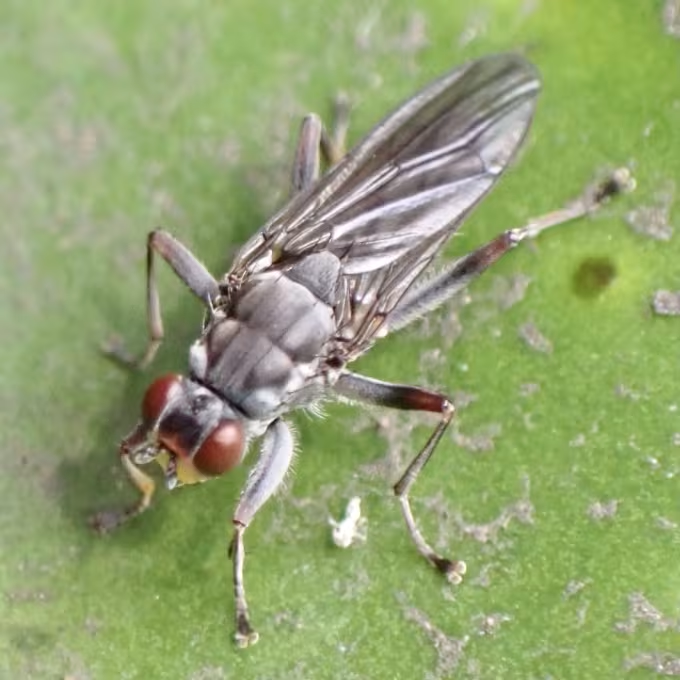
The water lily leaf miner (Hydromyza livens) is a dipteran fly belonging to the Scathophagidae family. It is a specialist insect adapted to freshwater habitats.
Adult flies are often observed resting on the surface of floating leaves of aquatic plants. They are relatively small and inconspicuous to the untrained eye.
The larvae are specialized leaf miners that feed exclusively on the internal tissues of their host plants, creating complex tunnels known as mines.
The lifecycle includes several developmental stages, with the larval stage being the most active and damaging period for host plant species.
Pupation occurs in specialized chambers within the leaf tissue, ensuring the pupa remains submerged and protected until the emergence of the adult fly.
What it damages
The primary host plants for this insect include yellow water-lily (Nuphar lutea) and white water-lily (Nymphaea alba).
The larvae tunnel through the leaf parenchyma, destroying the cells responsible for photosynthesis and causing significant stress to the plant.
Affected leaves often develop necrotic patches, lose their vitality, and may prematurely sink into the water column, leading to decay.
Severe infestations can result in the thinning of lily pads across the entire water surface, negatively affecting the health of the plant colony.
Open tunnels created by the larvae provide easy access for aquatic fungi and bacteria, which often cause further rot and leaf death.
Signs of infestation
The most distinctive sign of infestation is the presence of winding, pale tracks or tunnels within the leaf blades of water lilies.
Dark lines of larval excrement are usually visible inside the mines, which help to identify the activity of the leaf miner larva.
Leaves may show signs of blistering or thinning as the larva feeds inside the tissue, often leading to discoloration ranging from yellow to brown.
In advanced cases, the integrity of the leaf surface is broken, and the damaged areas may appear shredded as the tissue decays.
Observation of adult flies landing on the surface of the lily pads is a strong indication that the lifecycle is actively continuing in the area.
Control measures
Manual removal of infested leaves is the recommended management strategy to keep the population under control without affecting water quality.
Once removed, infested plant material should be disposed of away from the water source to ensure the lifecycle is completely broken.
Avoid using systemic or broad-spectrum insecticides in or near water, as they pose significant risks to aquatic life, including fish and beneficial insects.
Encouraging a diverse aquatic environment helps maintain balance, as predators such as predatory beetles and damsel fly larvae may prey on the flies.
Regular inspection of the pond surface during the growing season allows for early detection and ensures that management efforts remain minimal and effective.
Taxonomy
- Latin name
- Hydromyza livens
- Order
- Diptera (flies)
- Family
- Scathophagidae
- EPPO code
- HYDZLI
Discussion
No discussions yet — be the first.