
Common rudd
Scardinius erythrophthalmus
Description
How to identify
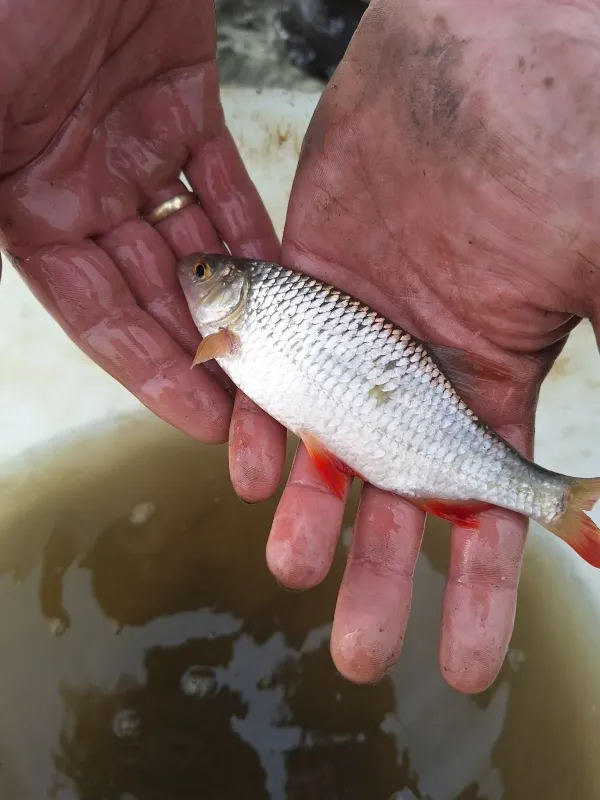
The common rudd (Scardinius erythrophthalmus) is a freshwater fish belonging to the family Cyprinidae. It is widely recognized by its golden-brown scales and distinctive bright red fins.
These fish typically reach lengths between 35 and 50 centimeters and can weigh over 1 kilogram. Their body is deep and laterally compressed, featuring a distinct keel along the belly.
The eyes of the rudd are notable for their orange-red iris, which serves as a key identifier for this species in various European and Asian water bodies.
Their terminal, upward-facing mouths are highly adapted for feeding on surface vegetation and aquatic plants, which makes them a concern in managed aquatic environments.
Agronomists working in aquaculture or pond-based crop systems identify them as potential pests due to their omnivorous diet and high activity levels.
What it damages
Common rudd cause significant damage to aquatic crops, particularly ornamental plants or those grown in managed hydroponic or pond environments.
The fish consume tender shoots, leaves, and stems of various aquatic species, such as water lilies and submerged vegetation, hindering their growth and aesthetic value.
Feeding activity is most destructive during the early growth stages of aquatic plants, when soft tissues are easily accessible and highly palatable to the fish.
High population densities in confined water bodies lead to the widespread destruction of plant cover, disrupting the local aquatic ecosystem balance.
Furthermore, their constant foraging increases water turbidity, which blocks necessary sunlight from reaching benthic plant life, effectively suppressing their development.
When it appears
The most active period for plant damage occurs during the warmer months, typically from late spring through the end of the summer season.
As water temperatures rise above 12-15 degrees Celsius, the metabolic rate of the fish increases, leading to more aggressive feeding behaviors on aquatic flora.
The peak of plant growth in the spring often coincides with the rudd's need for nutrients, leading to increased predation on new plant buds.
During autumn, as temperatures begin to drop, the fish's metabolic rate slows down, yet they continue to consume organic matter until winter dormancy.
In winter, common rudd remain largely inactive at the bottom of the water column, causing minimal to no damage to aquatic plant cultivation.
Signs of infestation
The most immediate indicator of rudd damage is the presence of ragged or bitten leaf edges, which are characteristic of their feeding style.
Stunted growth or missing plant sections in specific zones of the pond often indicate heavy grazing by schools of rudd inhabiting the area.
Floating fragments of leaves and stems on the water surface are common signs of messy feeding, where the fish tear apart more plant material than they consume.
Increased murkiness in the water around the plant beds serves as an indirect sign of the fish disturbing the sediment and the plant root structures.
- Ragged and bitten leaf margins.
- Absence of young, tender plant shoots.
- Floating plant debris on the surface.
Control measures
Physical barriers, such as fine-mesh nets, are the most effective way to protect high-value aquatic plant crops from rudd intrusion.
Regulating the population size within commercial ponds through systematic culling helps to mitigate the overall pressure on aquatic vegetation.
Providing alternative food sources within the pond can sometimes divert the fish's attention away from the cultivated crop species.
In highly intensive farming systems, utilizing closed-loop hydroponic or tank environments completely prevents fish access to the plants.
Maintaining a balanced ecosystem with appropriate predators or depth management can also reduce the likelihood of rudd dominating the pond environment.
Taxonomy
- Latin name
- Scardinius erythrophthalmus
- Family
- Cyprinidae
- EPPO code
- SCDIER
Discussion
No discussions yet — be the first.