
Scaptocoris
Scaptocoris
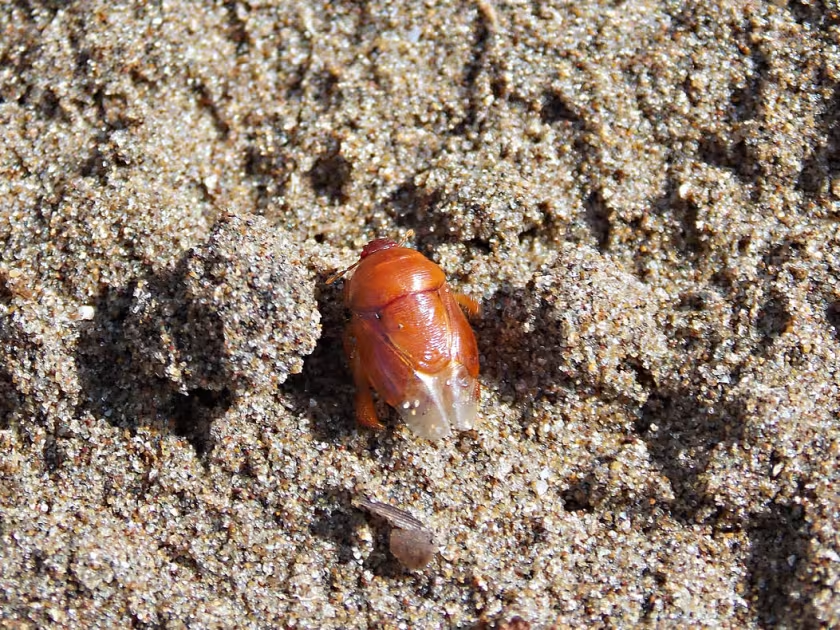
Description
How to identify
Scaptocoris is a genus of bugs belonging to the family Cydnidae, commonly known as burrowing bugs. These are specific subterranean insects that lead a hidden lifestyle within the soil profile.
Adult specimens have a characteristic body structure: flattened and oval-shaped, typically dark brown or black in color. Their forelegs are significantly thickened and highly adapted for digging through dense soil.
Nymphs resemble the adults in appearance but are lighter in color and lack developed wings. They undergo several developmental stages while remaining in the rhizosphere of the host plants.
These insects possess a specialized piercing-sucking mouthpart, which is perfectly adapted for puncturing plant roots and extracting nutrient-rich sap.
The insect's life cycle is closely tied to the soil environment. Adults and nymphs spend the majority of their time underground, preferring loose, well-aerated soils that allow for easy movement.
What it damages
Scaptocoris is a polyphagous pest that damages a wide spectrum of agricultural crops. The root systems of plants are particularly vulnerable during the early stages of development.
Significant damage is observed in crops such as maize, cotton, soybean, sorghum, and various cereals. In some regions, severe infestations in vegetable plots have also been reported.
Attacked roots cease to function normally. Necrotic spots form at the puncture sites, disrupting the transport of water and mineral nutrients to the plant's aerial parts.
Young plants often die shortly after germination. Mature specimens suffering from an infestation exhibit stunted growth and a critical reduction in overall crop yield.
Root damage often acts as an entry point for secondary infections, such as fungal diseases and rot, which multiplies the total scale of economic loss.
When it appears
The insect's activity is directly correlated with soil temperature and moisture levels. The highest levels of damage occur during the sowing and early crop growth phases.
In regions with distinct seasons, Scaptocoris survives unfavorable conditions (such as cold or drought) in deeper soil layers, moving vertically through the soil profile.
The peak of infestation typically occurs in the spring when nymphs begin feeding actively on seedling roots, coinciding with the phase of maximum vulnerability for the crops.
Reproduction takes place in the soil. Females lay eggs near the roots of host plants, providing offspring with direct access to food immediately upon hatching.
Migration of the bugs within the soil horizon can be influenced by agronomic practices, such as irrigation or tillage, which force the insects to relocate within the substrate.
Signs of infestation
Visual signs of infestation include patchy, uneven germination and stunted seedlings. Fields often appear mottled, with irregular areas of dead or weakened plants.
Excavating affected plants reveals thinned roots, presence of visible lesions, or necrosis. In the root zone, one can often find the bugs themselves or their developing nymphs.
Plants affected by Scaptocoris are prone to sudden wilting even when soil moisture levels are adequate, as the root system can no longer maintain proper turgor pressure.
In areas with high bug density, the soil may emit a characteristic odor associated with many members of the burrowing bug family.
Occasionally, adults may be observed on the soil surface after heavy rain or irrigation, as they are forced to leave their flooded burrows, although the main population remains hidden.
Control measures
Effective protection against Scaptocoris requires a multifaceted approach, as direct contact with the insects deep in the soil is challenging. Monitoring population density before sowing is essential.
Chemical control strategies include seed treatments with systemic insecticides, which provide protection for the seedling during its most critical growth stage.
Deep plowing and thorough soil preparation before planting can disrupt insect tunnels, mechanically destroying a portion of the population and exposing them to natural predators.
Crop rotation helps to reduce the build-up of the pest, as interrupting the food source on preferred host crops limits the ability of the bugs to multiply within the field.
The use of biological control agents, such as entomopathogenic fungi or nematodes, represents a promising direction for managing high-density pest populations in specific regions.
Taxonomy
- Latin name
- Scaptocoris
- Order
- Hemiptera (bugs, aphids, leafhoppers)
- Family
- Cydnidae
- EPPO code
- SCAOSP
Discussion
No discussions yet — be the first.