
Russelliana psyllid
Russelliana
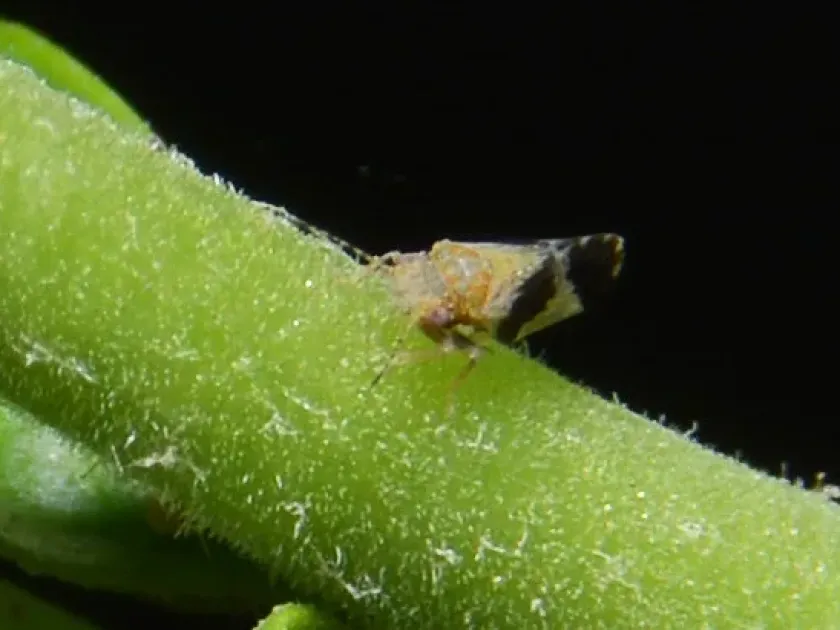
Description
How to identify
Psyllids of the genus Russelliana are members of the family Psyllidae, commonly known as jumping plant lice, characterized by their small size and robust hind legs.
Adults possess transparent wings that are held roof-like over the abdomen when at rest, which is a classic morphological feature of this group.
They are generally found in shades of yellow, green, or brown, allowing them to blend seamlessly with the foliage of their host plants.
Nymphs are typically flattened and often covered with waxy secretions, which provide protection against both predators and topical chemical applications.
Identification at the species level within the genus Russelliana is complex and often relies on the microscopic examination of male genitalia and specific host plant associations.
What it damages
The primary hosts for these pests are plants within the Solanaceae family, including economically important crops such as potatoes and tomatoes.
They feed on plant sap by piercing and sucking phloem tissues, which causes significant physiological stress and growth inhibition to the affected plants.
In addition to direct feeding damage, they are known to transmit various phytopathogens that can drastically reduce yield and compromise tuber quality.
The saliva injected during the feeding process can be phytotoxic, often leading to leaf curling, chlorosis, and general stunting of the plant canopy.
Severe infestations can lead to total crop failure if left unmanaged, particularly in regions where environmental conditions favor the rapid reproduction of the pest.
When it appears
The life cycle of the Russelliana psyllid is synchronized with the growing season of host plants, starting in early spring as temperatures rise.
Females lay eggs directly on the soft, succulent tissues of young shoots, ensuring that nymphs have immediate access to food upon hatching.
The number of generations per year depends heavily on the climatic conditions, with warmer regions allowing for continuous breeding and overlapping generations.
Population densities usually peak in the mid-summer months when host crops are in the most active stages of vegetative growth and fruit set.
As the season ends, the insects transition to dormant states or seek refuge on perennial wild hosts to survive the winter months.
Signs of infestation
Visual identification starts with observing curled, yellowing, or deformed leaves at the apical parts of the plant, often mistaken for nutrient deficiencies.
The presence of honeydew on the foliage is a key indicator, which often leads to the growth of sooty mold, giving the leaves a blackened appearance.
Upon closer inspection of the underside of leaves, one can find nymphs often protected by white, cottony, or waxy structures that they secrete.
Stunted growth, delayed development of buds, and a general lack of vigor in the crop are common indicators of a heavy infestation within the field.
In cases of severe infestation, the plant may exhibit signs of wilting even when soil moisture levels are adequate, due to the systematic damage to the vascular system.
Control measures
Management relies on the timely application of systemic insecticides that can reach the psyllids hiding under protective waxy coverings or leaf tissue.
Integrated Pest Management (IPM) practices, including the use of yellow sticky traps, are essential for monitoring flight activity and timing spray applications.
Cultural control measures involve strict sanitation, such as removing crop residues and weeding Solanaceous alternate hosts that harbor the population.
Biological control agents, including parasitic wasps, lady beetles, and lacewings, play a crucial role in suppressing psyllid numbers naturally.
Crop rotation and the use of certified, clean planting material are fundamental strategies to reduce the initial pressure of Russelliana infestations on new plantings.
Taxonomy
- Latin name
- Russelliana
- Order
- Hemiptera (bugs, aphids, leafhoppers)
- Family
- Psyllidae
- EPPO code
- RUSLSP
Discussion
No discussions yet — be the first.