
Root mealybug
Ripersiella maasbachi
Description
How to identify
The root mealybug (Ripersiella maasbachi) is a small, destructive insect belonging to the family Pseudococcidae. Unlike the common mealybugs found on leaves, this species dwells primarily underground.
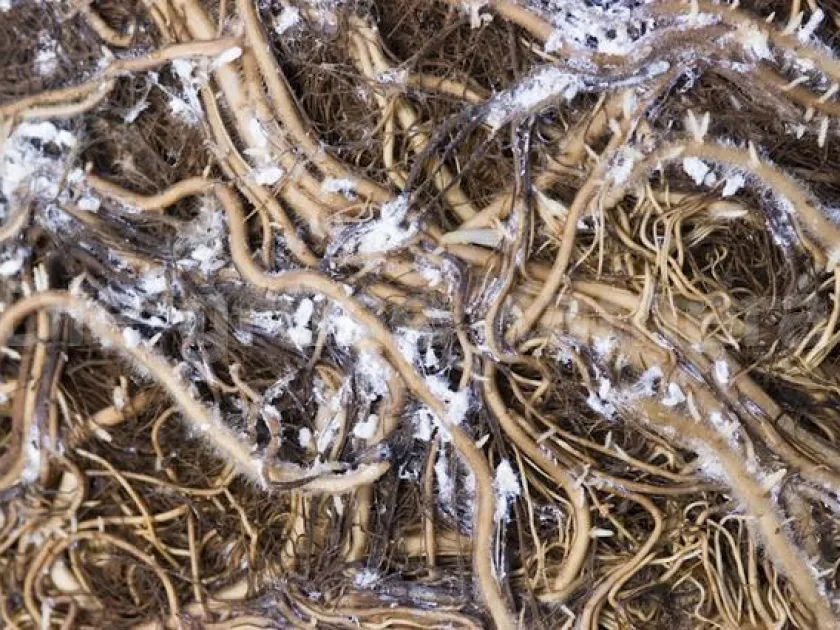
Adult females are approximately 1–3 mm long, oval-shaped, and covered in a waxy, white, powder-like substance that acts as a natural barrier against chemical sprays.
They are primarily found within the root zone of potted plants, often clustering around the base of the stem or deep within the root ball near the bottom of the pot.
The lifecycle of this pest is adapted to soil environments, allowing them to remain undetected for long periods while they feed on the plant's roots and multiply in large colonies.
They are typically introduced into a home environment through infested soil, new plants from nurseries, or by reusing contaminated pots without proper sterilization.
What it damages
These pests pose a significant threat to a wide range of plants, particularly cacti, succulents, and various ornamental species that thrive in well-drained, porous soils.
By piercing the roots, they extract vital plant sap, which immediately disrupts the plant’s ability to take up water and essential nutrients from the soil.
The infestation causes stunted growth, yellowing of the foliage, and a general lack of vigor that often leaves the plant susceptible to secondary pathogens.
As the root system is damaged, the plant loses its structural stability in the soil, which can eventually lead to the total collapse and death of the specimen if left untreated.
The damage is particularly insidious because the symptoms often manifest as common signs of improper watering or nutrient deficiency, making correct diagnosis difficult.
Signs of infestation
The most common indicator of a root mealybug infestation is a sudden, inexplicable decline in plant health, even when care routines have remained consistent.
When removing an infested plant from its pot, you will notice a white, cotton-like substance clinging to the roots and the sides of the container, indicating a massive colony.
The plant may exhibit wilting or leaf drop as the compromised roots are no longer capable of supplying sufficient moisture to the aerial parts of the plant.
In some cases, you might observe a grayish, fungal-like growth near the soil surface or around the base of the plant, which is actually a cluster of the pests themselves.
The soil may also appear dry and loose, and in advanced stages, the roots may look shriveled, discolored, or show signs of rotting due to concurrent fungal attacks.
Control measures
Effective control of root mealybugs requires a rigorous approach, as they are well-protected by their waxy secretions and soil coverage.
The most reliable method is to perform a full repotting, which involves shaking off all old soil and gently washing the roots with a systemic insecticide solution.
Systemic insecticides, which the plant absorbs, are essential because they ensure that the pest is poisoned from the inside out regardless of where they hide.
- Isolate the infected plant immediately from your collection.
- Discard the old soil and thoroughly sanitize the plant pot.
- Apply a root drench with a systemic insecticide.
- Repeat the application after two weeks to target newly hatched nymphs.
Maintaining proper watering habits is a crucial preventative measure, as consistent moisture levels can inhibit the mobility and reproduction of the pests within the root zone.
Taxonomy
- Latin name
- Ripersiella maasbachi
- Order
- Hemiptera (bugs, aphids, leafhoppers)
- Family
- Rhizoecidae
- EPPO code
- RHIOMA
Discussion
No discussions yet — be the first.