
Geococcus
Geococcus
Description
How to identify
Geococcus belongs to the family Pseudococcidae (mealybugs) and is recognized as a serious soil-dwelling pest. These insects are highly specialized and spend their entire life cycle underground.
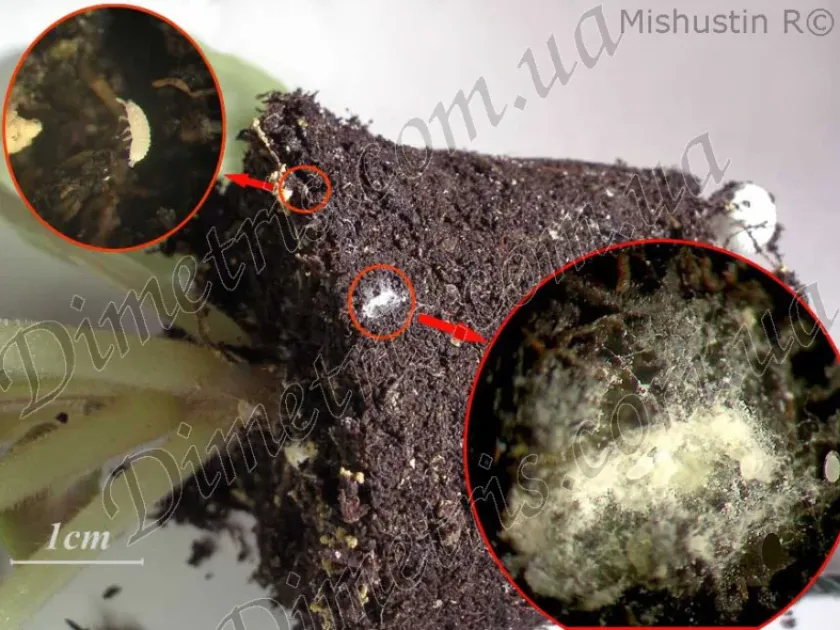
Adult females are small, oval-shaped insects characterized by a white, powdery, or waxy secretion that covers their bodies. This waxy coating provides a crucial defense against soil moisture.
Because they live within the root zone, Geococcus is often overlooked until the plant shows severe signs of decline. Their camouflage within the soil makes them extremely difficult to detect early.
Male Geococcus are winged but transient; they do not feed and possess very short lifespans. Their primary biological role is to locate sedentary females for reproduction.
The mobile stage of the pest is the crawler, or first-instar larva. These tiny individuals actively move through the soil pores to infest new roots and spread the colony.
What it damages
Geococcus primarily targets plants with succulent root systems, such as cacti, succulents, and various greenhouse ornamental plants. They thrive in restricted root zones like pots.
By feeding on the phloem sap of young roots and root crowns, the pests deprive the host of essential nutrients and water, causing systematic weakness.
Heavy infestations lead to stunted growth, loss of turgor, and yellowing foliage. In advanced stages, the plant's vascular system fails, leading to permanent wilting.
The feeding process creates small wounds that serve as entry points for soil-borne pathogens. This often leads to secondary root rot, which is usually the actual cause of plant death.
Damage is particularly severe in artificial environments where biological control agents are absent, allowing the mealybug population to reach high densities rapidly.
When it appears
In greenhouses and indoor environments, Geococcus can reproduce throughout the entire year, as temperatures are kept consistently favorable for their metabolism.
Activity peaks during warmer months when soil temperatures rise, accelerating the maturation of generations and increasing the frequency of egg-laying.
The pest does not experience a true dormancy period if the plant host remains alive. Consequently, constant vigilance is required regardless of the season.
The mobility of crawlers is highly dependent on irrigation. Frequent watering creates pathways in the soil structure that allow the larvae to relocate more easily.
Generation turnover time is highly temperature-dependent. Under optimal greenhouse conditions, the pest can complete several cycles in a single year, making control efforts persistent.
Signs of infestation
The most common indicator of a Geococcus infestation is an unexplained decline in plant health, where the plant stops growing despite regular care and watering.
Upon removing the plant from its container, one may find white, cotton-like masses clustered around the roots or adhering to the inside surfaces of the pot.
Affected roots often appear withered or show necrotic patches. In severe cases, the entire root ball may look like it is covered in a white or gray granular material.
Premature leaf drop and generalized chlorosis are classic symptoms, as the damaged root system can no longer supply the necessary resources to the upper plant parts.
The presence of ants around the base of the plant or in the soil is often a strong secondary indicator, as ants are known to farm mealybugs for their honeydew.
Control measures
The most effective strategy starts with destroying the infested soil and performing a complete repotting of the plant after thorough cleaning.
Systemic insecticides, particularly those containing neonicotinoids, are the gold standard for control. When applied as a soil drench, they are absorbed by the roots and protect the plant from within.
Manual removal of the pests by washing the root system with a mild insecticidal soap solution can reduce the population before chemical treatment is applied.
Strict quarantine protocols for all new plant acquisitions are essential to prevent the introduction of Geococcus into your collection or greenhouse.
- Discard infested soil immediately.
- Use systemic insecticides for soil drenching.
- Sanitize pots and tools before reuse.
- Inspect root systems of all new plants.
Taxonomy
- Latin name
- Geococcus
- Order
- Hemiptera (bugs, aphids, leafhoppers)
- Family
- Rhizoecidae
- EPPO code
- GECCSP
Discussion
No discussions yet — be the first.