
Coffee root mealybug
Geococcus coffeae
Description
How to identify
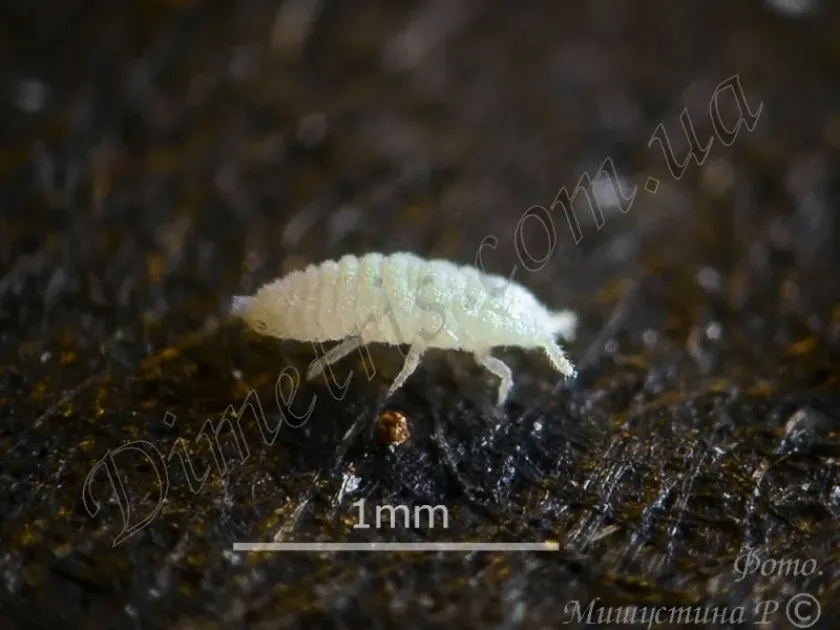
The coffee root mealybug (Geococcus coffeae) belongs to the Pseudococcidae family, order Hemiptera. It is a specialized soil-dwelling insect that lives almost exclusively in the root zone.
Adult females are small, oval, and flattened, measuring approximately 1.5 to 2 mm in length. Their bodies are covered with a waxy, white, mealy-like secretion that acts as a water-repellent barrier.
Males are rarely encountered and play a minimal role in the lifecycle. The population consists primarily of females and nymphs, which can reproduce quickly in protected environments.
These insects are highly mobile in their crawler stage, allowing them to navigate through soil pores and across surfaces to infect neighboring plants in a nursery or home collection.
The species is notorious for its cryptic nature. It rarely surfaces, making visual inspection of the plant's foliage insufficient for early detection of an infestation.
What it damages
The pest has a broad host range, including coffee plants, citrus, palms, ferns, and various succulent species often kept in greenhouses or as houseplants.
They feed by inserting their stylets into the roots, draining the plant of essential sap and nutrients. This weakens the plant's overall vascular health and disrupts water uptake.
Root damage leads to localized cell necrosis, which creates entry points for soil-borne pathogens. This often results in secondary fungal or bacterial root rots that are more lethal than the infestation itself.
Affected plants frequently show severe stunted growth. In younger specimens, the root system can be decimated within a short period, leading to rapid wilting and collapse.
Commercial growers face significant losses because the pest is easily distributed through contaminated soil, shared irrigation systems, and improperly disinfected plastic pots.
Signs of infestation
The first external sign of an infestation is often a failure to thrive. The plant looks permanently wilted despite adequate moisture levels in the growing medium.
Inspecting the root ball often reveals the presence of white, powdery, or woolly clusters. These are often mistaken for fungal growth, but closer observation reveals they are moving insects.
Root systems may appear encrusted with these white colonies, particularly near the edges of the pot or along the drainage holes where ventilation is higher.
The foliage will show signs of nutrient deficiency, such as interveinal chlorosis and leaf drop, even when fertilizers are applied regularly.
- Persistent wilting despite regular watering.
- General chlorosis and loss of leaf turgor.
- White, cottony material found in the soil near the roots.
- Stunted root development and lack of new root hairs.
- Increased susceptibility to root rot infections.
Control measures
Effective management requires aggressive sanitation. Heavily infested plants should be isolated, and the original growing medium must be discarded entirely.
The roots should be thoroughly rinsed and dipped in a systemic insecticide solution. Products containing imidacloprid or acetamiprid are generally effective for systemic control.
Sanitizing all gardening tools and pots is crucial. Plastic pots should be scrubbed with a disinfectant or replaced to prevent re-infestation from lingering eggs or crawlers.
Prevention involves using only high-quality, sterile potting mixes and keeping new additions in a strict quarantine for several weeks before integration.
Monitoring the undersides of pots and drainage trays is a simple but effective strategy to catch early outbreaks before they establish deeply within the root zone.
Taxonomy
- Latin name
- Geococcus coffeae
- Order
- Hemiptera (bugs, aphids, leafhoppers)
- Family
- Rhizoecidae
- EPPO code
- GECCCO
Discussion
No discussions yet — be the first.