
Root mealybug
Ripersiella
Description
How to identify
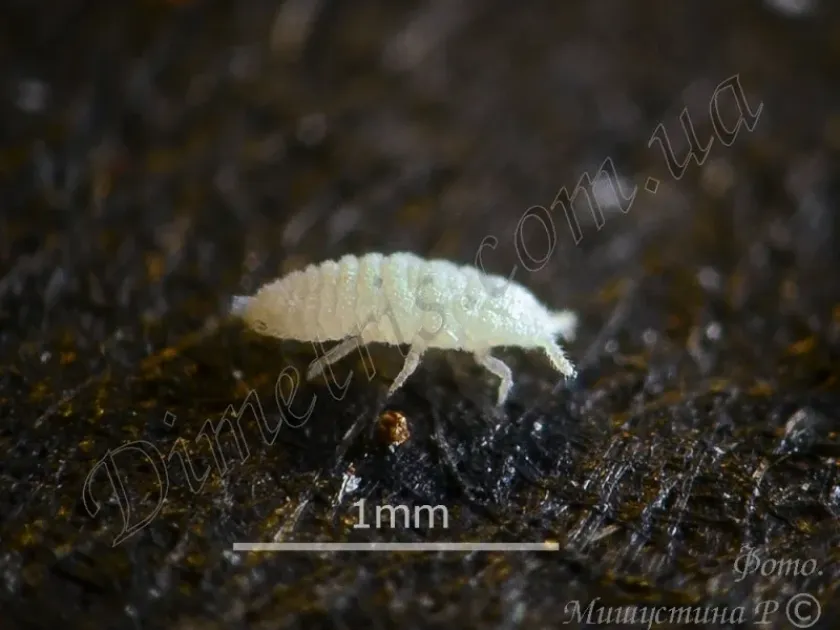
The root mealybug (genus Ripersiella) is a small, soil-dwelling insect belonging to the Pseudococcidae family within the order Hemiptera. Adults are typically 1–2 mm long, oval-shaped, and covered in a characteristic white, waxy, mealy secretion that provides protection against environmental stress and pesticides.
These pests live exclusively beneath the soil surface, congregating around roots, rhizomes, and the root neck of the host plant. Due to their pale color and secretive lifestyle, they are often mistaken for perlite grains or fungus, making early detection extremely challenging for growers.
Their life cycle includes eggs, nymphs (crawlers), and adults. Females lay their eggs in white, cottony ovisacs attached to the roots or the interior walls of pots, which serve as a reservoir for future generations if not completely removed during repotting.
Root mealybugs thrive in warm, dry conditions. They are most active when the soil moisture is low, which explains why they often propagate rapidly in potted indoor plants or during periods of drought in greenhouse crops.
The dispersal of these pests occurs primarily through infested potting soil, contaminated pots, or by introducing new plants that harbor dormant eggs or crawlers in their root balls.
What it damages
They primarily attack succulents, cacti, aroids, and various ornamental greenhouse plants. By piercing the root tissues, they sap the vitality of the plant, preventing the uptake of water and essential nutrients.
Signs of infestation
The first indicator of infestation is a sudden decline in vigor despite appropriate watering and fertilization. Plants often exhibit chlorosis, wilting, and stunted growth as their ability to transport water and minerals is severely compromised.
When a suspected plant is removed from its pot, white, cottony masses or powdery deposits will be visible on the roots and the inner surfaces of the container. This is a definitive sign of an active colony.
Over time, the root system becomes brittle, necrotic, and significantly reduced in mass. The plant may become loose in the soil, as the anchor roots are destroyed by the insects' feeding activity.
Secondary issues often arise as the damaged root tissue becomes highly susceptible to various soil-borne pathogens, leading to root rot and complete plant collapse.
Control measures
Eliminating root mealybugs requires a rigorous and multi-step strategy due to their hidden location within the soil profile.
- Discard infested soil completely and sanitize all containers thoroughly.
- Soak the root system of affected plants in a systemic insecticide solution.
- Apply systemic insecticides through soil drenching to ensure root absorption.
- Practice strict quarantine for any new arrivals to prevent widespread contamination.
- Always inspect the root ball during repotting for any signs of white waxy residue.
Taxonomy
- Latin name
- Ripersiella
- Order
- Hemiptera (bugs, aphids, leafhoppers)
- Family
- Rhizoecidae
- EPPO code
- RIPLSP
Discussion
No discussions yet — be the first.