
Sand martin
Riparia riparia
Description
How to identify
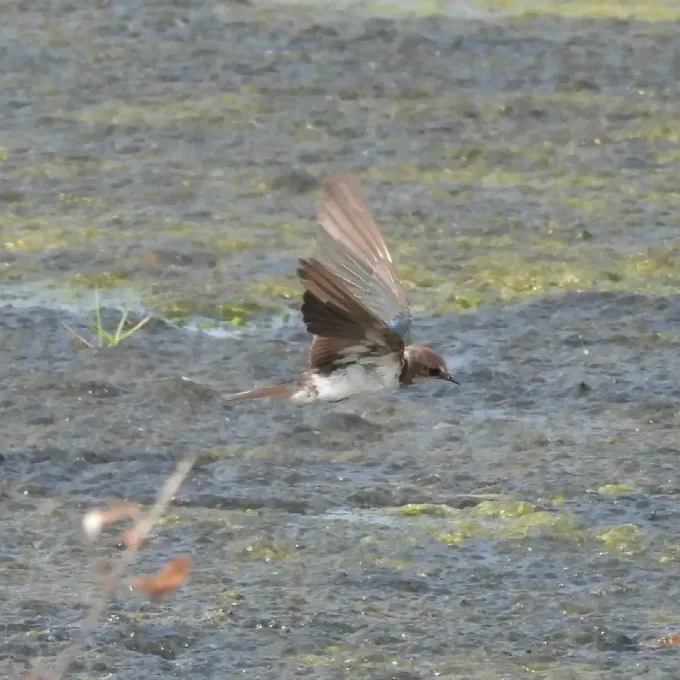
The Sand martin (Riparia riparia), also known as the Bank swallow, is a small migratory passerine bird belonging to the Hirundinidae family.
They are characterized by their brown upperparts, white underparts, and a distinct dark brown band across the breast that sets them apart from other swallow species.
These birds are colonial breeders that excavate burrows in vertical soil banks, such as riverbanks, sand pits, or industrial soil stockpiles.
They possess short, narrow, and pointed wings, allowing for rapid, flickering flight patterns while they hunt for airborne insects.
Their presence is easily identified by the complex network of holes in exposed earth banks and their distinct, grating "chrrr" calls heard during the breeding season.
What it damages
The Sand martin is not a crop pest; it is insectivorous and feeds entirely on flying insects, providing a natural pest control service to adjacent fields.
However, large colonies can cause structural damage to agricultural infrastructure, such as irrigation dikes, levees, and steep soil mounds, through excessive burrowing.
This burrowing activity can lead to soil instability and erosion, potentially compromising the integrity of water management systems if left unmonitored.
In quarrying or construction areas, their protected status can impact the schedule of excavation works if a nesting colony is discovered.
Most agriculturalists view them as beneficial allies rather than threats, as their dietary habits help suppress populations of agricultural insect pests.
When it appears
As long-distance migrants, Sand martins return to their breeding grounds in spring, typically between April and May, aligning with the rise in insect activity.
The core breeding season spans from late May through July, a period during which colony site activity is at its absolute peak for agricultural observation.
By late August, the birds prepare for migration, leaving their nesting sites to return to their wintering grounds in Africa or South Asia.
Throughout the day, they are highly active, covering significant distances to forage over nearby agricultural fields, orchards, and water sources.
Site fidelity is high, meaning if a location meets their nesting criteria, the colony is likely to return and expand in size over several consecutive years.
Control measures
In many regions, the Sand martin is a protected species, prohibiting any lethal control methods or direct destruction of active nesting sites.
To protect agricultural structures from damage, prevention is the primary strategy, including the reinforcement of banks with geotextiles or stone riprap.
Grading soil banks to a shallower, non-vertical angle effectively prevents these birds from excavating burrows in the first place.
If mitigation is necessary for critical infrastructure, visual repellents like reflective tape or silhouette decoys can discourage birds from settling.
Managing fields to encourage biodiversity and natural insect suppression should take priority over removing these helpful insectivorous birds.
Taxonomy
- Latin name
- Riparia riparia
- Family
- Hirundinidae
- EPPO code
- RIPRRI
Discussion
No discussions yet — be the first.