
Barn swallow
Hirundo rustica
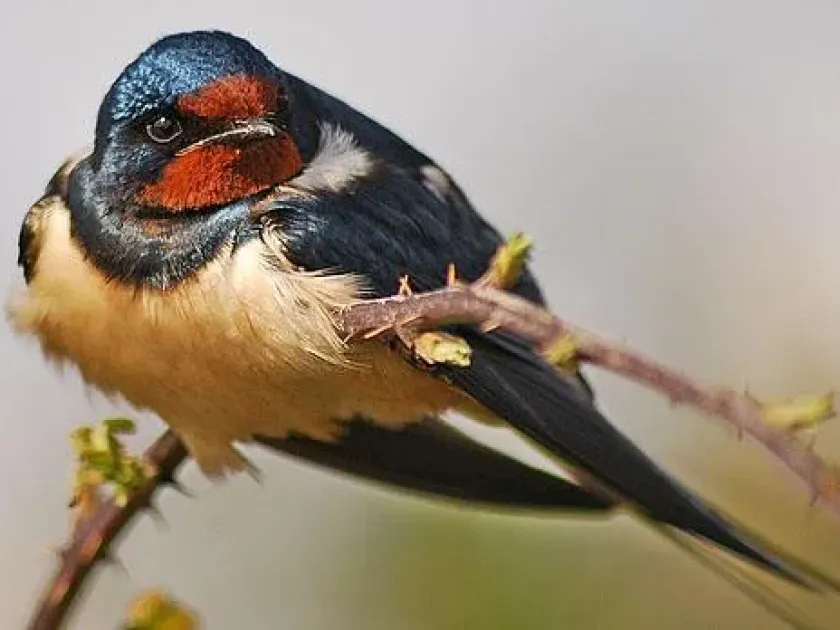
Description
How to identify
The barn swallow (Hirundo rustica) is a small migratory bird species belonging to the Hirundinidae family within the order Passeriformes. It is distinguished by its long, deeply forked tail, dark blue dorsal feathers, and a reddish-brown throat patch.
Adult barn swallows are typically 17–20 cm in length. They possess long, pointed wings that provide exceptional agility, allowing them to capture airborne insects with remarkable precision.
Juvenile birds generally exhibit duller plumage and shorter tail feathers. These birds are known for their strong site fidelity, often returning to the same nesting locations year after year.
Nests are constructed from mud pellets mixed with grass and feathers. They are typically adhered to vertical surfaces or rafters inside sheltered structures such as barns, stables, and sheds.
The species has a widespread distribution across the Northern Hemisphere, showing a clear preference for habitats that provide a mix of open farmland for hunting and buildings for nesting.
What it damages
In an agricultural context, the barn swallow is primarily considered a nuisance rather than a predator of crops. The main damage occurs due to the contamination of facilities with droppings.
Bird guano accumulation on livestock equipment, milking stations, and feed troughs poses hygiene risks, as it can carry bacteria, fungi, and parasites that threaten livestock health.
The presence of nesting material and fecal matter can lead to the corrosion of metal structures and the malfunctioning of sensitive mechanical equipment located within storage areas.
Inside grain storage facilities, the accumulation of nesting debris and droppings can lead to the spoilage of stored grain, failing to meet strict quality and safety regulations.
In greenhouses, although rare, swallows may damage young seedlings or cover fruit surfaces with droppings, significantly reducing the market value of the produce.
When it appears
Barn swallows are migratory birds that arrive in temperate regions during the spring, typically from April to May, as the weather warms and insect populations increase.
The peak nesting and breeding season occurs from late May through June, during which the birds are most active in building or refurbishing their mud nests within farm buildings.
During July and August, the birds are occupied with rearing their broods, leading to increased frequency of flights in and out of sheltered agricultural structures.
In late August and September, barn swallows form large pre-migratory flocks. During this phase, they frequently gather on utility wires and rooftops before departing for their wintering grounds.
The departure marks the end of their activity in the region, providing a seasonal window of opportunity for farmers to conduct sanitation and maintenance of affected buildings.
Signs of infestation
The presence of barn swallows is easily identified by their distinct chirping sounds and rapid movement in and out of windows, doorways, or roof gaps in agricultural buildings.
The most visual sign is the presence of cup-shaped mud nests attached to rafters, wall joints, or other high points within the structure.
Heavy accumulation of fresh or dried droppings on floors, machinery, or wall surfaces directly beneath nesting spots is a clear indicator of active colonization.
The discovery of feathers, fragments of dried mud, and straw on the ground confirms that birds are actively using the interior space for nesting purposes.
If openings or cracks in building exteriors show signs of regular traffic from birds, it indicates that the interior is likely serving as a nesting site.
Control measures
The most effective strategy is structural exclusion. Covering all ventilation openings, eaves, and windows with fine-mesh hardware cloth prevents birds from entering.
For rafters and ledges, installing slanted surfaces (at a 45-degree angle or more) prevents birds from attaching their mud nests, as they cannot find a suitable anchor point.
Regular monitoring in early spring is essential. Promptly removing nascent nests before eggs are laid can effectively discourage the birds from colonizing the area.
Visual deterrents such as reflective tapes or hanging objects can provide temporary relief, although birds often acclimate to these devices over time.
Maintaining a clean environment and ensuring that agricultural sheds are free of stored feed or standing water can significantly decrease the appeal of the building to barn swallows.
Taxonomy
- Latin name
- Hirundo rustica
- Family
- Hirundinidae
- EPPO code
- HIRURU
Discussion
No discussions yet — be the first.