
Common house martin
Delichon
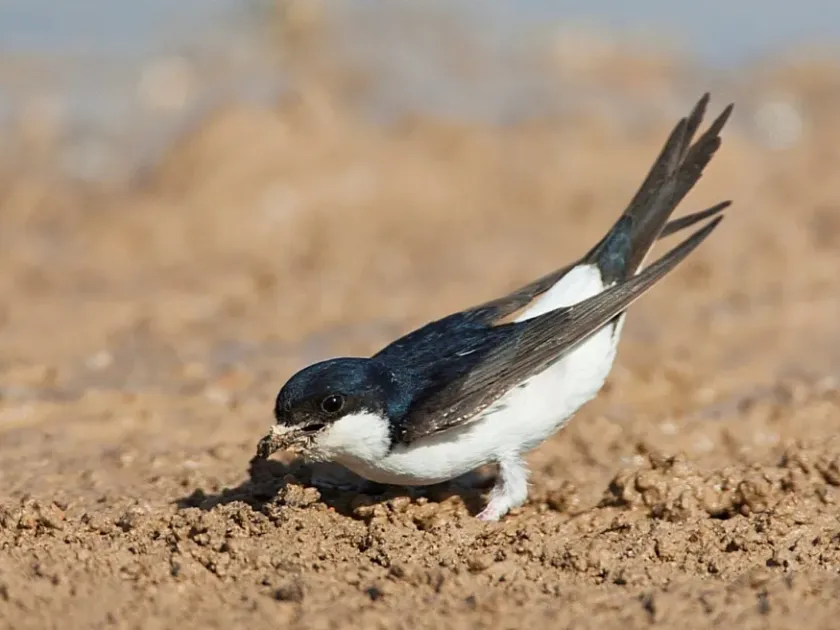
Description
How to identify
The common house martin (Delichon urbicum) is a migratory bird belonging to the swallow family, widely known for nesting on human-made structures.
They are characterized by their glossy blue-black upperparts and stark white underparts, with a distinctive white patch on the rump.
A key identifying feature of the genus Delichon is their legs, which are covered in white feathers all the way down to their toes.
These birds are highly social and are frequently seen in colonies, flying rapidly to catch insects on the wing, often near rural environments.
Their nests are intricate structures made of mud pellets, typically attached to the eaves or corners of buildings, providing shelter for their offspring.
What it damages
The primary agricultural concern regarding house martins is the buildup of guano, which contaminates building surfaces, machinery, and stored produce.
Accumulated bird droppings create unhygienic conditions in warehouses and storage facilities, posing risks of bacterial contamination to harvested grains or vegetables.
Continuous nesting activity can lead to the deterioration of building materials, as moisture from mud nests may cause structural decay over time.
Noise and presence of large colonies can be disruptive to farm operations and may hinder the maintenance of equipment stored in semi-open sheds.
Additionally, the collection of mud by the birds can damage the appearance of building exteriors and leave unsightly residue on functional equipment.
When it appears
House martins typically return to their breeding grounds in spring, starting in April, to reclaim or build nests on agricultural buildings.
The peak activity period occurs between June and July, coinciding with the intensive feeding of the first and second broods of chicks.
Towards the end of August, the birds aggregate into large flocks, increasing the concentration of guano deposition around their roosting and nesting areas.
The autumn migration begins in September, when the birds leave for their wintering grounds, providing a window for property cleanup and maintenance.
Seasonal patterns are crucial for farm management, as they dictate the optimal timeline for implementing bird-proofing measures to minimize damage.
Signs of infestation
The presence of cup-shaped mud nests tucked under eaves, ledges, or within sheds is the clearest indication of a house martin infestation.
Accumulations of white excrement on walls, floors, and machinery directly beneath nesting sites are tell-tale signs of active colony occupancy.
Constant, high-pitched vocalizations and frequent flights in and out of building gaps are indicative of a colony preparing or maintaining its nest.
Discovery of eggshell fragments and downy feathers on the ground confirms successful reproduction and long-term occupancy of the site.
Visible damage to structural mortar or exterior plaster due to the bird's search for nesting material is an indicator of repeated seasonal use.
Control measures
Installing bird spikes on ledges and eaves is an effective physical barrier that prevents birds from finding a suitable anchor point for their nests.
Mesh netting installed across gaps under roofs or entryways to barns effectively excludes martins from entering protected agricultural areas.
Utilizing visual deterrents such as reflective strips or hawk decoys can help discourage birds from settling on specific parts of a building.
- Regular sanitization of areas affected by bird droppings.
- Sealing off small openings in roof eaves.
- Active nest removal in early spring before eggs are laid.
Implementing ultrasonic acoustic deterrents can assist in managing colonies, provided that frequencies are rotated to prevent the birds from habituating.
Taxonomy
- Latin name
- Delichon
- Family
- Hirundinidae
- EPPO code
- DLCHSP
Discussion
No discussions yet — be the first.