
Tree swallow
Iridoprocne bicolor
Description
How to identify
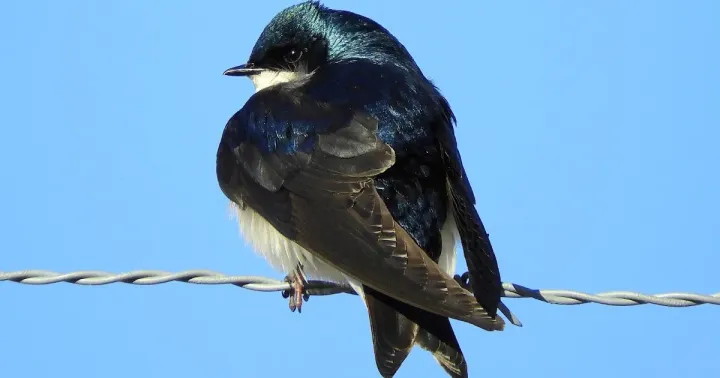
The tree swallow (Tachycineta bicolor) is a migratory songbird belonging to the Hirundinidae family and the Passeriformes order.
These birds are characterized by a striking iridescent blue-green upper body and a stark white underbelly, distinguishing them from other swallow species.
They are primarily cavity-nesters, frequently occupying abandoned woodpecker holes, hollow trees, or human-made nest boxes provided for conservation.
Their flight pattern is swift and agile, allowing them to capture insects in mid-air with high precision throughout the breeding season.
Adaptability to open, agricultural, or wetland habitats makes them a common sight in rural landscapes across North America.
What it damages
It is crucial to define that the tree swallow is not an agricultural pest; it does not consume seeds, fruits, or damage crop vegetation.
Unlike true pests, these birds do not harm the yield quality or quantity, making them harmless to the financial interests of farmers.
Instead, they function as natural pest controllers, consuming vast quantities of harmful insects, such as midges, beetles, and moths.
Occasionally, bird droppings near sensitive areas might cause sanitation concerns, but this is minor compared to the benefits they provide.
Consequently, they are widely recognized as beneficial allies in integrated pest management (IPM) strategies rather than threats.
When it appears
The presence of tree swallows in agricultural fields coincides with the emergence of insect populations during the spring and summer months.
They arrive at their nesting sites as temperatures rise and typically stay through the end of the breeding cycle in late summer.
As the weather turns cooler and insect activity declines, the birds gather in large flocks to begin their southern migration.
This seasonal pattern ensures that their beneficial predation services are available exactly when insect pest populations are most active.
Once the autumn migration begins, their direct impact on the ecosystem of the field effectively ceases until the following spring.
Signs of infestation
The most prominent sign of tree swallows is the sight of these birds gracefully swooping over fields and water sources in search of insects.
Frequent nesting in designated nest boxes or nearby natural tree cavities is a primary indicator of their established presence.
Their distinct, warbling calls are easily heard near their nesting sites throughout the peak of the breeding season.
A high density of swallows over a particular plot suggests a high abundance of insect activity in that specific microclimate.
No direct plant damage signs, such as chewed leaves or bored stems, will ever be observed in association with this species.
Control measures
There is generally no reason to implement control measures against tree swallows due to their significant positive impact on agricultural health.
If bird management is required for specific infrastructure areas, passive and humane methods should be prioritized to avoid harm.
- Utilizing reflective visual deterrents to discourage roosting on buildings.
- Deploying sonic deterrent devices if nesting in storage areas becomes a nuisance.
- Installing physical barriers like netting to prevent access to sensitive loading bays.
Management should focus on balancing the birds' benefits while maintaining the operational requirements of the farming facility.
Encouraging their presence through the strategic placement of nest boxes can actually enhance the biological pest control program.
Taxonomy
- Latin name
- Iridoprocne bicolor
- Family
- Hirundinidae
- EPPO code
- IRIPBI
Discussion
No discussions yet — be the first.