
Tree swallow
Iridoprocne
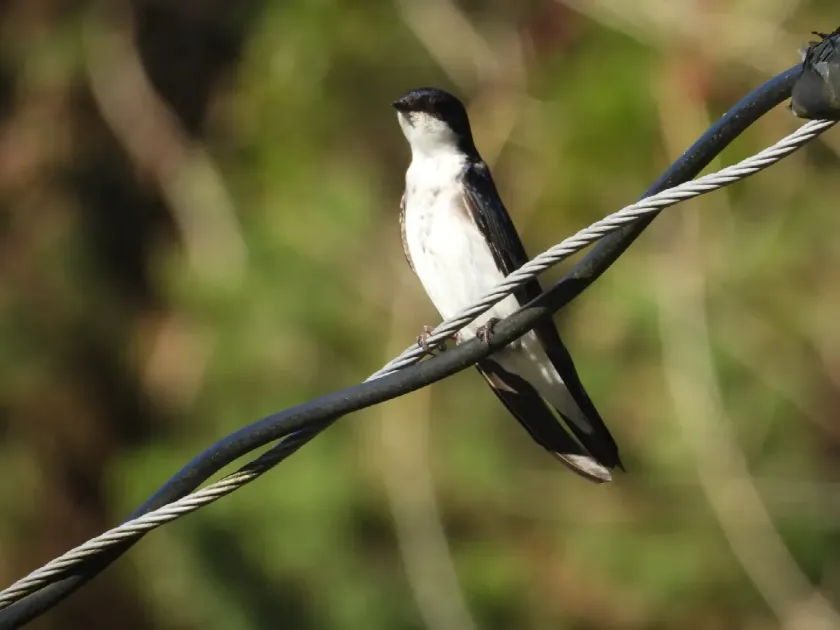
Description
How to identify
The tree swallow (scientifically Tachycineta bicolor) is a small passerine bird within the swallow family, Hirundinidae.
Adult birds possess a striking iridescent blue-green plumage on their dorsal side, which contrasts with their clean white ventral side.
Females may appear slightly duller in coloration compared to males, often showing more brownish tones on their wings and back.
Young birds are typically gray-brown above and white below, gradually transitioning to adult plumage after their first molt.
These birds are known for their exceptional flight agility, allowing them to catch insects mid-air with high efficiency.
What it damages
While tree swallows primarily feed on insects, they can cause incidental damage to soft fruit crops during times of food scarcity.
Their droppings can accumulate on equipment and crop surfaces, potentially contaminating produce and reducing its market value.
They often compete for nesting sites, sometimes displacing more beneficial insectivorous bird species from nesting boxes.
In large numbers, they may cause mechanical damage to tender crops by landing on plants or nesting in inappropriate structures.
The sheer presence of large flocks during migratory seasons can occasionally interfere with agricultural maintenance tasks.
When it appears
The active season for tree swallows begins in early spring, as they return to their breeding grounds to establish nesting territories.
Nesting and brood-rearing occur primarily throughout May and June, representing the period of highest field activity.
Post-breeding, these birds form large congregations in late summer to prepare for their long-distance migration.
Migration typically lasts through August and September, after which the birds vacate agricultural areas for warmer regions.
During the winter months, their presence in northern agricultural zones is non-existent as they migrate south.
Signs of infestation
Frequent and rapid flight patterns above fields are the most obvious indicator of a large swallow population nearby.
The presence of nesting material in artificial boxes or crevices in farm buildings suggests a localized colony.
Small, puncture-like marks on soft berries may indicate that birds have been pecking at the fruit in search of moisture.
White, chalky deposits of bird droppings on foliage, fencing, or machinery provide evidence of roosting sites.
Auditory cues, including their characteristic soft, warbling calls, confirm their identification in the field.
Control measures
Physical exclusion, such as the use of agricultural netting, remains the most reliable method for protecting small fruit crops.
Visual deterrents like reflective tapes, spinning mirrors, or predator kites can effectively discourage flocks from landing.
Sanitation practices that reduce local insect populations can make fields less attractive to insectivorous birds like swallows.
Sonic devices that emit predator calls or distress signals can be employed to temporarily move birds away from critical areas.
Always check local wildlife regulations before implementing any control measures, as many bird species are protected by law.
Taxonomy
- Latin name
- Iridoprocne
- Family
- Hirundinidae
- EPPO code
- IRIPSP
Discussion
No discussions yet — be the first.